
Starting seeds indoors can be a rewarding experience, offering the gardener a head start on the growing season and allowing for greater control over the conditions in which plants begin their life. However, purchasing specialized seed-starting containers can be costly, especially if you plan on growing a large variety of plants. Fortunately, your local dollar store is a treasure trove of affordable and creative solutions.
With a bit of ingenuity, everyday items can be repurposed into effective seed-starting containers. This not only saves money but also gives a new life to items that might otherwise be overlooked. In this article, we will explore twelve such items that are both budget-friendly and perfect for starting your seeds indoors.
1. Plastic Shot Glasses for Single-Seed Starts
Plastic shot glasses, often found in packs of 20 or more, are ideal for starting seeds that require individual attention. Their compact size, usually around 1.5 ounces, makes them perfect for sowing seeds that need to be transplanted individually, such as tomatoes or peppers. Simply poke a small hole at the bottom for drainage, fill with seed-starting mix, and plant your seeds.
The transparency of plastic shot glasses also allows you to easily monitor root growth and moisture levels, ensuring that your seedlings are developing healthily. As the plants grow, these individual containers make it easy to space out your seedlings, preventing overcrowding and promoting robust growth.
2. Muffin Tins and Silicone Baking Cups as Mini Cell Trays
Muffin tins paired with silicone baking cups offer an excellent solution for starting multiple seeds in a compact space. Each cup acts as an individual cell, keeping seeds organized and separate. Standard muffin tins usually have 12 wells, providing ample space for a variety of seedlings.
The flexibility of silicone baking cups makes it easy to pop out seedlings when they’re ready to transplant. Additionally, the cups are reusable and can be easily cleaned, making them an eco-friendly option. Ensure each cup has drainage by poking a small hole at the bottom, and fill with seed-starting mix before planting.
3. Aluminum Foil Pans as Sturdy Seed-Starting Flats
Aluminum foil pans, available in various sizes, serve as sturdy seed-starting flats that can accommodate a large number of seeds. These pans are particularly useful for starting seeds that don’t require individual cell separation, such as lettuce or other leafy greens.
To use an aluminum foil pan, simply fill it with seed-starting mix and scatter your seeds over the surface. Cover lightly with more mix, and water gently to avoid washing the seeds away. The depth of these pans ensures adequate room for root growth, while their lightweight nature makes them easy to move as needed.
4. Clear Storage Bins Turned DIY Greenhouses
Clear storage bins can be transformed into effective mini-greenhouses, providing the perfect environment for germinating seeds. The clear plastic helps trap heat and moisture, creating a warm, humid atmosphere ideal for seed starting.
Choose bins with clear lids to allow light to reach the seedlings. Place your seed trays or pots inside the bin, and cover with the lid to maintain humidity. As seedlings begin to grow, prop the lid open slightly to allow for air circulation and prevent mold growth. This setup is perfect for starting a large number of seeds simultaneously.
5. Disposable Drink Cups With Lids for Humidity Domes
Disposable drink cups, especially those with lids, can be used to create mini humidity domes for individual seedlings. The lids help retain moisture, creating a greenhouse effect that promotes faster germination.
Use clear cups to allow maximum light penetration, and ensure they have drainage holes at the bottom. Place your seed-starting mix and seeds inside, then cover with the lid. As seedlings sprout, remove the lid gradually to acclimate the plants to lower humidity levels.
6. Egg Storage Containers as Ready-Made Cell Packs
Egg storage containers, especially those with a clear top, are perfect for starting seeds that require individual cells. The compartments are already divided, making it easy to sow different seeds in each section.
Simply fill each compartment with seed-starting mix, and plant your seeds. The clear lid helps retain moisture and warmth, acting as a mini greenhouse. Once seedlings are ready to transplant, the individual sections make it easy to remove and transport each seedling to its new location.
7. Condiment Cups and Sauce Containers for Tiny Seeds
Small condiment cups or sauce containers, often found in packs of 10 or more, are ideal for starting tiny seeds that don’t need much space initially. Their compact size allows for efficient use of space and makes them easy to manage.
Ensure each cup has a small drainage hole, then fill with a light seed-starting mix. Plant your tiny seeds, such as basil or other herbs, and cover lightly with soil. The small size of these containers makes it easy to monitor moisture levels and root growth.
8. Plastic Food Storage Containers as Bottom-Watering Trays
Plastic food storage containers, especially those with a flat, shallow design, can be repurposed as bottom-watering trays. This method is particularly effective for preventing overwatering and promoting healthy root development.
Place your seed-starting pots inside the container, and add water to the bottom. The pots will absorb moisture from the bottom up, ensuring even watering. This setup also reduces the risk of fungal diseases by keeping the surface of the soil dry.
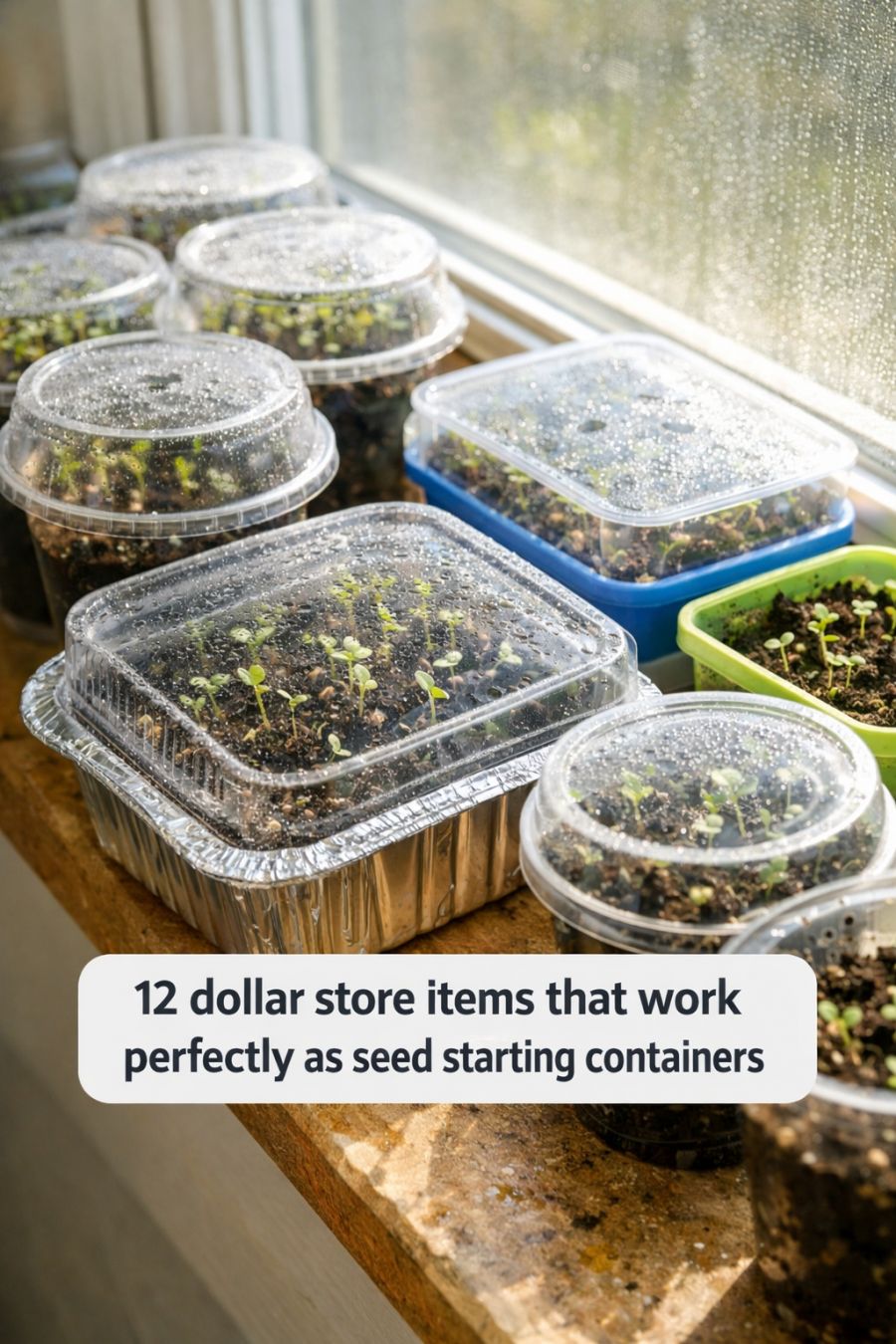
12 dollar store items that work perfectly as seed starting containers
Pages: 1 2
