
Pothos, also known as Devil’s Ivy, is a popular houseplant renowned for its hardiness and adaptability. Its ability to thrive under a variety of conditions makes it a favorite among both novice and experienced plant enthusiasts. However, when you decide to keep a pothos plant in a low light room, you might notice some surprising changes.
While pothos can tolerate low light, it isn’t their ideal environment. These changes in growth and appearance can sometimes be unexpected, leaving plant owners puzzled or even concerned. Understanding how low light affects pothos is crucial for maintaining a healthy plant and ensuring it thrives, even in less-than-ideal lighting conditions.
1. Slower, More Compact Growth Than You Expect
In low light conditions, pothos plants tend to grow slower than usual. The lack of sufficient light means the plant cannot photosynthesize as efficiently, leading to reduced energy production. As a result, you might notice that your pothos produces new leaves and vines at a much slower rate, sometimes taking months to show noticeable new growth.
Interestingly, this slow growth often results in a more compact plant. With less energy to produce long vines, the pothos focuses its resources on maintaining its current size, leading to a bushier appearance. This compact growth can be beneficial if you’re looking to keep your plant at a manageable size indoors.
2. Deeper Green Leaves That Look Almost Fake
One of the most noticeable effects of low light on pothos is the change in leaf color. In an effort to maximize photosynthesis with limited light, the leaves often become a deeper shade of green. This increased chlorophyll concentration gives the leaves a rich, almost artificial look.
This deep green hue can be quite striking and is often perceived as a sign of health, though it’s more of an adaptation to low light conditions. It’s important to note that while the color change is normal, it can also indicate that the plant is struggling to capture enough light.
3. Dramatically Reduced Water Needs
Pothos plants in low light require significantly less water than those in brighter conditions. With slower growth and reduced photosynthesis, the plant’s overall water consumption decreases. You may find yourself watering your pothos only once every two to three weeks, depending on the ambient humidity and temperature.
It’s crucial to adjust your watering schedule to prevent overwatering, which can lead to root rot. Always check the top inch of soil before watering, ensuring it’s dry to the touch.
4. Leggy, Sparse Vines That Change The Plant’s Shape
Without adequate light, pothos vines may grow leggy and sparse as they search for more light. This elongation results in longer internodes, causing the plant to appear more stretched out and less full.
This change in shape can lead to an uneven aesthetic, with some parts of the plant looking bare. Trimming back the long, sparse vines can encourage more compact growth and help maintain an attractive appearance.
5. Smaller Leaves And Fewer New Shoots
Low light conditions often result in smaller leaves and fewer new shoots. As the plant’s energy production decreases, it prioritizes sustaining existing growth over developing new leaves.
You might notice that new leaves are significantly smaller than older ones, sometimes only half the size. This adaptation allows the plant to conserve resources, though it can be disappointing if you’re hoping for lush, vigorous growth.
6. Variegation Fading Or Disappearing Over Time
The beautiful variegation that many pothos varieties boast is often diminished in low light. Variegated pothos rely on sufficient light to maintain their patterns, as the lighter sections of the leaves contain less chlorophyll.
In low light, the plant compensates by producing more chlorophyll, which can cause the variegation to fade or disappear entirely. If preserving variegation is important to you, consider supplementing with a grow light or relocating the plant to a brighter spot.
7. Surprisingly Tough Survival In Near-Shade Corners
Despite the challenges, pothos are remarkably resilient and can survive in near-shade conditions where many other plants would falter. Their adaptability allows them to persist even with minimal light, making them ideal for dim corners or rooms with limited natural light.
While the plant may not thrive in such conditions, its ability to endure can be impressive, offering greenery where few other plants can survive.
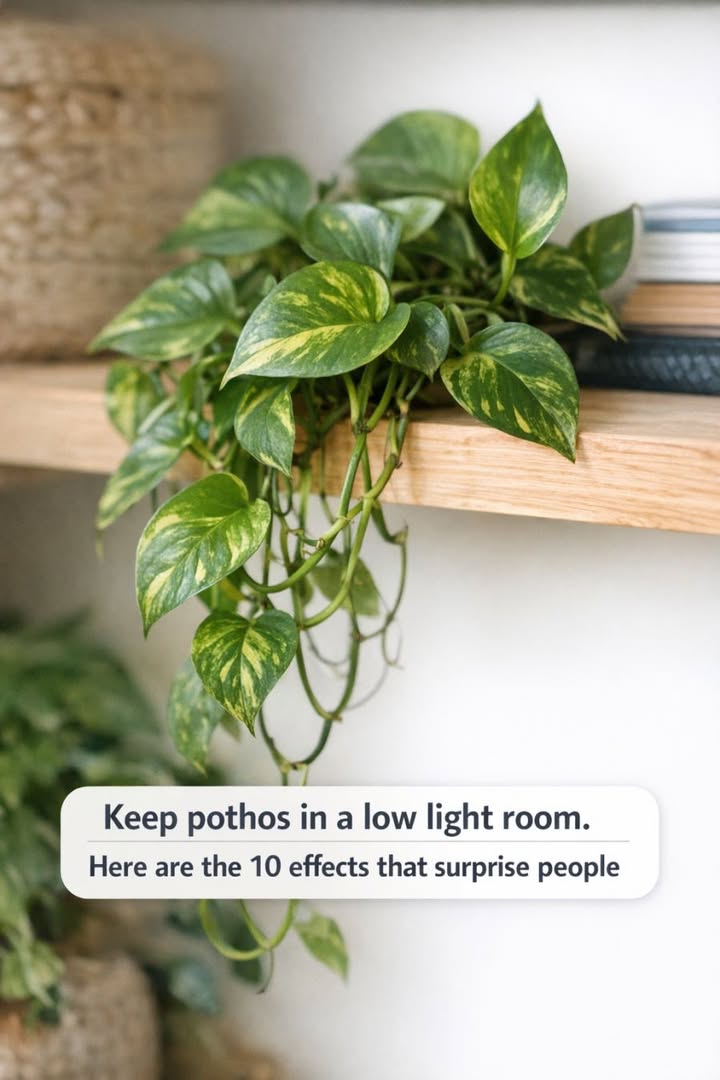
Keep pothos in a low light room. Here are the 10 effects that surprise people
Pages: 1 2
