
Cheesecake is a beloved dessert, celebrated for its rich, creamy texture and delightful flavor. However, many home bakers find themselves perplexed when they discover liquid droplets on the surface of their cheesecake after chilling it in the fridge. This occurrence can be alarming, especially if you’re unsure whether this affects the cheesecake’s safety and quality.
In this article, we’ll delve into the science behind why these liquid droplets form on your cheesecake and explore whether it’s safe to consume. We’ll provide insights into how to prevent this from happening in the future and share tips for handling a cheesecake that appears to be ‘weeping’. Whether you’re a novice baker or a seasoned pro, understanding these nuances can help you achieve the perfect cheesecake every time.
1. What Those Mysterious Liquid Droplets on Cheesecake Really Are
The droplets that form on your cheesecake’s surface are generally a result of condensation. This is a common phenomenon that occurs when moisture from the surrounding air condenses on a cooler surface. When you place a warm or room temperature cheesecake into the refrigerator, the temperature difference between the cheesecake and the cold air in the fridge can cause droplets to form.
Cheesecakes are made from ingredients that contain water, such as cream cheese, eggs, and sugar. As the cheesecake cools, some of this inherent moisture can be drawn to the surface, adding to the condensation effect. These droplets are typically harmless and don’t affect the taste or texture of the cheesecake significantly, but they can be unsightly and might make you worry about spoilage.
2. Condensation 101: How Fridge Temperature Changes Make Cheesecake Sweat
Condensation occurs when warm air meets a cooler surface, causing the air’s moisture to turn into liquid droplets. In the case of cheesecake, when it’s placed in a refrigerator where the temperature is much lower (usually around 35 to 38 degrees Fahrenheit or approximately 2 to 3 degrees Celsius), the warm air surrounding the cheesecake interacts with the cold surface, leading to the formation of condensation.
To minimize condensation, it’s essential to allow the cheesecake to cool gradually before refrigerating it. Rapid temperature changes can exacerbate moisture accumulation. By cooling your cheesecake on the counter until it reaches room temperature before placing it in the fridge, you can help prevent this issue.
3. Sugar and “Weeping”: Why the Sweetness Pulls Moisture to the Surface
Sugar is hygroscopic, meaning it has the ability to attract and retain water molecules from the environment. In cheesecakes, the sugar used in the batter can draw moisture to the surface, contributing to the ‘weeping’ effect, especially when the cake is subjected to temperature changes.
This phenomenon is more pronounced in cheesecakes with higher sugar content. The weeping is often more visible when the cheesecake is refrigerated, as the cold temperature can enhance sugar’s moisture-attracting properties. However, this is a natural occurrence and not necessarily a sign of spoilage.
4. When Moisture Is Normal—and When It’s a Red Flag for Spoilage
Moisture on the surface of a cheesecake is generally normal and not a sign of spoilage, especially if it appears as small droplets soon after refrigeration. However, if the moisture is accompanied by an off smell, discoloration, or mold, these are clear signs that the cheesecake may have spoiled.
It’s important to remember that cheesecakes, like any other dairy-based product, have a limited shelf life. Typically, a homemade cheesecake can last up to 5-7 days in the refrigerator. If the cheesecake has been stored for longer and shows signs of excessive moisture or a sour odor, it’s best to err on the side of caution and discard it.
5. How to Tell If Your Cheesecake Is Still Safe to Eat
To determine if your cheesecake is safe to eat, start by examining its appearance and smell. The presence of small droplets alone does not indicate spoilage. However, if you notice any discoloration or mold on the surface, it’s safer to discard the cheesecake.
Additionally, smell the cheesecake. A fresh cheesecake should have a neutral or slightly sweet aroma. If it has a sour or unpleasant odor, it’s a sign that it may have gone bad. Always trust your senses; when in doubt, it’s better to be cautious and not consume it.
6. The Role of Cooling: Why Putting Cheesecake in the Fridge Too Soon Backfires
Placing a warm cheesecake directly into the refrigerator is a common mistake that can lead to excessive condensation. When a cheesecake is still warm, it releases more moisture, which, when trapped in a cold environment, can lead to a soggy top.
To avoid this, allow your cheesecake to cool at room temperature for at least an hour before transferring it to the fridge. This gradual cooling process helps reduce the amount of condensation that forms on the surface and maintains the cheesecake’s desirable texture.
7. Covering, Wrapping, and Storing Cheesecake the Right Way
Proper storage of cheesecake is crucial to maintaining its quality. Once the cheesecake has cooled to room temperature, cover it with plastic wrap or foil to protect it from the cold air in the fridge. This barrier can help reduce condensation and prevent the cheesecake from absorbing any odors from other foods.
If you have a springform pan, you can cover the cheesecake directly in the pan. Otherwise, transfer the cheesecake to an airtight container for added protection. This method not only preserves the cheesecake’s texture but also extends its shelf life.
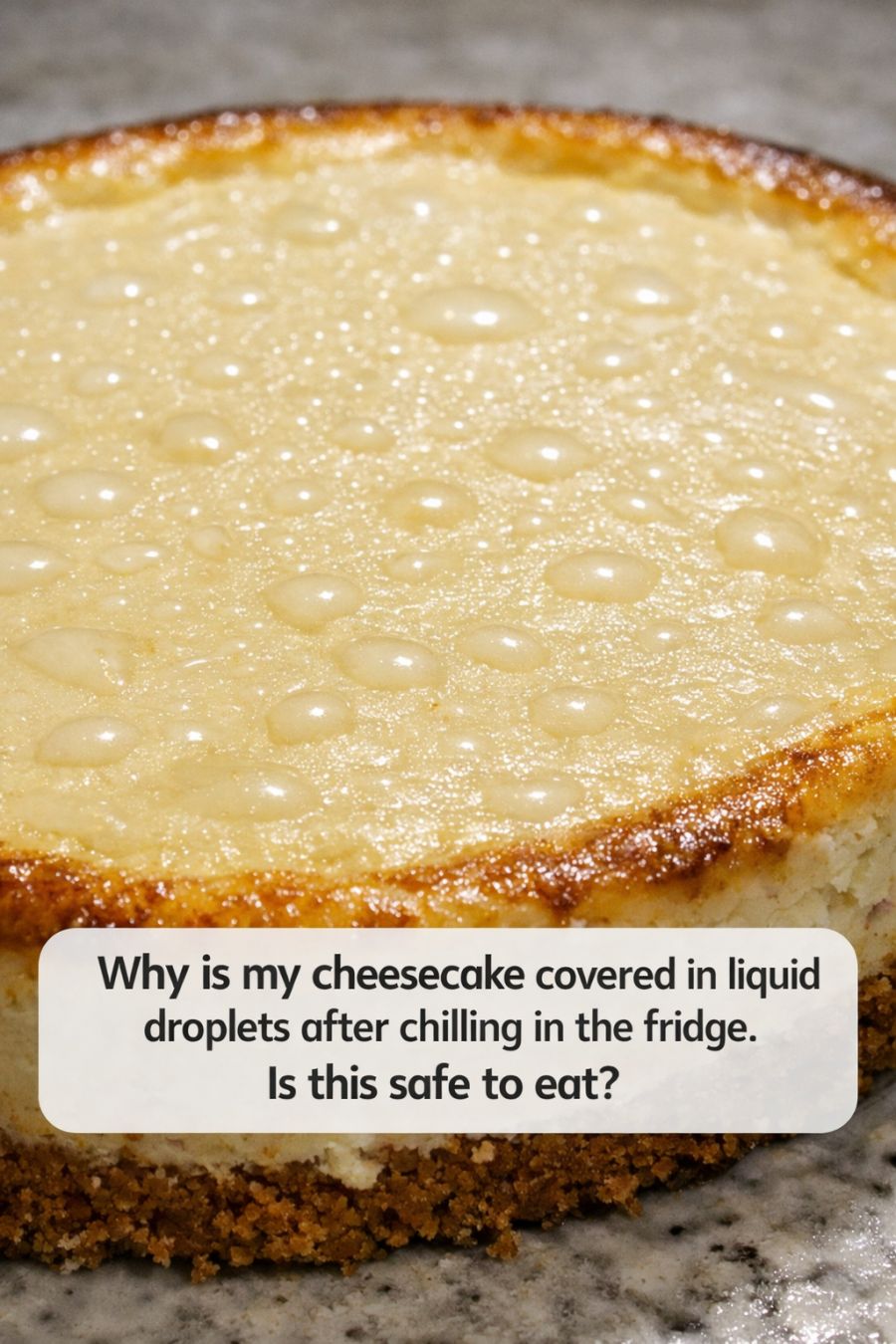
Why is my cheesecake covered in liquid droplets after chilling in the fridge. Is this safe to eat?
Pages: 1 2
