
In the world of houseplants, there’s one vine that stands out not just for its beauty but for its incredible ease of propagation. This plant is not only a favorite among beginners but also a staple in the homes of seasoned plant enthusiasts. Its ability to grow quickly and adapt to various environments makes it a beloved choice for anyone looking to add greenery to their space.
Whether you’re new to the world of plant care or an experienced gardener, learning to propagate this vine can be a rewarding and enjoyable experience. With just a few simple steps, you can turn a single plant into a lush, vibrant display that can transform any room into a green oasis.
1. Meet the Golden Pothos: The Ubiquitous Vine You Already Know
The Golden Pothos, also known as Epipremnum aureum, is one of the most common houseplants around the globe. Known for its heart-shaped, green leaves with vibrant yellow variegation, this vine can grow up to 10 feet long indoors, making it an excellent choice for hanging baskets or trailing along shelves.
This plant is not only beautiful but also incredibly resilient. It can thrive in a wide range of lighting conditions, from bright indirect light to low light. This adaptability, along with its air-purifying qualities, has made it a popular choice for homes and offices alike.
2. Why Golden Pothos Is the Easiest Plant to Propagate in Water
Golden Pothos is exceptionally easy to propagate in water due to its robust nature and willingness to root quickly. Unlike some plants that require precise conditions, Pothos cuttings can begin rooting with just a simple glass of water and a bit of patience.
The nodes of the Pothos, which are located at the points where leaves meet the stem, naturally initiate root growth when submerged in water. Within a few weeks, you can observe the development of white, spindly roots, making it a satisfying process for both beginners and seasoned plant lovers.
3. How to Identify Golden Pothos (So You Can Name It With Confidence)
Identifying a Golden Pothos is relatively straightforward, thanks to its distinctive features. Look for heart-shaped leaves that are usually 4 to 8 inches long, with a waxy texture and a bright green hue accented by yellow variegation. This variegation often appears in marbled patterns across the leaf surface.
Pothos vines are characterized by their long, trailing stems that can easily climb or hang, making them versatile decorative plants. If you’re unsure whether a plant is a Pothos, check for these key features and compare them to images of confirmed specimens.
4. Step-By-Step: Taking the Perfect Cutting for Water Propagation
To take the perfect cutting from your Golden Pothos, begin by selecting a healthy vine with several leaves. Using clean, sharp scissors or pruning shears, make a cut about a quarter-inch below a node. Ensure that your cutting includes at least one or two nodes and three to four leaves.
After taking the cutting, remove the leaf closest to the cut end to expose the node, as this is where new roots will develop. Place the cutting in a jar of clean water, ensuring that the nodes are submerged but the leaves are not in contact with the water.
5. The Best Jars, Vases, and Glassware for Rooting Pothos Cuttings
When selecting a container for rooting Pothos cuttings, transparency is key. Clear glass jars or vases allow you to monitor root development and spot any issues such as algae growth. Mason jars, recycled glass bottles, and small vases are all excellent choices.
Ensure that the container is deep enough to submerge the nodes without submerging the leaves, as leaves in water can rot. A narrow neck can help support the cutting, keeping the leaves elevated above the water surface.
6. Water Basics: What to Use, How Often to Change It, and Where to Place Your Cuttings
Use room-temperature, non-chlorinated water for your Pothos cuttings. If tap water is your only option, let it sit out for 24 hours to allow chlorine to dissipate before using it.
Change the water every 1 to 2 weeks to prevent bacterial buildup and ensure that your cutting has access to fresh nutrients. Place your jar in a spot with bright, indirect light, as direct sunlight can scorch the leaves and stunt root development.
7. Watching Roots Explode: A Week-By-Week Timeline of Growth
In the first week, you’ll notice little to no change as the cutting adjusts. By the second week, small root nubs will start to form at the submerged nodes. These tiny roots will continue to grow and multiply over the next weeks.
By week four, you should have a healthy root system that is at least a few inches long. This is usually the point when your cutting is ready to be transferred to soil or can continue growing in water if desired.
8. From One Vine to a Jungle: Creative Ways to Let Pothos Take Over
Once you’ve mastered propagating Pothos, the possibilities are endless. Create a Pothos wall by training vines to climb trellises or attach hooks to guide the plants along walls and ceilings.
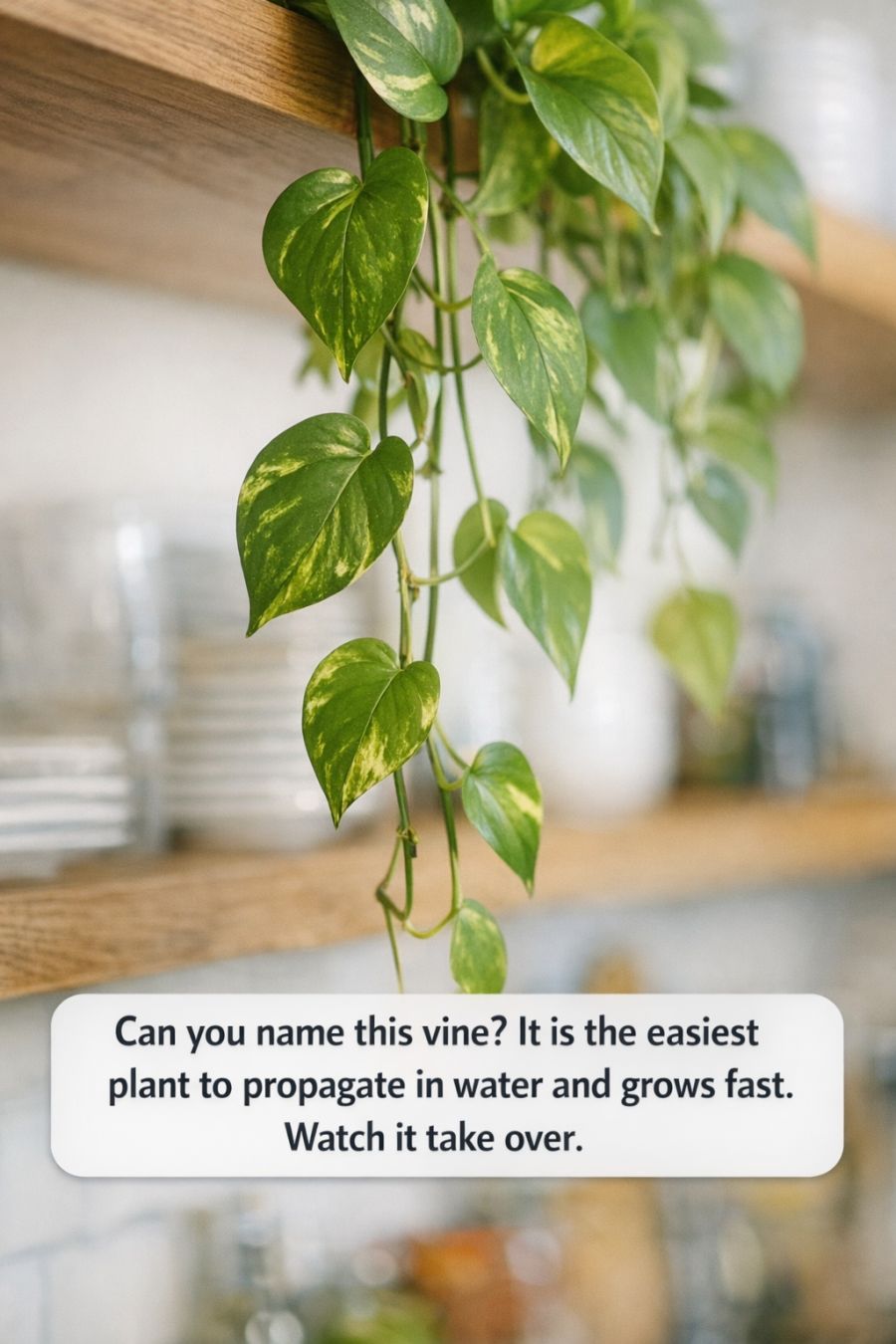
Can you name this vine? It is the easiest plant to propagate in water and grows super fast. Watch it take over
Pages: 1 2
