
Taking care of Grandma’s beloved seedlings while she’s away is a task filled with a mixture of honor and pressure. You want to do right by her, ensuring her precious plants thrive in her absence. But waking up to find tiny bugs covering the stems of these seedlings can turn a calm morning into a frantic scramble for solutions.
With a multitude of questions racing through your mind—What are these bugs? Will the seedlings survive? How do I fix this?—you’re in need of fast, effective answers. This article will guide you through identifying the pests, understanding their impact, and executing immediate and long-term solutions to protect those cherished seedlings.
1. What Those Tiny Bugs On Grandma’s Seedlings Actually Are
The tiny creatures you’ve discovered are most likely aphids, a common pest in gardens around the world. Aphids are small, pear-shaped insects, typically measuring between 1 to 3 millimeters in length. They come in various colors, including green, black, and brown, which can make them blend in with the plant stems and leaves.
Aphids feed on the sap of plants by inserting their needle-like mouthparts into the plant tissue. This not only weakens the plant by depriving it of essential nutrients but also introduces potential plant viruses. The sticky substance aphids excrete, known as honeydew, can attract other pests and lead to the growth of sooty mold, further damaging the plants.
2. How To Tell Aphids Apart From Other Plant Pests In Seconds
Identifying aphids can be done quickly by observing their distinct features. Unlike other pests, aphids have soft bodies and lack wings, although some may develop wings if the population becomes overcrowded. They often cluster in large groups, which is a telltale sign of their presence.
Another quick method to differentiate aphids is by checking for the presence of honeydew on the leaves below the affected area. If you notice a sticky residue, it is likely caused by aphids. Additionally, the presence of ants can be an indicator, as they are attracted to the sweet honeydew and often protect aphids from predators.
3. The Immediate Emergency Move: Physically Knocking Aphids Off
In an emergency, the fastest way to reduce the aphid population is to physically remove them from the plants. This can be done by gently brushing them off with your fingers or using a soft brush. It’s important to be gentle to avoid damaging the delicate seedlings.
Another effective method is using a strong stream of water to dislodge the aphids. This can be done with a spray bottle or a garden hose with a gentle setting. Ensure the water pressure is not too high to prevent damaging the seedlings, especially if they are in a fragile state.
4. Safe Sink Or Shower Method: Washing Seedlings Without Killing Them
For seedlings that are small enough to handle, the sink or shower method can be a lifesaver. Place the seedlings gently in a sink or shower and use lukewarm water to wash the aphids off. Hold the seedlings upside down if possible to prevent the soil from getting too wet.
Ensure the water is not too hot or too cold, as extreme temperatures can shock the plants. After washing, allow the seedlings to drain and dry in a well-ventilated area to prevent fungal growth.
5. Fast Natural Sprays You Can Mix From Common Kitchen Ingredients
Natural sprays can be a quick and effective way to control aphid populations. A simple solution can be made by mixing one tablespoon of dish soap with one quart of water. Spray this mixture directly onto the aphids, ensuring full coverage.
Another natural remedy involves using neem oil, which can be mixed with water and a few drops of dish soap. Neem oil disrupts the life cycle of aphids and other pests without harming beneficial insects. Always test a small section of the plant before full application to ensure there is no adverse reaction.
6. Store-Bought Solutions: When And How To Use Insecticidal Soap
Insecticidal soap is a commercially available solution specifically designed to target soft-bodied insects like aphids. It works by penetrating the insect’s outer layer, causing dehydration and death.
When using insecticidal soap, follow the instructions carefully to avoid damaging the seedlings. Apply it during cooler parts of the day to prevent sunburn and test it on a small area before full application. Reapply every few days if necessary, but ensure not to overuse as this can stress the plants.
7. Protecting Delicate Seedlings So They Don’t Collapse Or Dry Out
Ensuring the seedlings are not overwhelmed by pest control measures is crucial. After treatments, monitor the soil moisture to ensure it is neither too dry nor waterlogged. Using mulch can help retain soil moisture and protect the roots.
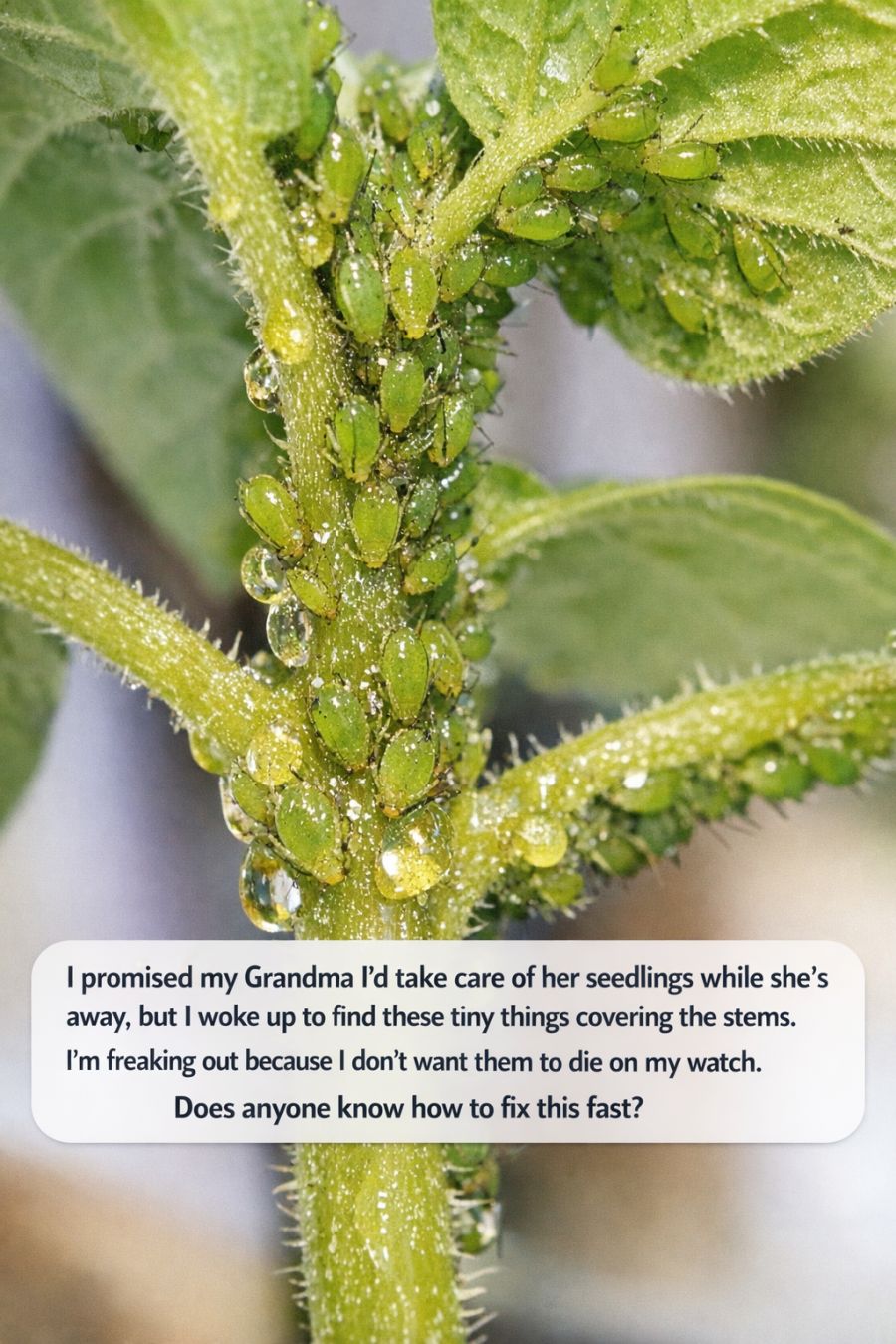
I promised my Grandma I’d take care of her seedlings while she’s away, but I woke up to find these tiny things covering the stems. I’m freaking out because I don’t want them to die on my watch. Does a
Pages: 1 2
