
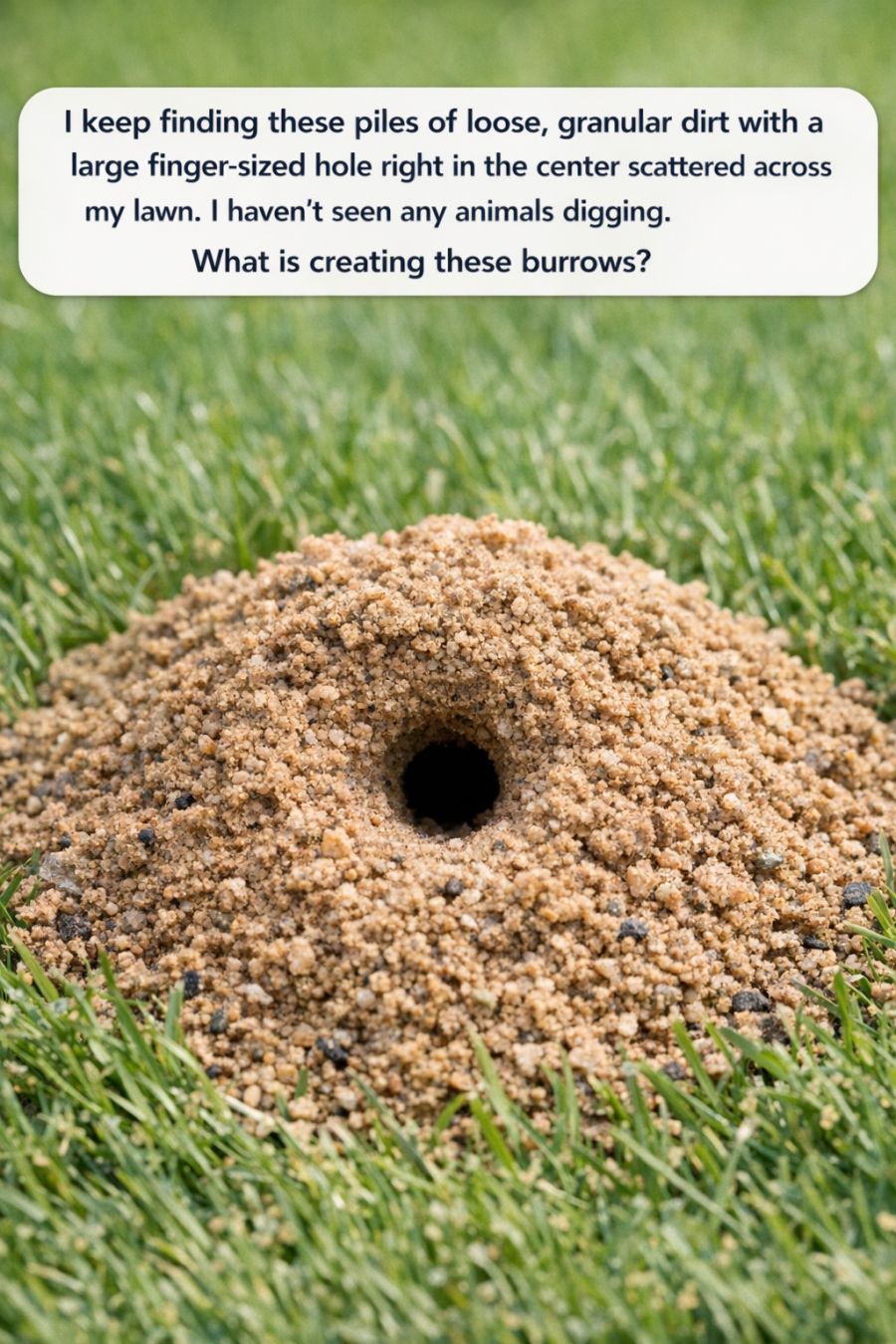
Finding mysterious piles of loose, granular dirt scattered across your lawn can be perplexing, especially when they have a large finger-sized hole at the center. These formations appear overnight, and despite your watchful eye, there’s no sign of any critter causing this disruption. The presence of these burrows raises questions about the unseen activities taking place beneath the surface of your yard.
Understanding what’s causing these disturbances is crucial, not only for the health of your lawn but also for your peace of mind. While the initial assumption might be that a small mammal is responsible, these dirt piles often indicate the presence of certain insects, specifically cicada killer wasps. These insects create subterranean homes that leave behind telltale signs above ground. Let’s delve into the details of these enigmatic burrows and uncover the secrets they hold.
1. Why Mysterious Dirt Piles With Central Holes Point to Insect Burrows
Small piles of dirt with a central hole are typically indicative of insect activity rather than mammals. The size and shape of the hole, approximately the diameter of a human finger, along with the surrounding loose soil, suggest an insect rather than a larger creature like a mole or vole. Insects that construct these types of burrows are often solitary and focused on reproduction, with the females doing most of the digging.
The dirt is usually granular because insects, unlike larger animals, move small amounts of soil at a time, creating a loose pile around the entrance of their nest. This behavior is typical of certain wasps and bees that excavate soil to create a safe and suitable environment for laying eggs and raising their young. The specific characteristics of these burrows can help identify the species responsible.
2. Meet the Culprit: Cicada Killer Wasps and Their Underground Nests
Cicada killer wasps (Sphecius speciosus) are among the largest wasps found in North America, with females reaching up to 2 inches in length. Despite their intimidating size, these wasps are solitary and generally non-aggressive towards humans. They are named for their prey—cicadas—which the female wasps paralyze and bring back to their underground nests as food for their larvae.
The female cicada killer will dig a burrow that can be up to 10 inches deep and several feet long, with a characteristic mound of dirt at the entrance. These burrows are often found in well-drained, sandy soils and can be located in lawns, gardens, or along sidewalks. The wasps prefer sunny areas that facilitate the development of their offspring.
3. How to Recognize a Cicada Killer Burrow Versus Other Lawn Pests
Identifying a cicada killer burrow involves examining the size and placement of the hole, as well as the dirt pile. The entrance hole is typically about ½ inch to 1 inch in diameter, surrounded by a mound of coarse soil. This differs from the fine, conical mounds created by ants or the plugged tunnels made by moles.
Additionally, cicada killer burrows are often found in clusters, as females tend to choose similar locations for their nests. Observing a solitary wasp entering or leaving a hole is a strong indication of a cicada killer’s presence. The time of year also provides clues, as cicada killers are most active during the late summer months when cicadas are abundant.
4. The Life Cycle of Cicada Killers and Why They Target Your Yard
The life cycle of cicada killer wasps is closely tied to the availability of cicadas, which is why these wasps become active in mid to late summer. After mating, the female wasp excavates a burrow to serve as a nest for her offspring. She paralyzes cicadas with her sting and drags them into the nest to provision her larvae.
Each burrow can contain several chambers, each with one or two cicadas and a single wasp egg. The larva feeds on the cicada, developing through the summer and fall before overwintering in the burrow as a pupa. By the following summer, the adult wasp emerges to continue the cycle. Lawns with sandy, well-drained soil are ideal for these wasps to dig their burrows, making residential yards a common target.
5. What Those Granular Dirt Piles Reveal About Activity Below Ground
The presence of granular dirt piles indicates that active excavation is taking place below ground. Each pile represents the labor of a female wasp, diligently moving soil out to create a suitable nesting chamber. The size of the dirt pile can give clues about the extent of the burrow and the number of chambers within.
Observing these piles can also help gauge the level of activity in your yard. A high number of dirt mounds can suggest a thriving population of cicada killers, indicating a healthy local ecosystem with plenty of cicadas to sustain the wasps’ life cycle.
6. Are Cicada Killer Wasps Dangerous to People and Pets?
While their size and buzzing flight may be alarming, cicada killer wasps are generally not dangerous to humans or pets. The females have a sting, but they are not aggressive and will typically only sting if handled or threatened. Males, which are often seen patrolling the area, cannot sting at all.
These wasps are solitary and do not defend their nests aggressively like social wasps or bees. Their focus is on provisioning their nests and ensuring the survival of their young. If left undisturbed, they pose little risk to people and pets enjoying the yard.
7. Common Look-Alikes: Moles, Ground Bees, Ants, and Other Burrowers
Several other creatures can create burrows or mounds in lawns, and distinguishing between them is important for correct identification. Moles create raised tunnels across lawns but generally do not leave open holes. Ground bees, like miner bees, can also create small mounds but tend to have smaller entrance holes.
Ants often create small, fine mounds with tiny entrance holes, while vole activity is marked by surface runways rather than distinct burrows. Observing the specific characteristics of the mound and hole, along with the activity of any insects present, can help differentiate between these lawn inhabitants.
I keep finding these piles of loose, granular dirt with a large finger-sized hole right in the center scattered across my lawn. I haven’t seen any animals digging. What is creating these burrows?
Pages: 1 2
