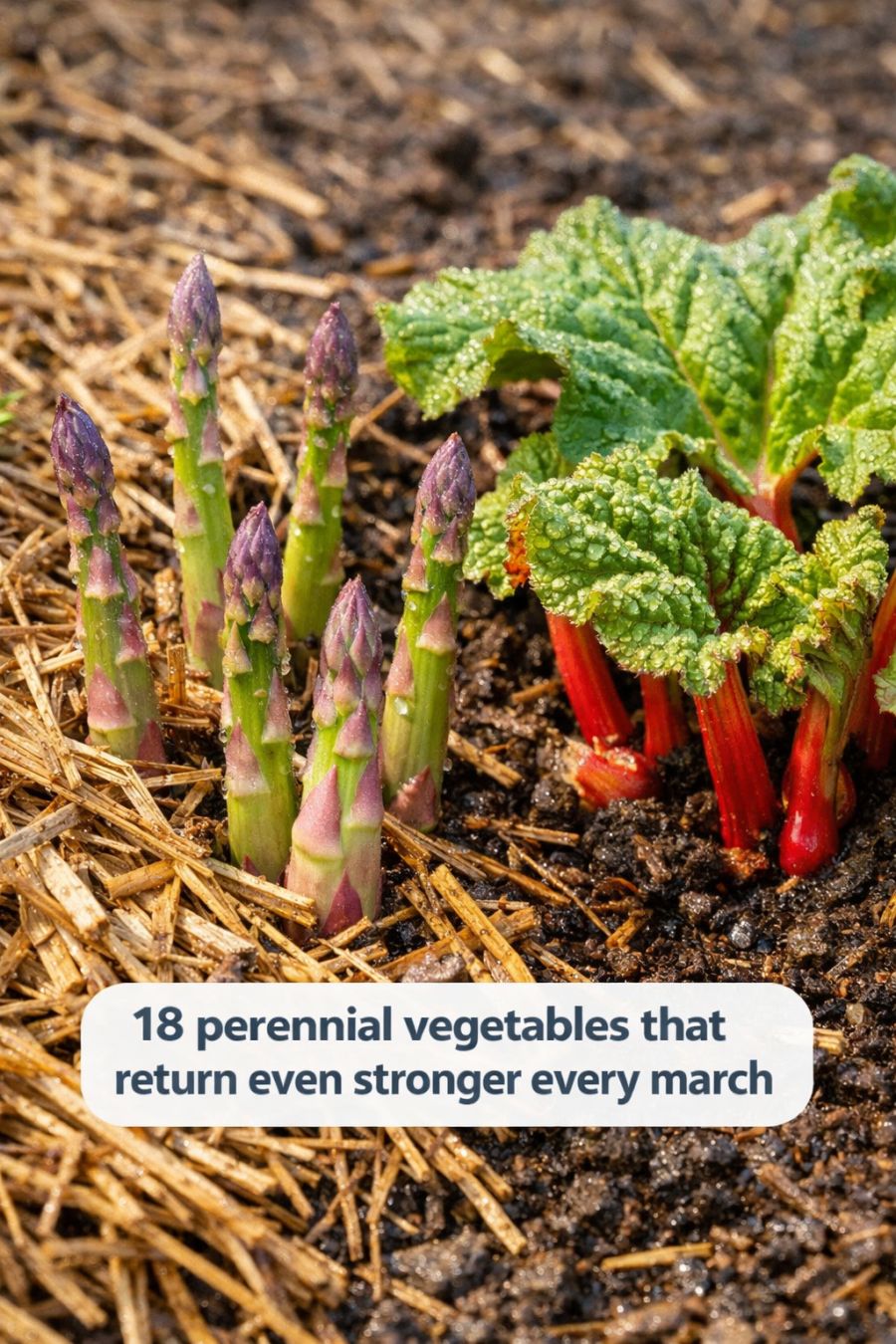
As spring approaches, gardeners eagerly anticipate the return of greenery and the bounty of perennial vegetables. Unlike annuals, these plants return year after year, offering a sustainable and reliable source of food with less effort. By investing in perennial vegetables, you can create a low-maintenance garden that provides harvests from early spring through late fall.
March is a key month for many perennial vegetables as they begin to emerge with renewed vigor. This article highlights 18 perennial vegetables that not only survive the winter but thrive as they return, often stronger and more productive each year. Whether you are a seasoned gardener or a beginner, these plants can provide a foundation for a resilient and productive garden.
1. Asparagus: The Classic March Harvest Powerhouse
Asparagus is one of the most well-known perennial vegetables, prized for its tender and flavorful spears. Once established, an asparagus bed can produce for 20 years or more. In March, as temperatures rise, asparagus crowns awaken and send up spears that can grow several inches in a single day. These early shoots are a delicacy, tender and full of flavor.
Asparagus requires patience initially, as it should not be harvested heavily until the third year after planting. However, the wait is worthwhile, as a mature asparagus bed can yield up to 2 pounds of spears per 10-foot row each spring. With proper care, including regular weeding and mulching, asparagus can thrive and produce abundantly for decades.
2. Rhubarb: Tart Stalks That Burst Back With Color
Rhubarb is a hardy perennial known for its large, vibrant stalks that add a tart flavor to pies and desserts. Emerging in early spring, rhubarb’s red or green stalks are a welcome sight, often appearing as early as March. Rhubarb thrives in cooler climates and can remain productive for 10 to 15 years.
To ensure a healthy rhubarb patch, plant crowns in rich, well-drained soil with plenty of organic matter. Allow plants to establish for a couple of years before harvesting heavily. Once established, a single plant can produce several pounds of stalks each season. Remember to remove any flower stalks to direct the plant’s energy towards producing more edible stalks.
3. Chives: Early Spring Onions You Can Cut Again and Again
Chives are a versatile perennial herb that adds a mild onion flavor to dishes. Emerging early in the spring, chive plants form dense clumps that can be harvested repeatedly throughout the growing season. The narrow, hollow leaves can be snipped as needed, promoting continued growth.