
Imagine stepping out into your garden, breathing in the fresh morning air, only to be taken aback by a startling sight clinging to the trunk of your maple tree. A mysterious, hollow figure, resembling a brown monster with intimidating claws, catches your eye. It appears almost alive, yet eerily still, prompting a flurry of questions and concerns about its origin.
Upon closer inspection, you realize this peculiar shell isn’t some garden invader but rather a remnant from a fascinating natural process. This discovery can spark curiosity and lead to a deeper understanding of the complex and wondrous cycles of life happening right in your backyard.
1. The “Monster” On Your Maple Tree Is a Cicada Shell
The mysterious, hollow form attached to your tree is likely the exoskeleton of a cicada. Cicadas are insects belonging to the order Hemiptera, known for their distinctive life cycles and loud, summer songs. The shell you found is the exuviae, the outer skin that cicadas shed as they transition from their immature nymph stage to adulthood.
Typically, these exoskeletons are about 1 to 1.5 inches long, with a translucent brown hue. They have a characteristic split along the back, which is the exit point for the adult cicada. Despite their monstrous appearance, these shells are completely harmless and are a natural part of the insect’s development.
2. Why Cicadas Leave Behind These Hollow, Brown Exoskeletons
Cicadas undergo a process known as molting, where they shed their old exoskeleton to allow for growth. This is essential because their rigid exoskeleton does not expand. As the nymphs mature, they outgrow their current shell and need to develop a new, larger one.
The shedding of the exoskeleton, or ecdysis, occurs when the nymph climbs out of the ground and attaches itself to a vertical surface, like your maple tree. The exoskeleton splits, and the adult cicada emerges, leaving behind the empty shell as evidence of its transformation.
3. How Cicadas Transform: From Underground Nymph To Winged Adult
Cicadas spend most of their lives underground as nymphs, feeding on the sap from plant roots. Depending on the species, this subterranean phase can last anywhere from a few years to over a decade. When they are ready to mature, the nymphs tunnel to the surface, usually during the warm months of late spring and early summer.
Once above ground, the nymphs climb onto a tree or other structure, where they molt one final time. The adult cicada emerges, initially soft and vulnerable, but its body hardens within a few hours. The newly emerged adults then spend the next several weeks engaging in mating and laying eggs, continuing the cycle.
4. Key Features That Prove It’s a Cicada Exoskeleton, Not a Pest
Cicada exoskeletons are often mistaken for pests due to their somewhat daunting appearance. However, they can be identified by several key features: the size and shape match the adult cicada, with a distinct split down the back and the presence of claw-like legs used for climbing.
Moreover, cicada exoskeletons are hollow and light, easily crumbling if handled. Unlike harmful pests, these shells do not pose any threat to plants or humans and are simply the remnants of a natural growth process.
5. Why Cicada Shells Cling So Tightly To Tree Bark
The cicada exoskeletons cling tightly to surfaces due to the nymph’s strong legs, which are adapted for climbing. These legs have tiny claws that help the cicada maintain a secure grip on vertical surfaces, allowing the emerging adult to safely exit through the split in the back of the shell.
Additionally, the nymph attaches firmly to ensure it remains stationary during the molting process, which can take several hours. This stability is crucial for the successful emergence of the adult cicada.
6. When You’re Most Likely To Spot Cicada Shells In Your Yard
Cicada shells are most commonly found during the late spring and early summer months, coinciding with the emergence of adult cicadas. The exact timing depends on the species and geographic location.
Some species, like the periodical cicadas, have synchronized emergences every 13 or 17 years, resulting in large numbers of shells and adults appearing simultaneously. Others, known as annual cicadas, emerge every year, albeit in smaller, less synchronized numbers.
7. Are Cicadas Harmful To Your Maple Tree Or Garden?
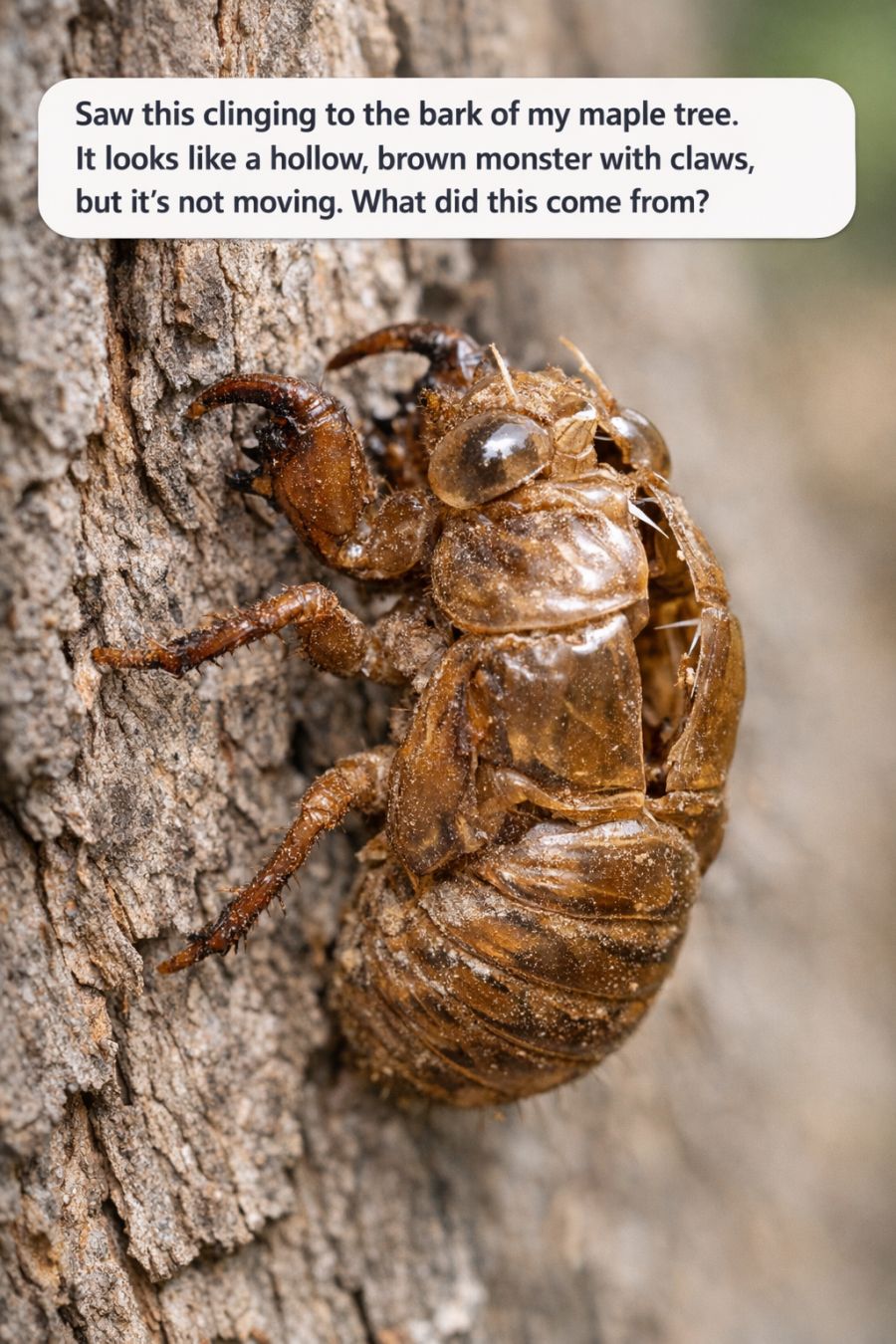
Saw this clinging to the bark of my maple tree. It looks like a hollow, brown monster with claws, but it’s not moving. What did this come from?
Pages: 1 2
