
To use this trick, simply microwave your vegetable and fruit scraps on high for about a minute before adding them to the compost. Be sure to let them cool before mixing them into the pile to avoid killing beneficial microbes with excessive heat.
5. Use Shredded Newspaper for Carbon Balance
Shredded newspaper is an excellent addition to your compost, serving as a carbon-rich material that balances out nitrogen-heavy green waste. It’s important to ensure the newspaper is shredded to increase surface area and promote faster decomposition.
Add a layer of shredded newspaper every time you add a fresh batch of kitchen scraps or grass clippings. This will help maintain the carbon to nitrogen ratio, preventing the pile from becoming too wet and smelly. Ensure that the newspaper is non-glossy and free from colored inks, as these can introduce toxic substances into your compost.
6. Incorporate Hair Clippings to Increase Protein Content
Hair clippings, whether from humans or pets, are a surprisingly effective addition to your compost pile. They contain nitrogen and proteins, which are essential for microbial growth. Scatter the clippings throughout the compost to prevent them from matting together, which can impede airflow.
It’s advisable to use hair clippings in moderation, as they decompose slowly. A small handful of hair clippings per cubic foot of compost will provide the necessary nutrients without overwhelming the pile. Over time, they will break down and contribute to the overall structure and nutrient content of the compost.
7. Add Crushed Eggshells for Calcium Enrichment
Eggshells are a natural source of calcium, an essential nutrient for plant growth. Before adding them to your compost, it’s beneficial to crush the eggshells into small pieces to speed up the decomposition process.
Add the crushed eggshells to your compost pile, mixing them in with other materials. Not only will they contribute calcium, but they will also help improve the soil structure by providing grit, which is particularly beneficial for aerating heavy soils.
8. Pour Coca-Cola to Accelerate Composting
Coca-Cola, with its high sugar and acid content, can be used to speed up the composting process. The sugars in the soda feed the bacteria and fungi in the compost, while the acidity helps break down organic material.
Pour about one cup of Coca-Cola over your compost pile once a month. Be careful not to overdo it, as excessive sugar can attract pests and create an imbalance in the compost. This trick works best when combined with regular turning of the compost to ensure even distribution and aeration.
9. Bury Banana Peels for Potassium Infusion
Banana peels are rich in potassium, an essential nutrient for plant health. Burying them in your compost pile allows them to break down slowly, releasing potassium and other nutrients into the soil.
To maximize their benefits, chop the banana peels into small pieces before burying them in the compost. This will help them decompose more quickly and evenly. Regularly turning the compost will also help distribute the nutrients throughout the pile.
10. Use Baking Soda to Reduce Odors
Baking soda is well-known for its odor-neutralizing properties, and it can be a useful tool in managing compost odors. Sprinkle a small amount of baking soda over your compost pile if you notice any unpleasant smells.
It’s important to use baking soda sparingly, as too much can alter the pH balance of the compost. A light dusting every few weeks should be sufficient to keep odors at bay without affecting the microbial activity necessary for decomposition.
11. Throw in Citrus Peels to Deter Pests
Citrus peels have a natural pest-repelling quality due to their strong scent and acidic nature. Adding citrus peels to your compost can help deter pests such as ants and rodents.
Chop the peels into small pieces to speed up their decomposition and ensure they are evenly distributed throughout the compost. While they can be beneficial, use them in moderation to avoid making the compost too acidic, which can slow down the decomposition process.
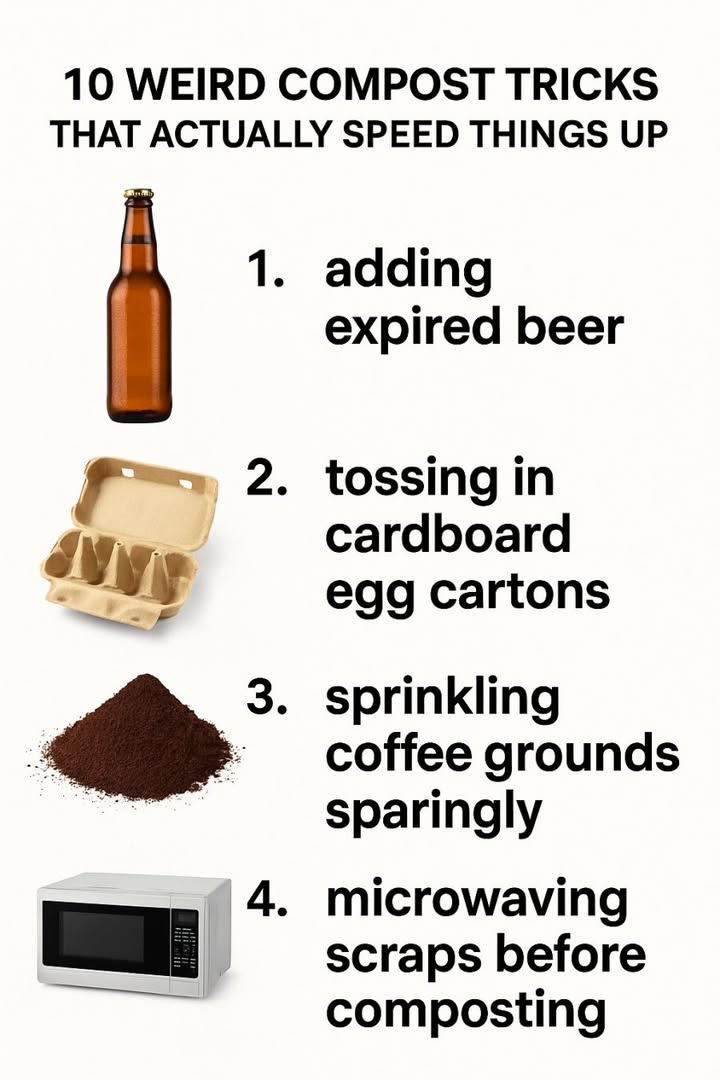
10 weird compost tricks that actually speed things up
Pages: 1 2
