
6. Adding a Pinch of Hydrogen Peroxide To Boost Oxygen and Sterilize
Hydrogen peroxide is a versatile agent that can both sterilize seeds and improve oxygen availability during soaking. By adding a small amount, usually a 3% solution at a ratio of 1 teaspoon per cup of water, gardeners can reduce the risk of fungal infections and enhance seed respiration.
The oxygen released by the breakdown of hydrogen peroxide can stimulate faster germination by improving cellular respiration processes in the seed. This method is particularly beneficial for seeds prone to damping-off, a common fungal disease that affects seedlings.
7. Epsom Salt Soaks To Prime Seeds With Magnesium
Epsom salt, chemically known as magnesium sulfate, can be used in seed soaking solutions to provide essential nutrients that aid in germination and early seedling growth. Magnesium is a crucial component of chlorophyll, the molecule responsible for photosynthesis.
By dissolving a small amount of Epsom salt, approximately 1 tablespoon per gallon of water, into the soaking solution, seeds can absorb this mineral, potentially leading to more vigorous growth. This is particularly beneficial for seeds of plants that are heavy magnesium feeders, such as tomatoes and peppers.
8. Chamomile Tea Soaks To Fight Fungus and Damping-Off
Chamomile tea is a natural antifungal agent that can be used to soak seeds, offering protection against diseases like damping-off. The tea contains compounds such as chamazulene and bisabolol, which have antimicrobial properties.
To prepare a chamomile soak, steep a chamomile tea bag in hot water, let it cool, and use it as the soaking liquid. This method not only helps in preventing fungal attacks but also provides a gentle, natural environment for seeds to germinate.
9. pH-Tuned Soaks: Adjusting Acidity for Faster Sprouting
The pH level of the soaking solution can have a significant impact on seed germination. Many seeds prefer a slightly acidic environment, which can be achieved by adding a few drops of vinegar or lemon juice to the soak water.
Maintaining a pH level between 5.5 and 6.5 can help improve nutrient availability and activate enzymes that aid germination. It’s important to test the pH and ensure it remains within this optimal range, as overly acidic conditions can be detrimental.
10. Using Air Pumps or Frequent Stirring To Oxygenate Soak Water
Oxygen is a critical component of seed respiration during germination. To ensure seeds have adequate oxygen, gardeners can use an aquarium air pump to aerate the soaking water, or simply stir the water frequently.
This increased oxygenation can prevent seeds from becoming waterlogged and promote faster, more uniform germination. Seeds like sunflower and pumpkin, which are larger and more prone to oxygen deprivation, particularly benefit from this method.
11. Rinse, Drain, and Plant: Post-Soak Steps That Lock In Speed
After soaking, it’s essential to rinse seeds thoroughly to remove any residual soaking solution, which might otherwise inhibit growth. Draining the seeds well ensures they are not overly wet when planted, reducing the risk of rot.
Planting the seeds immediately after they have been rinsed and drained locks in the benefits of soaking. Ensuring the soil is well-aerated and at the appropriate temperature will further enhance germination speed, allowing the seeds to transition smoothly from soaking to sprouting.
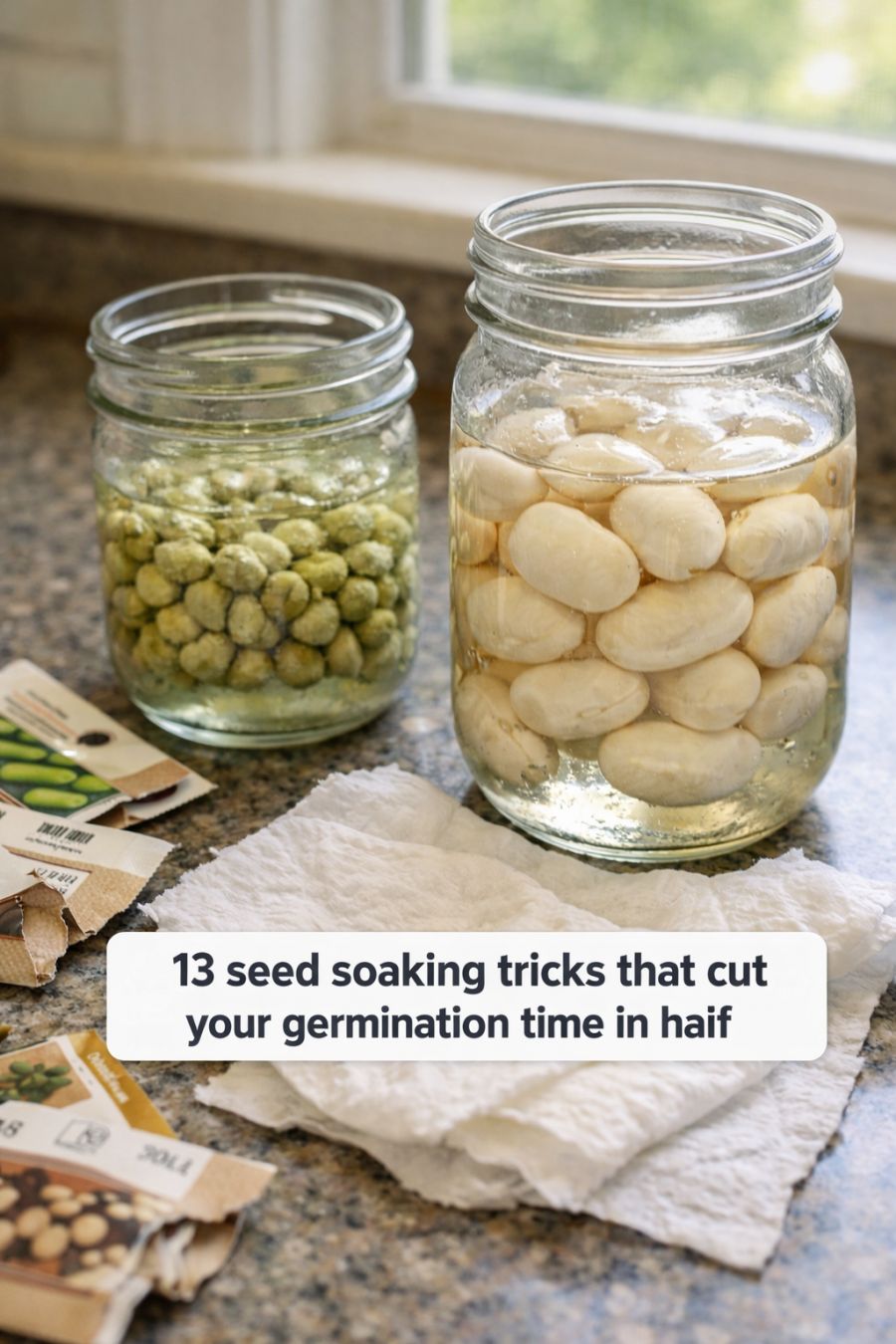
13 seed soaking tricks that cut your germination time in half
Pages: 1 2
