
7. Use Garden Hoses and Sprinklers for Ice-Shell Protection
While it may seem counterintuitive, using water can protect plants from frost through a process known as ice-shell protection. Before nightfall, lightly spray the plants with water using a garden hose or sprinkler. As the temperature drops, a thin layer of ice forms, releasing latent heat that prevents the plant tissues from freezing.
This method is most effective in areas where temperatures hover around freezing and should be used with caution. Avoid excessive watering, as too much ice can weigh down and damage plants. This technique works well for fruit trees and other larger plants that are difficult to cover.
8. Stabilize Covers With Bricks, Boards, and Cinder Blocks
To keep frost covers securely in place, use heavy objects such as bricks, boards, and cinder blocks. These items help anchor the covers, preventing them from being blown away by the wind. Place these weights around the perimeter of the cover, ensuring they are in contact with the ground to maintain a seal.
This approach is particularly useful for larger coverings made from tarps or blankets that cover extensive areas. By securing the edges, you ensure that the insulating properties of the cover are maximized, offering better protection for your plants.
9. Raise Plants Off Cold Ground Using Crates and Pallets
Cold ground can quickly sap heat from pots and containers, so raising them off the ground can help insulate them. Wooden crates and pallets are perfect for this purpose. Elevate your pots by placing them on top of these platforms, which create an air gap between the ground and the plant.
This technique allows for better air circulation and reduces the risk of frost damage to the roots. It’s an easy and effective way to use materials you might already have lying around, and it can make a significant difference in protecting your plants during cold snaps.
10. Harness Car Heat and Windshields for Portable Warmth
If you have potted plants that are particularly sensitive to frost, consider using your car as a temporary greenhouse. During the day, park the car in a sunny spot to allow it to warm up. In the evening, place the pots inside the car, utilizing the trapped heat for overnight protection.
Be sure to crack a window to prevent excessive humidity and potential mold growth. This method is ideal for small potted plants and seedlings that are easy to move and require extra care during frost warnings.
11. Store Tools and Hoses Smartly to Prevent Freeze Damage
Garden tools and hoses are susceptible to damage when left out in freezing temperatures. Store them in the garage or shed to prevent cracking and other cold-related issues. Drain hoses thoroughly to remove any water that could freeze and cause damage.
For added protection, coil hoses neatly and store them off the ground on hooks or shelves. This not only extends their lifespan but also ensures they are ready to use when needed. Proper storage of garden tools and hoses is a simple but important step in winter garden maintenance.
12. Reuse Newspaper and Paper Bags as Last-Minute Insulation
Newspapers and paper bags can be used for quick, temporary insulation when frost is expected. Crumple newspaper and place it around the base of plants, or use paper bags to cover smaller plants and seedlings. These materials create a barrier that traps heat and protects against cold air.
This hack is an excellent last-minute solution when you need to act quickly. While not as durable as some other options, it can provide adequate protection for a short period. Plus, it’s an eco-friendly way to repurpose materials that might otherwise go to waste.
13. Create Windbreaks With Ladders, Screens, and Panels
Wind can exacerbate frost damage by lowering the effective temperature around plants. Create windbreaks using ladders, screens, or panels placed strategically around vulnerable areas. These barriers reduce wind speed and help maintain a warmer microclimate for your plants.
Arrange the windbreaks so they block prevailing winds without shading the plants from sunlight. This method is particularly helpful in open areas where wind exposure is a concern. By reducing wind chill, you can significantly increase the chances of your plants surviving a frost event.
14. Keep a Grab-and-Go Frost Kit Ready in the Garage
Prepare a frost kit with all the essentials needed for quick action when frost is forecasted. Include items such as blankets, tarps, ropes, and weights, as well as scissors and tape for securing covers. Having everything in one place allows you to respond swiftly to unexpected weather changes.
Store the kit in an easily accessible location in the garage, so you’re always ready to protect your plants at a moment’s notice. This proactive approach ensures you’re not caught off guard and can make all the difference in preserving your garden during cold snaps.
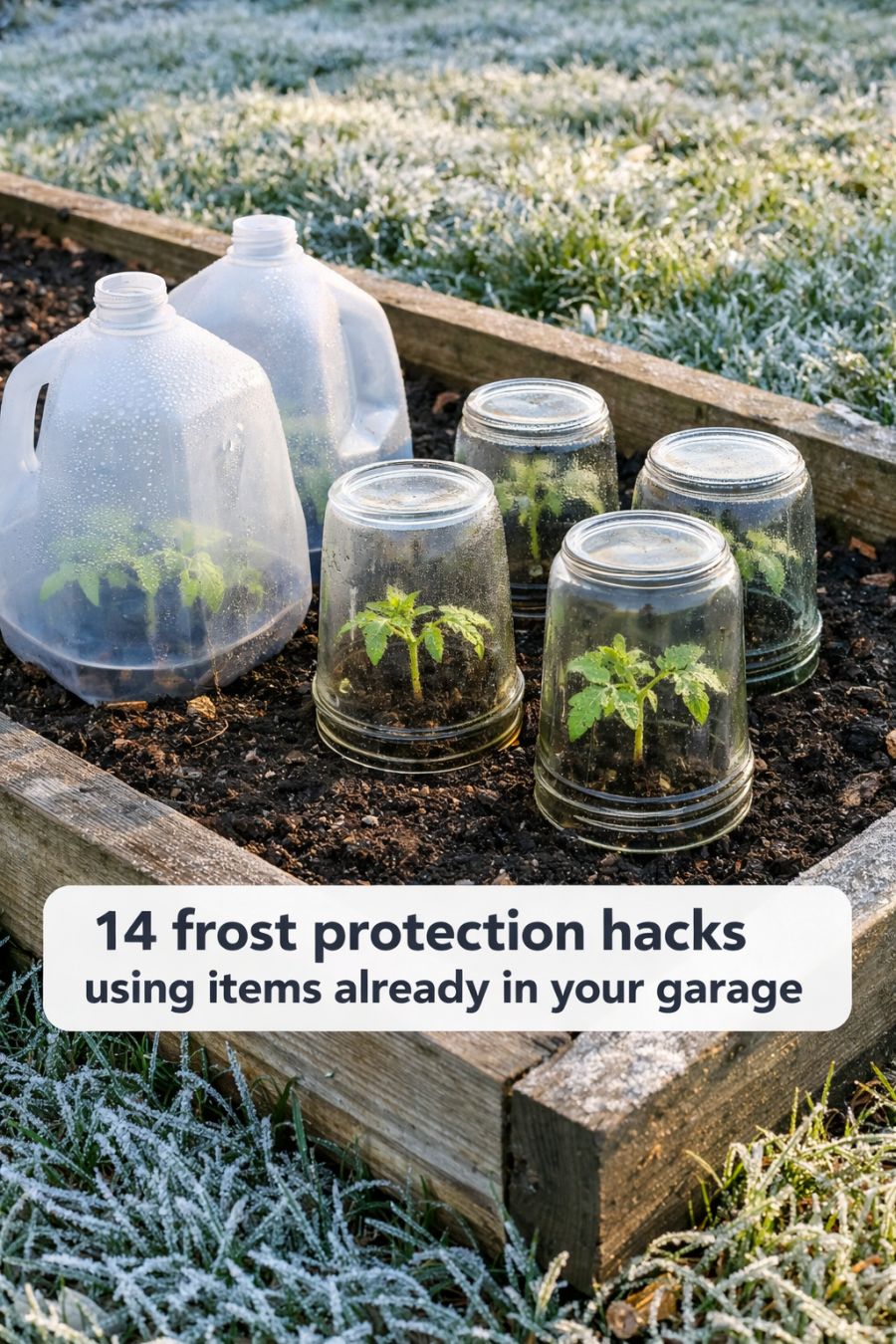
14 frost protection hacks using items already in your garage
Pages: 1 2
