
12. Neglecting Seasonal Mulch Adjustment
Mulching needs can change with the seasons, and failing to adjust your mulch accordingly can lead to problems. In winter, a thicker layer may be beneficial for insulation, while in summer, a thinner layer may be preferable to avoid overheating the soil.
Regularly assess your mulch layer and make adjustments based on seasonal needs to ensure optimal plant health and growth throughout the year.
13. Overlooking the Impact on Soil pH
Some mulches, particularly organic ones like pine needles, can alter soil pH over time. If your plants require a specific pH range, this can become an issue.
Conduct regular soil tests to monitor pH levels and choose mulches that will either maintain or adjust to the desired pH for your plants. This proactive approach will help you avoid nutrient imbalances and ensure healthy plant growth.
14. Not Taking Pest Control into Account
Certain types of mulch can attract pests, such as termites or rodents. If pest control is a concern in your area, choosing the right mulch type is crucial.
Cedar and cypress mulches are known for their natural pest-repelling properties and can be a good choice if you’re worried about unwanted visitors in your garden.
15. Misjudging Mulch’s Aesthetic Impact
While mulch serves a functional purpose, it also plays a role in the visual appeal of your garden. Choosing a mulch color and texture that complements your garden design is important.
Consider the overall look you want to achieve and select a mulch that enhances your garden’s aesthetic. This attention to detail can elevate the beauty of your outdoor space while still providing all the functional benefits of mulching.
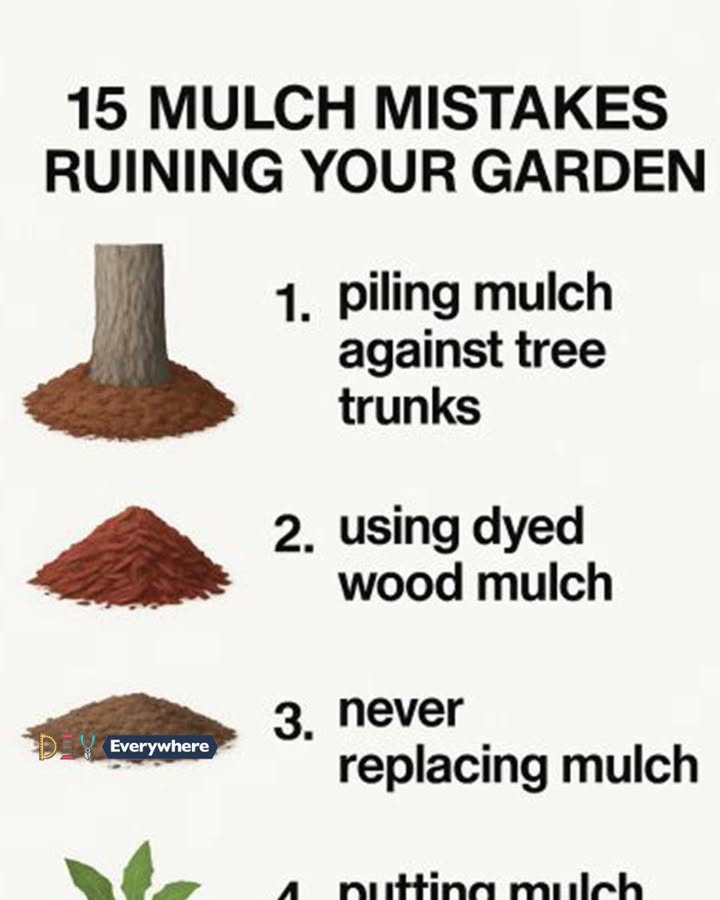
15 mulch mistakes ruining your garden
Pages: 1 2
