
4. Chives: Perennial Powerhouse That Springs Back to Life
Chives are a hardy perennial that springs back to life with vigor when planted in March. Known for their mild onion flavor, chives can be sown directly into the ground or started indoors and transplanted once the soil is workable. Space plants about 12 inches apart to allow for clump expansion.
Chives prefer full sun and well-drained soil, and they require minimal maintenance. As the temperatures rise, chives will produce vibrant purple flowers that are also edible. Regularly snip the leaves to encourage new growth, and enjoy the fresh, onion-like flavor in salads, soups, and garnishes.
5. Dill: Feathery Giant That Rockets Up in Cool Soil
Dill is a fast-growing herb that flourishes in the cool, moist conditions of early spring. When planting dill in March, sow seeds about 1/4 inch deep and 12 inches apart to accommodate its tall, feathery growth. Under optimal conditions, dill can grow up to 3 feet tall, making it a striking addition to any garden.
Dill thrives in full sun and well-drained soil, and it requires minimal care beyond regular watering. The leaves, seeds, and flower heads are all edible, providing a fast-growing herb that adds a fresh, tangy flavor to dishes. Be sure to harvest dill regularly to prevent it from bolting too quickly as temperatures rise.
6. Mint: Vigorous Spreader That Explodes in Moist March Beds
Mint is a robust herb that can explode with growth when planted in March, thanks to its preference for moist, well-drained soil. Known for its invasive nature, it is often best to plant mint in containers or dedicated garden beds to prevent it from overtaking other plants.
Mint varieties, such as spearmint and peppermint, benefit from partial to full sun exposure. Once established, mint can be harvested regularly to encourage bushier growth. It is a hardy perennial that provides a constant supply of fresh leaves for teas, desserts, and savory dishes throughout the growing season.
7. Oregano: Rugged Mediterranean Herb That Thrives in Early Warmth
Oregano is a rugged herb that thrives when planted in the early warmth of March. Native to the Mediterranean, oregano prefers full sun and well-drained soil. Sow seeds or plant seedlings about 12 inches apart to allow for its spreading growth habit.
Oregano is a perennial that can reach heights of 18 to 24 inches. The leaves are most flavorful when harvested just before the plant flowers. Regular pruning encourages dense growth and a continuous supply of leaves for culinary use. Oregano’s robust flavor is a staple in Italian and Greek cuisines, adding depth to sauces, meats, and vegetables.
8. Thyme: Low-Growing Aromatic That Fills In Fast
Thyme is a low-growing aromatic herb that fills in garden spaces quickly when planted in March. It prefers full sun and well-drained soil, making it an excellent choice for rock gardens or borders. Plant thyme seedlings or sow seeds about 8 inches apart to allow for spreading.
As a perennial herb, thyme is drought-tolerant once established and requires minimal maintenance. Regular harvesting of the stems promotes bushier growth and enhances the plant’s aromatic qualities. Thyme is a versatile herb used to season meats, soups, and stews, and its small, fragrant leaves can be harvested throughout the growing season.
9. Sage: Woody Herb That Surges When Planted Just Before Heat
Sage is a woody herb that benefits from being planted just before the heat of summer, making March an ideal time to get it in the ground. Sage thrives in full sun and well-drained soil. Space plants about 24 inches apart to accommodate their bushy growth habit.
Sage is a perennial that can grow up to 2 feet tall and wide. Its leaves are best harvested before the plant flowers, as this is when their flavor is most concentrated. Sage is a staple in stuffing, poultry dishes, and herbal teas, and its hardy nature makes it a reliable addition to any herb garden.
10. Rosemary: Sun-Loving Evergreen That Establishes Strong Roots
Rosemary is a sun-loving evergreen herb that establishes strong roots when planted in March. This Mediterranean native prefers full sun and well-drained soil, making it suitable for dry, sunny spots in the garden.
Rosemary can grow into a large shrub, reaching heights of 3 to 5 feet in optimal conditions. Space plants about 2 to 3 feet apart to allow for their expansive growth. Regular pruning keeps rosemary compact and encourages new growth. Its aromatic leaves are perfect for flavoring meats, breads, and stews, and the plant’s resilience makes it a long-lasting addition to the garden.
11. Tarragon: Delicate Gourmet Herb That Takes Off in Cool Springs
Tarragon is a delicate gourmet herb that benefits from the cool conditions of early spring planting. There are two main types: French and Russian, with French tarragon being preferred for culinary use due to its superior flavor.
Plant tarragon in full sun and well-drained soil, spacing plants 18 to 24 inches apart. French tarragon is typically propagated from cuttings rather than seeds. This herb can reach 2 to 3 feet in height and is best harvested before flowering to ensure the most flavorful leaves. Tarragon is a key ingredient in French cuisine, particularly in sauces and dressings.
12. Marjoram: Sweet, Tender Herb That Loves Mild March Days
Marjoram is a sweet, tender herb that appreciates the mild days of March for planting. It prefers full sun and well-drained soil. Space plants about 12 inches apart to allow for their spreading habit.
Marjoram is often grown as an annual, though in warm climates it can be a perennial. The plants reach about 12 to 18 inches in height and produce small, aromatic leaves that are perfect for seasoning soups, salads, and meats. Regular harvesting of the leaves encourages bushier growth and prolongs the harvest period.
13. Lemon Balm: Fragrant Pollinator Magnet That Spreads Quickly
Lemon balm is a fragrant herb that spreads quickly when planted in the cool, moist conditions of March. This member of the mint family prefers partial to full sun and well-drained soil. Space plants about 12 inches apart to accommodate their spreading nature.
Lemon balm is a perennial that can grow up to 2 feet tall. Its lemon-scented leaves are attractive to pollinators and can be used in teas, salads, and desserts. Regular pruning helps control its growth and encourages a more compact form. Lemon balm is also known for its calming properties and is often used in herbal remedies.
14. Fennel: Tall, Architectural Herb That Shoots Up in Cool Weather
Fennel is a tall, architectural herb that thrives when planted in the cool weather of March. Sow seeds directly into the garden about 12 inches apart. Fennel prefers full sun and well-drained soil.
Fennel can grow up to 5 feet tall and is known for its feathery foliage and licorice-flavored seeds. Both the seeds and the bulbous base can be harvested for culinary use, adding a sweet, anise-like flavor to dishes. Fennel’s tall stature makes it a striking addition to the garden, and its seeds are a favorite of beneficial insects.
15. Lovage: Celery-Flavored Giant That Leaps Up From Early Planting
Lovage is a celery-flavored herb that leaps up with growth when planted in March. This hardy perennial prefers full sun to partial shade and well-drained soil. Space plants about 24 inches apart to accommodate their large size.
Lovage can grow up to 6 feet tall, with leaves, stems, and seeds all usable in cooking. Its flavor is similar to celery but more intense, making it a great addition to soups, stews, and broths. Lovage is a vigorous grower and can quickly become a centerpiece in the herb garden, providing a perennial source of flavor.
16. Chamomile: Gentle Blooms That Carpet Beds From March Starts
Chamomile is a gentle herb known for its daisy-like blooms that carpet garden beds when planted in March. It prefers full sun and well-drained soil. Sow seeds directly into the garden and lightly cover, as they require light to germinate.
German chamomile is an annual that can grow up to 2 feet tall, while Roman chamomile is a perennial groundcover. Both varieties are prized for their calming properties and are commonly used to make tea. Regular harvesting of the flowers encourages continuous blooming and provides a steady supply for drying and brewing.
17. Sorrel: Tangy Leafy Herb That Explodes in Chilly Soil
Sorrel is a tangy, leafy herb that thrives when planted in the chilly soil of March. It prefers full sun to partial shade and well-drained soil. Sorrel can be sown directly into the garden, with seeds spaced about 12 inches apart.
Sorrel is a perennial that forms dense clumps of arrow-shaped leaves, reaching up to 2 feet in height. Its lemony flavor is ideal for salads, soups, and sauces. Regular harvesting prevents the plant from becoming too woody and encourages new, tender growth. Sorrel is one of the first greens to appear in spring, providing fresh leaves early in the season.
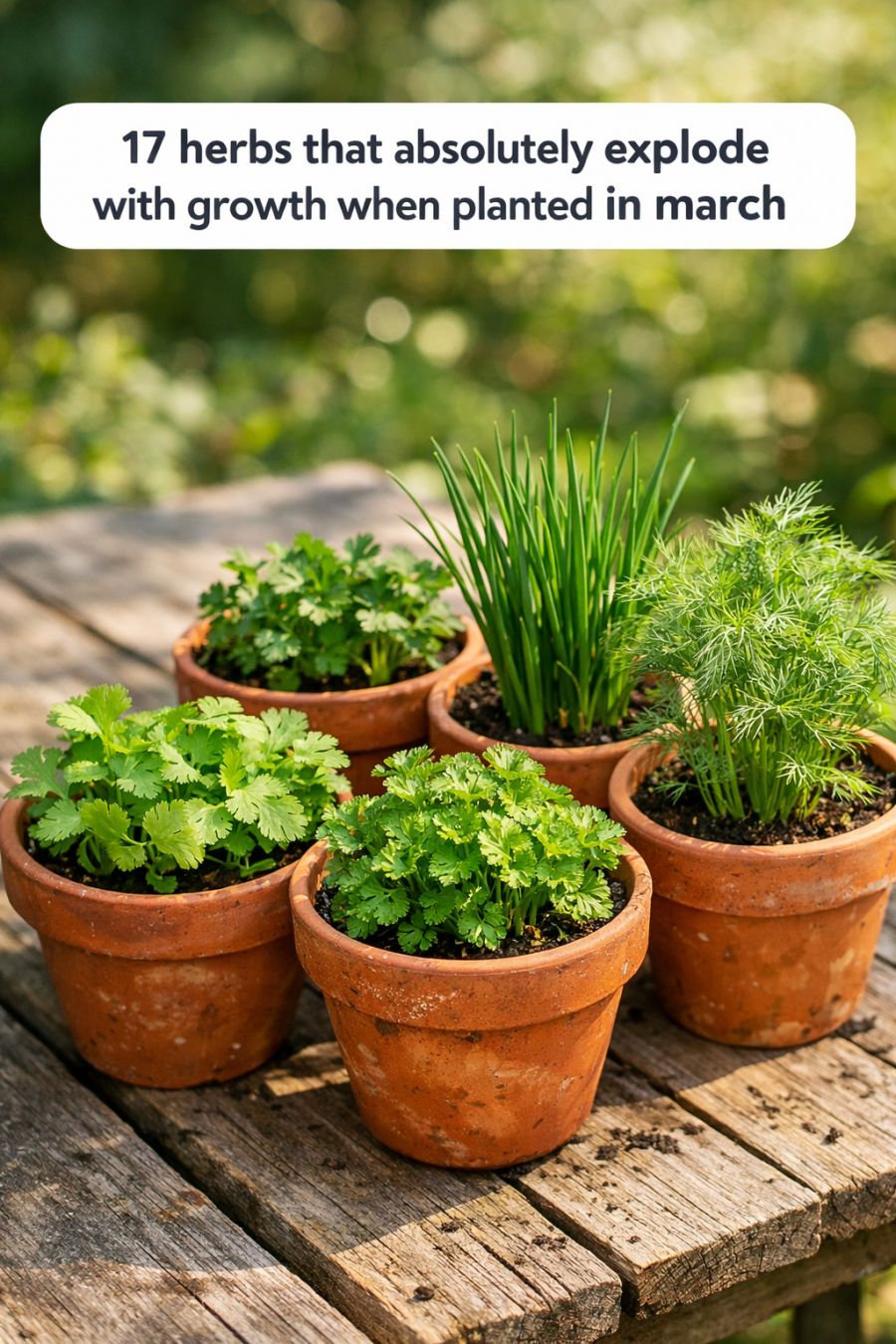
17 herbs that absolutely explode with growth when planted in march
Pages: 1 2
