
As the winter months approach, gardeners face the perennial challenge of protecting their plants from frost damage. While purchasing expensive frost covers and specialized gear is an option, you might be surprised at how many effective solutions you already have in your garage. With a bit of creativity and resourcefulness, everyday items can be repurposed to provide the necessary protection against the cold.
This article explores 14 innovative frost protection hacks using items commonly found in the garage. From cardboard boxes to plastic bottles, these DIY solutions are not only cost-effective but also eco-friendly. Let’s dive into these practical tips to ensure your garden survives the frost and thrives come spring.
1. Use Cardboard Boxes as Overnight Plant Shields
Cardboard boxes are excellent insulators and can be strategically placed over plants to shield them from frost. The air trapped within the box acts as an insulating layer, reducing the risk of freezing temperatures damaging delicate foliage. Choose boxes that are large enough to cover the entire plant, ensuring they reach the ground to trap warmth effectively.
For added insulation, you can line the inside of the box with newspaper or old towels. This hack is particularly useful for covering small shrubs and potted plants overnight. Remember to remove the boxes in the morning once temperatures rise to allow sunlight to reach the plants.
2. Repurpose Old Blankets and Towels as Frost Covers
Old blankets and towels can be repurposed as temporary frost covers for your plants. Layer them over plants during the coldest nights to provide a barrier against the frost. These materials trap warmth from the soil and protect leaves from direct contact with freezing air.
Ensure the blankets and towels are securely anchored to prevent them from blowing away in the wind. You can use clothespins or rocks to hold them in place. This method is ideal for covering larger areas and can be reused throughout the winter season.
3. Turn Plastic Storage Bins Into Mini Greenhouses
Plastic storage bins can be transformed into mini greenhouses, offering protection and warmth for your plants. Clear bins work best as they allow sunlight to penetrate, creating a warm microclimate inside. Simply place the bin over the plant, ensuring the edges are sealed against the ground to trap heat effectively.
For ventilation, slightly prop one side of the bin during the day when the sun is shining, allowing excess heat to escape while still maintaining a warmer environment than the outside air. This hack is perfect for young plants and seedlings that need extra protection during cold spells.
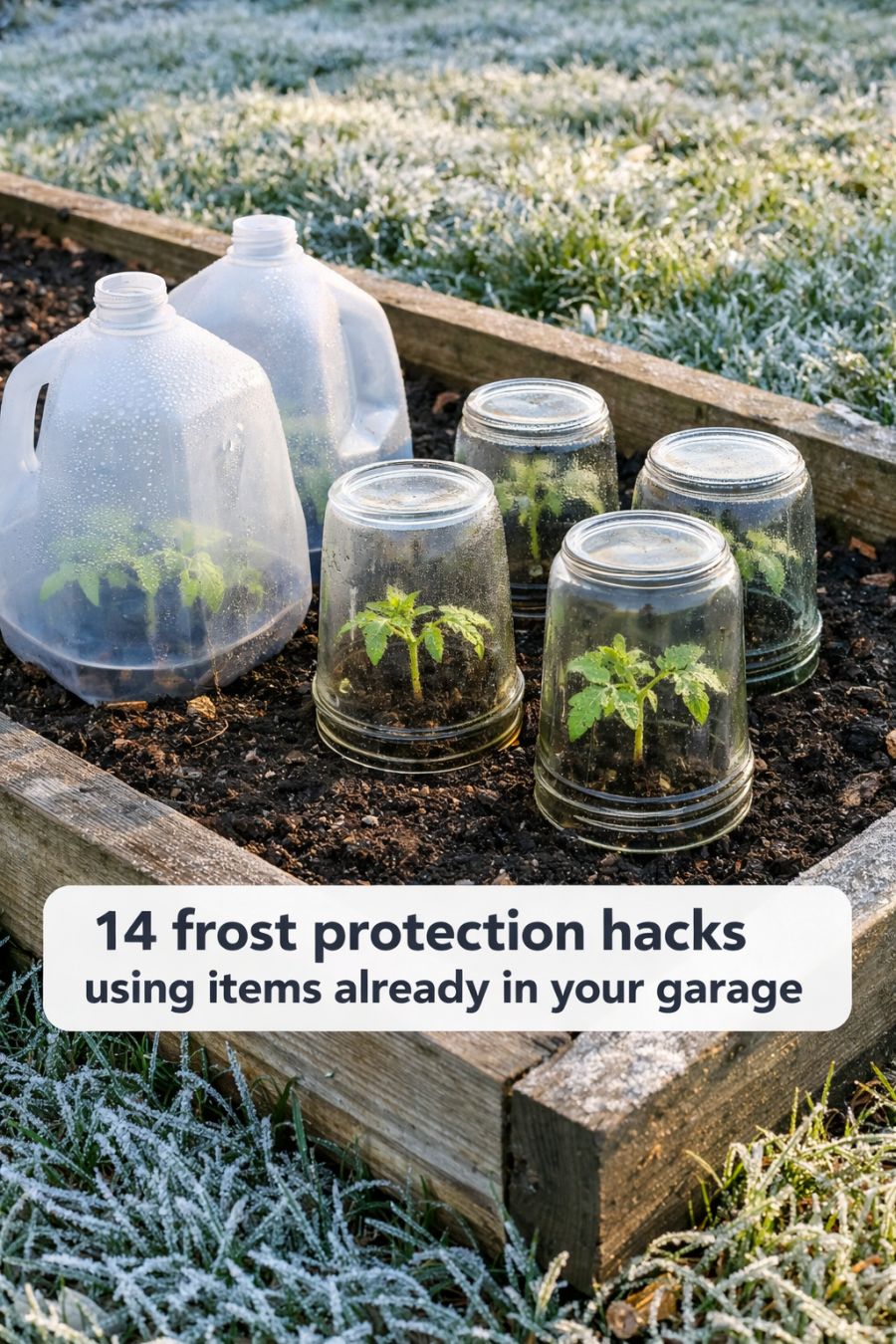
4. Protect Seedlings With Clear Plastic Bottles and Jugs
Clear plastic bottles and jugs can serve as protective cloches for seedlings. Cut the bottom off and place them over individual plants, pressing them slightly into the soil to secure them. The transparent plastic allows sunlight in while trapping warm air around the seedling, creating a mini greenhouse effect.
This method is particularly effective for small, delicate seedlings that are especially vulnerable to frost. Be sure to remove the caps during the day to allow for air circulation and prevent overheating. This simple yet effective hack uses materials that would otherwise be discarded, offering an eco-friendly solution.
5. Deploy Tarps and Drop Cloths for Large Bed Coverage
Tarps and drop cloths can be used to cover large garden beds, providing widespread protection against frost. Drape the fabric over the plants and secure the edges with rocks, bricks, or garden stakes to keep it in place. These materials are thick enough to offer significant insulation while being lightweight enough not to damage the plants beneath.
This method is especially useful for vegetable gardens or flower beds that cover a large area. It’s important to remove the tarps or cloths during the day to expose the plants to sunlight and prevent moisture buildup under the covers.
6. Insulate Pots With Bubble Wrap and Packing Materials
Bubble wrap and other packing materials are excellent for insulating potted plants. Wrap the pots with bubble wrap, securing it with tape or string. This additional layer helps retain heat in the soil and protects the roots from freezing temperatures.
For extra protection, consider placing the wrapped pots close together and covering them with a large tarp or blanket. This creates a communal microclimate that traps heat and keeps the plants warm. This technique is particularly beneficial for tropical plants or those not native to your climate.
14 frost protection hacks using items already in your garage
Pages: 1 2
