
Spinach is a leafy green vegetable that is not only packed with nutrients but also incredibly versatile in the kitchen. Whether you’re tossing it into salads, blending it into smoothies, or sautéing it as a side dish, spinach is a staple that can elevate any meal with its fresh, earthy flavor. For avid gardeners and fresh produce enthusiasts, the idea of having a perpetual harvest of spinach is enticing. Imagine stepping out into your garden to pick fresh spinach leaves whenever you need them, without the worry of running out.
Achieving a continuous supply of spinach requires careful planning and some horticultural know-how. In this guide, we’ll walk you through the step-by-step process of growing spinach so you can enjoy a perpetual harvest. From selecting the right varieties to mastering planting techniques, we’ll cover everything you need to know to keep your spinach patch thriving all season long.
1. Understand What a Perpetual Spinach Harvest Really Means
A perpetual harvest of spinach means that you always have fresh leaves available for picking. This is achieved through a combination of succession planting, strategic harvesting, and effective plant care. Unlike a single harvest, where you plant once and gather all your produce at once, a perpetual harvest involves staggering planting times and using techniques that prolong the life and productivity of your plants.
This method ensures that as some plants are maturing and ready for harvest, others are just beginning to grow. By understanding the growth cycle of spinach, which typically takes about 6-8 weeks from seed to harvest, you can plan accordingly to have new plants ready as older ones dwindle. Aiming for a perpetual harvest also means paying attention to the conditions that spinach thrives in, such as cool temperatures and consistent moisture.
2. Choose the Right Spinach Varieties for Continuous Picking
To achieve a continuous harvest, it’s important to choose spinach varieties that are well-suited for multiple pickings and that have staggered maturity times. Some varieties are more bolt-resistant, meaning they can withstand warmer temperatures without going to seed, which is crucial for extending the growing season.
Consider varieties like ‘Bloomsdale Long Standing’ for its resistance to bolting and ‘Tyee’ which is known for its vigorous growth and resistance to disease. ‘Space’ is another great option for spring planting due to its fast-growing nature. By planting a mix of varieties, you can ensure a steady supply of spinach throughout the growing season as different types mature at different rates.
3. Plan Your Planting Calendar for Season-Long Succession
A successful perpetual harvest of spinach starts with a well-planned planting calendar. Begin by determining your local frost dates to decide when to start your first planting. Spinach seeds can be sown as soon as the soil is workable in early spring, approximately 4-6 weeks before the last expected frost.
For a continuous harvest, plan to plant new seeds every 2-3 weeks. This staggered planting ensures that as older plants are being harvested, new ones are coming up to take their place. In cooler climates, you can continue planting every few weeks until about 6-8 weeks before the first expected fall frost. In warmer climates, consider planting in late summer for a fall crop, taking advantage of the cooler autumn weather.
4. Prepare Rich, Cool Soil That Keeps Spinach Producing
Spinach thrives in rich, well-drained soil with a pH of 6.0 to 7.0. Before planting, amend your soil with plenty of organic matter such as compost or well-rotted manure to improve its fertility and moisture retention. Spinach prefers cooler soil temperatures, ideally between 45°F and 75°F.
To keep the soil cool, consider adding a layer of organic mulch around your spinach plants. This not only helps regulate soil temperature but also retains moisture and suppresses weeds. Raised beds are particularly effective for growing spinach as they provide good drainage and can be filled with high-quality soil mixes.
5. Sow Spinach the Smart Way: Depth, Spacing, and Timing
When sowing spinach seeds, plant them about 1/2 inch deep and space them 2-4 inches apart in rows that are 12-18 inches apart. This spacing allows the plants enough room to grow and prevents overcrowding, which can lead to disease and poor air circulation.
Spinach seeds germinate best in cool conditions, so sow them in the early morning or late afternoon to avoid the heat of the day. Keep the soil consistently moist during the germination period, which typically takes 5-10 days. If you’re planting in succession, be sure to mark your rows with planting dates to keep track of your schedule.
6. Use Shade, Mulch, and Water to Keep Plants from Bolting
Bolting occurs when spinach plants prematurely flower and go to seed, often due to heat or stress. To prevent this, provide partial shade for your spinach during the hottest part of the day. You can use shade cloth or plant taller crops nearby to offer natural shade.
Regular mulching helps maintain consistent soil moisture and temperature, reducing the likelihood of bolting. Water your spinach deeply and regularly, ensuring the soil stays moist but not waterlogged. Inconsistent watering can stress the plants and encourage bolting.
7. Feed and Thin Your Spinach for Fast, Tender Regrowth
Spinach is a heavy feeder, so providing it with adequate nutrients is essential for continual growth. Apply a balanced, slow-release fertilizer at planting and side-dress with compost or a liquid fertilizer every few weeks to support healthy foliage production.
Thinning your spinach plants is also crucial. Once seedlings have a few true leaves, thin them to about 4-6 inches apart to allow room for mature growth. Thinning not only reduces competition for nutrients but also improves airflow around the plants, reducing the risk of fungal diseases.
8. Master the Cut-and-Come-Again Harvesting Technique
The cut-and-come-again method involves harvesting the outer leaves of the spinach plant while allowing the inner leaves to continue growing. This technique encourages the plant to produce new leaves, extending the harvest period.
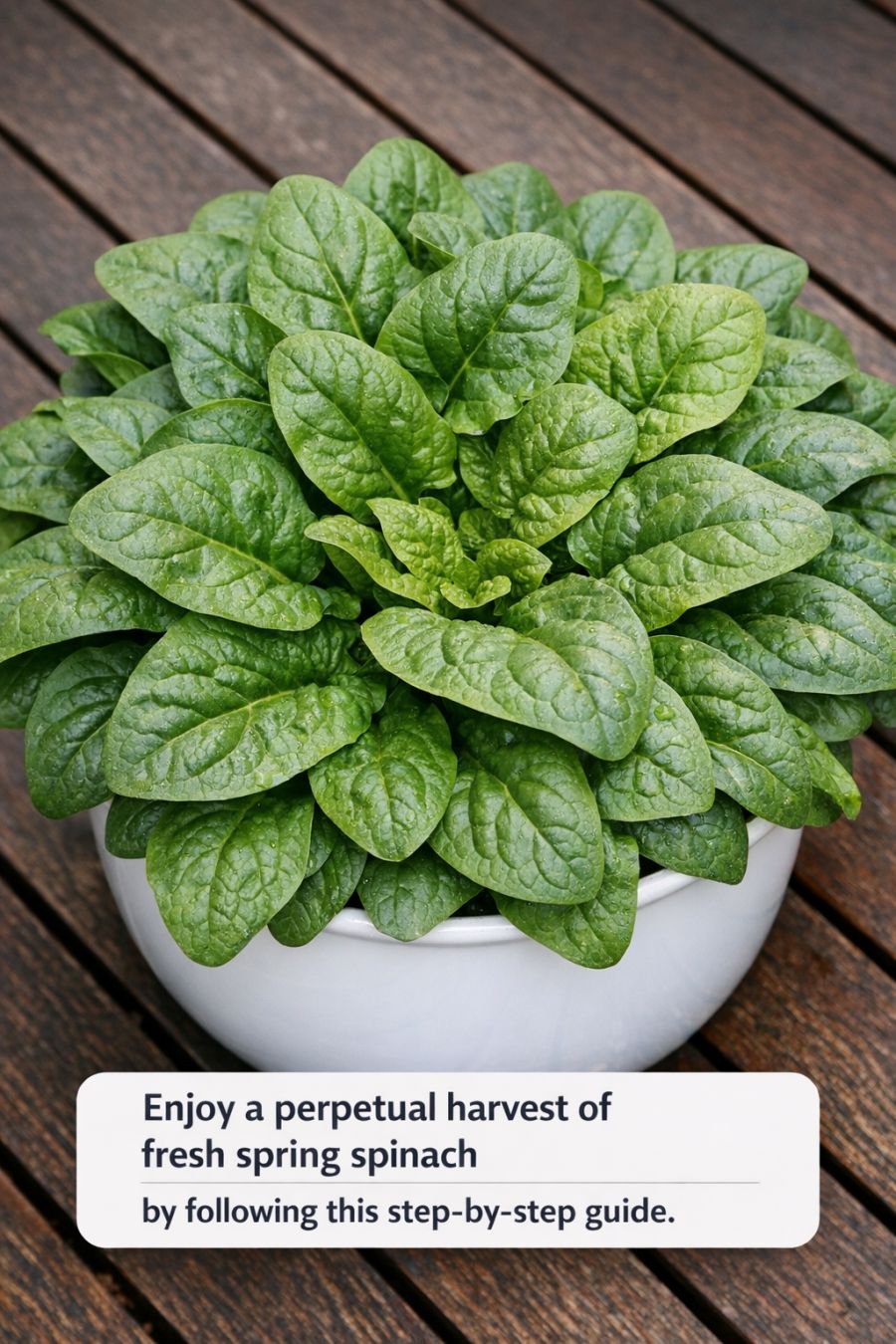
Enjoy a perpetual harvest of fresh spring spinach by following this step-by-step guide
Pages: 1 2
