
Hydrangeas, with their lush blooms and vibrant colors, are a favorite among gardeners. However, many enthusiasts find themselves struggling when trying to propagate these beautiful plants from cuttings. The process, though seemingly straightforward, often results in frustration and disappointment when the cuttings fail to root or thrive.
Understanding the nuances of hydrangea propagation is essential for success. Unlike some other plants, hydrangeas have specific requirements that must be met for rooting to occur. By learning the correct techniques and avoiding common pitfalls, you can increase your chances of successfully growing new hydrangea plants from cuttings, enriching your garden with these stunning blooms.
1. The Big Mistake: Treating Hydrangea Cuttings Like Any Other Plant
One of the most common mistakes people make is treating hydrangea cuttings as they would any other plant. While many plants can root easily in water or basic potting soil, hydrangeas require a more tailored approach. This misconception leads to poor results, as hydrangeas have unique characteristics that need specific conditions to thrive.
For instance, hydrangeas benefit from a more controlled environment with higher humidity and a particular type of rooting medium. Treating them like a typical houseplant often results in the cuttings drying out or becoming waterlogged, both of which are detrimental to successful rooting. Understanding these specific needs is the first step in avoiding the most common propagation mistakes.
2. Choose the Right Parent Plant and Perfect Cutting Time
Selecting the right parent plant is crucial for successful propagation. Choose a healthy, disease-free plant with vigorous growth, as this will ensure that the cuttings have the best chance of rooting and developing into strong plants. It’s also important to choose the right time to take cuttings; the best period is typically in late spring to early summer when the plant is actively growing.
Timing is critical because cuttings taken during active growth have higher levels of rooting hormones and energy reserves, which are necessary for rooting. Avoid taking cuttings during periods of drought or extreme heat, as the plant may be stressed, leading to poor rooting success.
3. Select the Exact Type of Stem Cutting Hydrangeas Need
Hydrangeas require specific types of stem cuttings known as softwood cuttings. These are taken from new, flexible growth that has not yet become woody. To identify a suitable softwood cutting, look for a stem that is firm but bends easily without snapping. This stage of growth contains the right balance of nutrients and rooting hormones needed for successful propagation.
Cuttings should be 4 to 6 inches long and include at least one or two nodes, which are the points on the stem where leaves emerge. These nodes are crucial as they contain the cells necessary to form new roots.
4. Make a Clean, Strategic Cut for Maximum Rooting Success
Using a sharp, sterilized knife or pruning shears, make a clean cut just below a node on the selected stem. This is important because a clean cut minimizes damage to the plant tissue, reducing the risk of infection and increasing the chances of successful rooting.
Ensure that the cutting tool is sterilized with rubbing alcohol or a bleach solution to prevent the introduction of pathogens. A clean cut also promotes quicker healing and root development, as jagged edges can hinder the plant’s ability to form roots effectively.
5. Strip, Trim, and Prep Leaves the Way Pros Actually Do It
After taking the cutting, remove the leaves from the bottom half of the stem. This reduces water loss and focuses the plant’s energy on developing roots instead of maintaining foliage. Leave a few leaves at the top of the cutting, but trim them in half to further reduce water loss through transpiration.
By reducing the leaf area, the cutting is less likely to wilt while it is establishing roots. This step is often overlooked but is critical for maintaining the right balance of moisture and energy within the cutting, leading to higher rooting success rates.
6. Use the Right Rooting Medium (Hint: Regular Potting Soil Fails)
Regular potting soil is often too dense and retains too much moisture for hydrangea cuttings, leading to rot. Instead, professionals recommend using a well-aerated, light rooting medium such as a mix of equal parts perlite and peat moss. This combination provides excellent drainage while retaining enough moisture to encourage root growth.
The airy nature of this medium allows oxygen to reach the developing roots, which is essential for their growth. Ensuring that the medium is moist but not waterlogged is key to preventing rot and promoting healthy root development.
7. Rooting Hormone: When It’s Essential and When It’s Optional
Rooting hormone can be beneficial in promoting root growth, especially for novice gardeners or when conditions are not ideal. Dip the cut end of the stem in a rooting hormone powder or gel before planting it in the rooting medium. This can significantly increase the chances of successful rooting by providing additional hormones that stimulate root development.
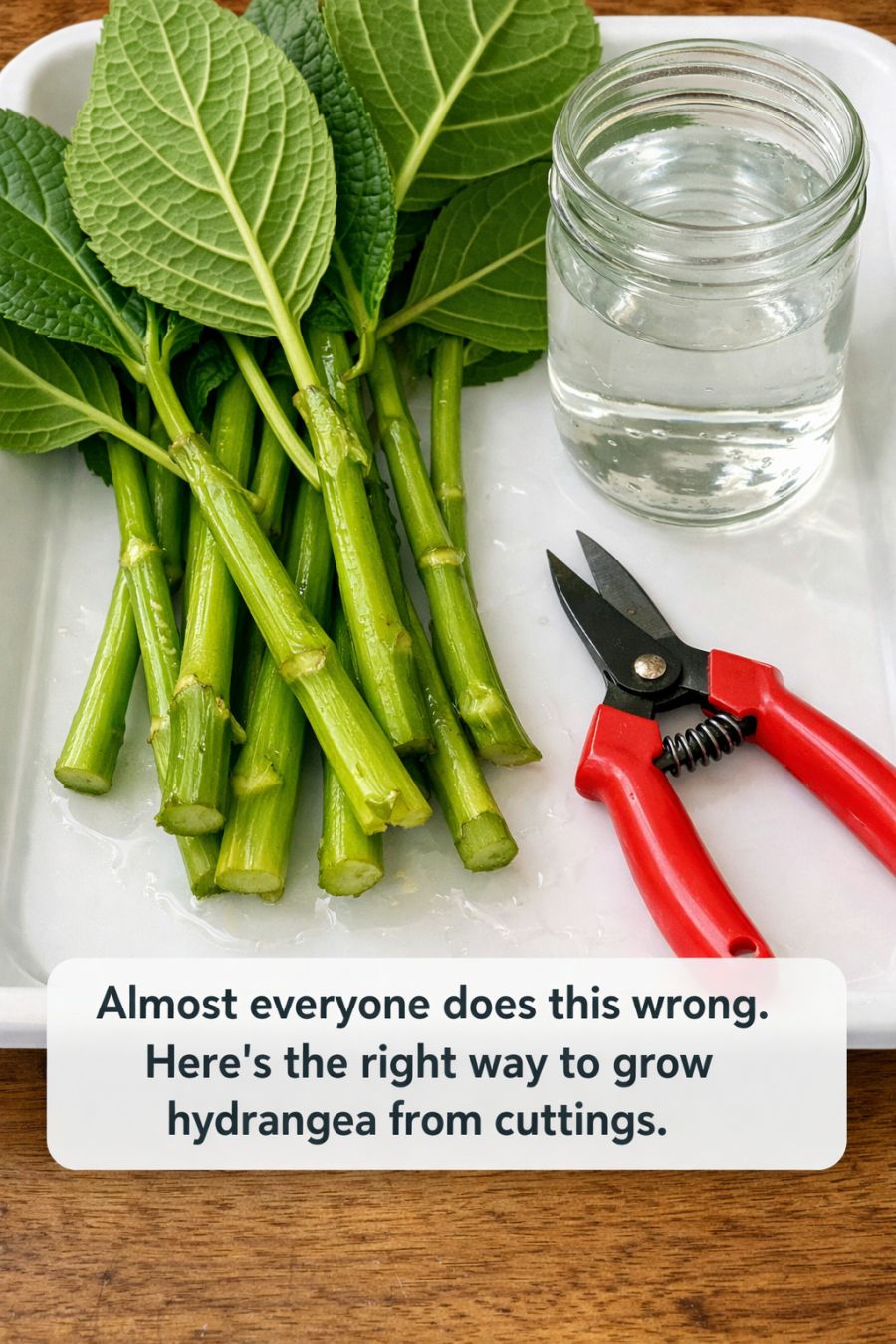
Almost everyone does this wrong. Here’s the right way to grow hydrangea from cuttings.
Pages: 1 2
