
Gardening enthusiasts are always on the lookout for innovative and simple ways to enhance the growth of their plants. While traditional fertilizers and composting methods are well-known, a new trend has caught the attention of gardeners: burying whole raw eggs in potting soil. This unconventional method might seem odd at first, but many swear by its effectiveness.
The idea of using a whole egg as a natural fertilizer is intriguing and taps into the concept of using organic materials to enrich the soil. By understanding the benefits and mechanisms behind this practice, gardeners can decide whether this technique is a worthy addition to their gardening repertoire.
1. The Surprising Trend: Why Gardeners Are Burying Whole Eggs
The practice of burying whole raw eggs in potting soil has gained traction due to its simplicity and potential efficacy. Proponents of this method claim that it provides a natural and balanced nutrient boost to plants without the need for chemical fertilizers. The trend likely started as a means to utilize kitchen waste effectively by turning it into a garden resource.
Gardeners have reported that this method works particularly well for container plants, where soil nutrients can deplete quickly. The egg acts as a slow-release fertilizer, gradually decomposing and feeding the plants over time. The practice also aligns with sustainable gardening principles, as it minimizes waste and encourages recycling of organic materials.
2. How a Raw Egg Turns Into Slow-Release Plant Food
When a raw egg is buried in the soil, it begins to decompose slowly, releasing nutrients into the surrounding soil. This process is facilitated by soil microbes and the natural breakdown of organic matter. As the egg breaks down, it releases essential nutrients such as nitrogen, phosphorus, and calcium, which are crucial for plant growth.
The decomposition process can take several weeks, depending on soil conditions, temperature, and microbial activity. During this time, the egg provides a steady supply of nutrients, acting as a slow-release fertilizer. This gradual release ensures that plants receive a consistent nutrient supply, promoting healthy growth and development.
3. Nitrogen, Phosphorus, Calcium: The Nutrient Boost Hidden in an Egg
Eggs are rich in nitrogen, phosphorus, and calcium, essential nutrients that plants need for various physiological functions. Nitrogen is vital for leafy growth, phosphorus aids in root development and flowering, and calcium is crucial for cell wall structure and overall plant strength.
A single raw egg contains approximately 6 grams of protein, which includes amino acids that break down into nitrogen. The calcium content in eggshells, which is about 94% calcium carbonate, contributes to soil pH balance and provides calcium to plants. Phosphorus, although present in smaller amounts, is still beneficial for promoting strong root systems and blooming.
4. Supercharging Root Growth and Stronger Stems
The nutrients released from a decomposing egg can lead to enhanced root growth and stronger plant stems. Phosphorus is particularly important for root development, enabling plants to establish a robust root system that can efficiently uptake water and nutrients from the soil.
Calcium plays a critical role in strengthening plant cell walls, leading to sturdier stems that can support the plant’s structure and withstand environmental stresses. By providing these essential nutrients naturally, the egg method supports the overall health and resilience of plants.
5. Bigger Blooms and Higher Yields for Container Plants
Container plants often face the challenge of nutrient depletion due to limited soil volume. Burying a raw egg in the potting soil can help mitigate this issue by supplying a steady stream of nutrients over time. As a result, plants may produce bigger blooms and yield higher fruit or vegetable output.
The slow-release nature of the egg’s nutrients ensures that plants are fed consistently, preventing nutrient spikes and deficiencies. This balanced nutrition can lead to more vibrant flowers and healthier fruiting, enhancing the overall productivity of container gardens.
6. The Right Way To Bury a Whole Egg in Potting Soil
To effectively use a raw egg as fertilizer, it’s important to bury it correctly. The egg should be placed about 4-6 inches deep in the potting soil, ensuring it is well-covered to prevent exposure to the air and potential odor issues. It’s best to position the egg closer to the plant’s root zone to maximize nutrient uptake.
For container plants, it’s advisable to bury the egg before planting or during repotting. This allows the egg to begin decomposing as the plant establishes itself, providing nutrients during the critical early growth stages.
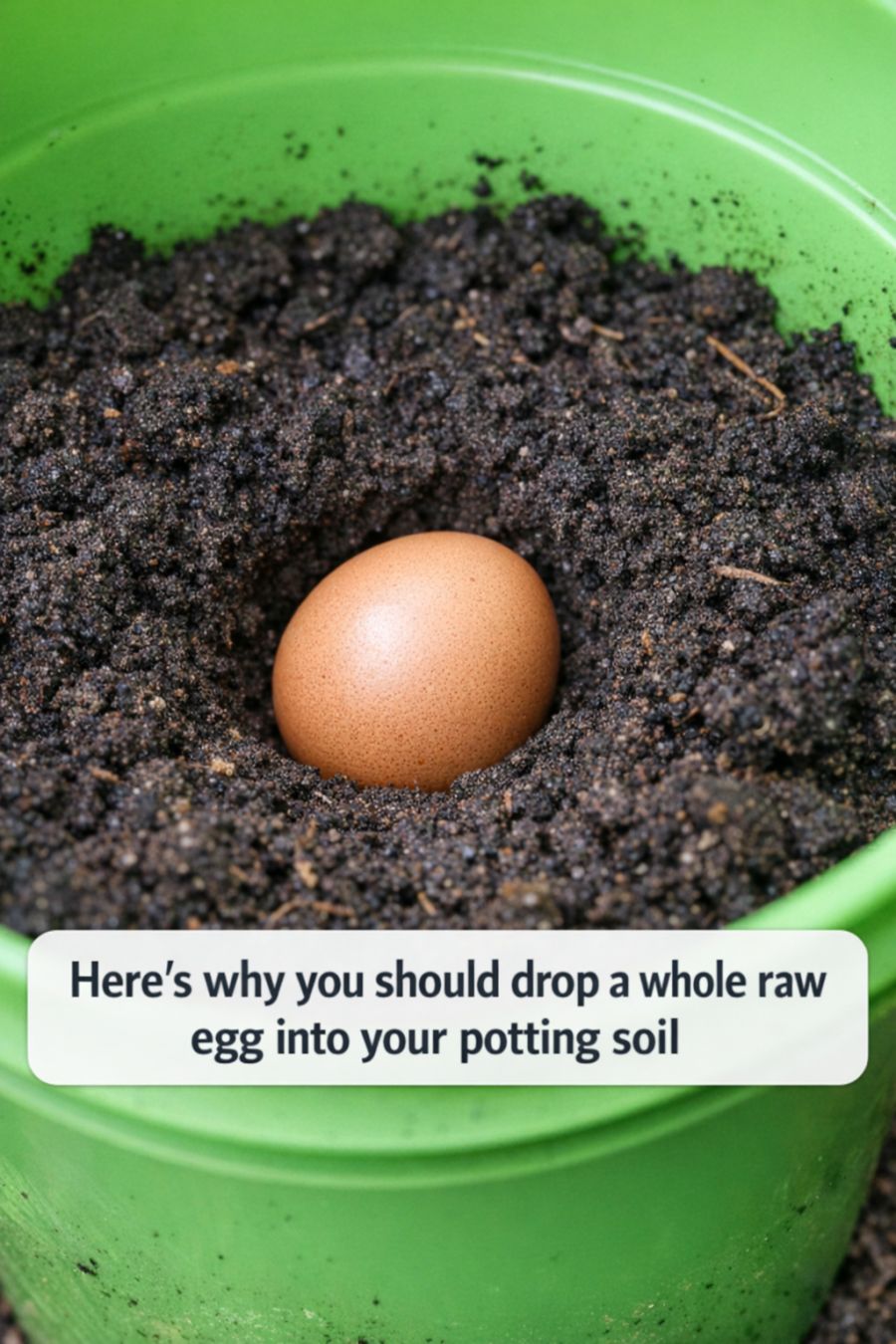
Here’s why you should drop a whole raw egg into your potting soil
Pages: 1 2
