
As the winter months draw to a close and spring begins to emerge, gardeners and farmers welcome the subtle transformations in their crops. One of the most delightful surprises during this transitional period is the way certain vegetables react to a late March frost. While frost might seem like an adversary to most plants, for some vegetables, it acts as a natural sweetener, enhancing their flavor profiles in unexpected ways.
When temperatures dip just below freezing, it triggers biochemical changes in the cells of certain vegetables. These changes often result in the conversion of starches to sugars, a process that not only protects the plants from freezing but also enhances their sweetness. This natural adaptation is why some vegetables are best harvested after a frost, offering a sweeter taste that delights the palate and adds a special touch to springtime meals.
1. Why A Late March Frost Can Make Vegetables Taste Sweeter
The phenomenon of vegetables tasting sweeter after a frost is rooted in plant physiology and biochemistry. During colder weather, plants undergo a process called cold acclimation, where they convert stored starches into sugars. These sugars act as a natural antifreeze, lowering the freezing point of the plant’s cells and protecting them from frost damage.
For example, when temperatures drop to near-freezing levels, enzymes in the plant cells break down complex carbohydrates into simpler sugars. This not only prevents ice crystal formation, which can damage cell walls, but also enhances the flavor of the vegetables. In some cases, the sugar content can increase by as much as 30% after a frost, noticeably sweetening the taste of the produce.
2. Carrots: Frost-Kissed Roots With Concentrated Sugars
Carrots are a prime example of a vegetable that benefits from a late frost. When exposed to cold, the starches in carrots are converted into sugars, resulting in a sweeter, more flavorful root. This transformation can make freshly harvested, frost-touched carrots taste almost candy-like, with a sweetness that pairs well with their natural earthiness.
The increased sugar content not only improves the taste but also enhances the texture, making carrots crisper and more enjoyable to eat raw or cooked. This is why many gardeners deliberately leave carrots in the ground until after a frost to maximize their sweetness.
3. Parsnips: The Classic Cold-Sweetened Winter Staple
Parsnips are another root vegetable that becomes significantly sweeter after a frost. In response to the cold, parsnips convert starches into sugars, which not only protects the plant but also intensifies its natural sweetness. This conversion makes parsnips a favorite for winter dishes, as their nutty, sweet flavor is enhanced.
After a frost, parsnips can taste almost caramel-like, with a complexity that adds depth to soups, stews, and roasts. Their creamy texture and sweet flavor make them a versatile ingredient in winter cooking, and they are often left in the ground until the first frost passes to achieve this enhanced taste.
4. Brussels Sprouts: Bitterness Down, Sweetness Up After A Chill
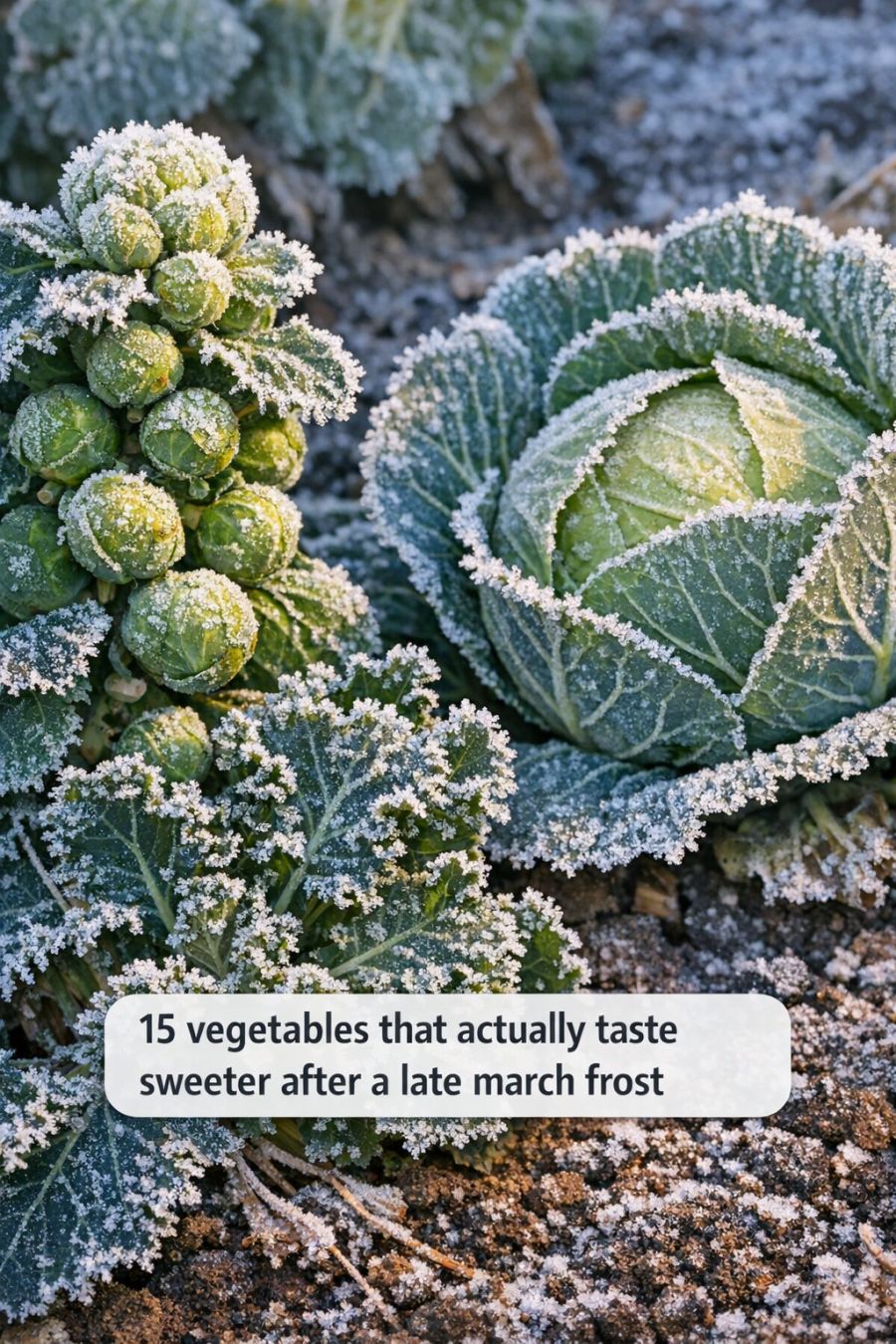
Brussels sprouts are known for their slightly bitter taste, but a touch of frost can transform them into a much sweeter and more palatable vegetable. The cold triggers the conversion of starches into sugars, reducing bitterness and enhancing sweetness. This change can make Brussels sprouts more appealing to those who might otherwise be put off by their strong flavor.
After a frost, Brussels sprouts develop a milder, nuttier taste, with a subtle sweetness that complements their natural savory profile. This makes them a perfect addition to winter meals, whether roasted, sautéed, or steamed. The frost-kissed flavor can also encourage more people to enjoy this nutrient-rich vegetable.
5. Kale: Frost-Tender Leaves With A Milder, Sweeter Bite
Kale is a hardy green that thrives in cooler temperatures, and its flavor benefits greatly from a touch of frost. The cold weather initiates a biochemical reaction that increases the sugar content in kale leaves, reducing their often bitter and pungent taste.
Frost-touched kale tends to have a milder, sweeter flavor, making it more enjoyable both raw in salads and cooked in a variety of dishes. Its tender leaves become slightly more succulent, adding to the overall eating experience. This makes kale a popular choice for winter gardening, as it can withstand low temperatures and offer a sweeter taste as a result.
6. Cabbage: Tighter Heads, Crunchier Texture, Subtle Sweetness
Cabbage is another vegetable that responds positively to frost, developing a sweeter taste and improved texture. Cold temperatures cause the sugars in cabbage to become more concentrated, enhancing its natural sweetness and making the leaves crisper.
This transformation can add a delightful crunch and subtle sweetness to dishes, whether cabbage is used in salads, stir-fries, or as a side dish. The tighter heads and improved flavor profile post-frost make cabbage a versatile and enjoyable addition to winter and early spring meals.
7. Leeks: Cooler Nights, Softer Fibers, Sweeter Flavor
Leeks are part of the allium family and, like their relatives, they benefit from cooler temperatures. A late frost can enhance the sweetness of leeks by increasing their sugar content, which also softens the fibrous texture of their stalks.
The result is a vegetable with a milder, sweeter flavor that can elevate soups, stews, and other dishes. Frost-sweetened leeks offer a more delicate taste, balancing their onion-like sharpness with a subtle sweetness that can complement a variety of culinary creations.
8. Beets: Earthy Roots That Turn Candy-Sweet In The Cold
Beets are naturally sweet, but a late frost can take their flavor to another level. The cold triggers the conversion of starches into sugars, resulting in an intensification of their natural sweetness. This process can make beets taste almost like candy, with a vibrant, earthy flavor.
Frost-touched beets are perfect for roasting, as their increased sugar content caramelizes beautifully, enhancing their flavor. Their sweet, earthy taste can add depth to salads, sides, and main courses alike, making them a valuable addition to any winter harvest.
15 vegetables that actually taste sweeter after a late march frost
Pages: 1 2
