
Taking on the responsibility of tending to a garden, especially when dealing with an unexpected family emergency, can be quite overwhelming. When you notice that the pepper plants, which your sister usually takes care of, are turning pale, it’s natural to feel a surge of panic. These plants, once vibrant and green, now look terrible, and you might feel at a loss about what to do next.
The good news is that with a little patience and the right information, you can help your pepper plants recover. Understanding the possible causes of the pale appearance and taking the appropriate corrective actions can make a significant difference. This article aims to guide you through the process of diagnosing and treating the common issues that could be affecting your pepper plants.
1. First, Don’t Panic: How Fast Yellowing Can Be Reversed
It’s important to remember that many causes of yellowing in pepper plants are reversible if caught early. The first step is to assess the situation calmly and systematically. Start by observing the overall condition of the plants, including the leaves, stems, and soil. Often, yellowing can be reversed within a few days to a week if the underlying issue is addressed promptly.
Begin by documenting the symptoms: note any wilting, spots, or other unusual appearances. This information will be crucial as you diagnose the problem and implement solutions. By taking swift and informed action, you can stop further damage and encourage the plants to regain their healthy color.
2. Reading the Leaves: What Pale and Yellow Peppers Are Telling You
The color and condition of leaves are key indicators of a plant’s health. Yellowing leaves on pepper plants can signify several issues, ranging from nutrient deficiencies to environmental stress. Pay attention to where the yellowing begins: older leaves turning yellow first might suggest a nitrogen deficiency, while newer leaves doing so could indicate issues like iron deficiency.
In addition to color, observe the texture and placement of the yellowing. Uniform yellowing might indicate a general issue, such as overwatering, whereas splotchy yellowing could be a sign of pests or disease. Understanding these subtle differences can help narrow down the potential causes.
3. Check Watering Habits: Overwatering vs. Underwatering Stress
One of the most common causes of yellowing in pepper plants is improper watering. Overwatering can lead to root rot, depriving the plant of necessary oxygen and causing the leaves to turn yellow. On the other hand, underwatering stresses the plant, leading to wilting and yellowing as the plant conserves resources.
To determine if watering is the issue, check the soil moisture about two inches below the surface. If it’s soggy, reduce watering frequency, allowing the soil to dry out between sessions. If it’s dry, increase watering gradually until the soil is consistently moist but not waterlogged.
4. Sunlight and Heat: When Pepper Leaves Bleach or Burn
Peppers require ample sunlight, but too much direct exposure, especially during the hottest parts of the day, can lead to leaf bleaching or burning. This is particularly true if the plants have been recently transplanted or if there has been a sudden increase in temperature.
Ensure that your plants receive about 6-8 hours of sunlight daily, but consider providing some shade during peak sun hours if you notice signs of sunburn. Using shade cloths or repositioning pots can help mitigate the intensity of sunlight and protect the plants.
5. Nutrient Deficiencies: The Most Common Causes of Yellow Leaves
Nutrient deficiencies are a frequent cause of yellowing in pepper plants. Nitrogen deficiency, for instance, leads to uniform yellowing of older leaves, while magnesium deficiency might result in yellowing between the veins of the leaves.
Conduct a soil test to determine the nutrient levels and adjust the fertilizer accordingly. A balanced fertilizer with a ratio of 5-10-10 (N-P-K) can help address common deficiencies. Be sure to follow the label instructions to avoid over-fertilization, which can cause further stress to the plants.
6. Soil pH and Fertilizer Fixes You Can Do Today
Soil pH affects nutrient availability, and peppers prefer a slightly acidic to neutral pH range of 6.0 to 7.0. If the pH is too high or too low, it can lock out essential nutrients, leading to yellowing.
Use a soil pH test kit to check the levels. If adjustments are needed, lime can be added to raise pH, while sulfur can lower it. Additionally, applying a liquid fertilizer can provide a quick nutrient boost, helping to correct deficiencies more rapidly.
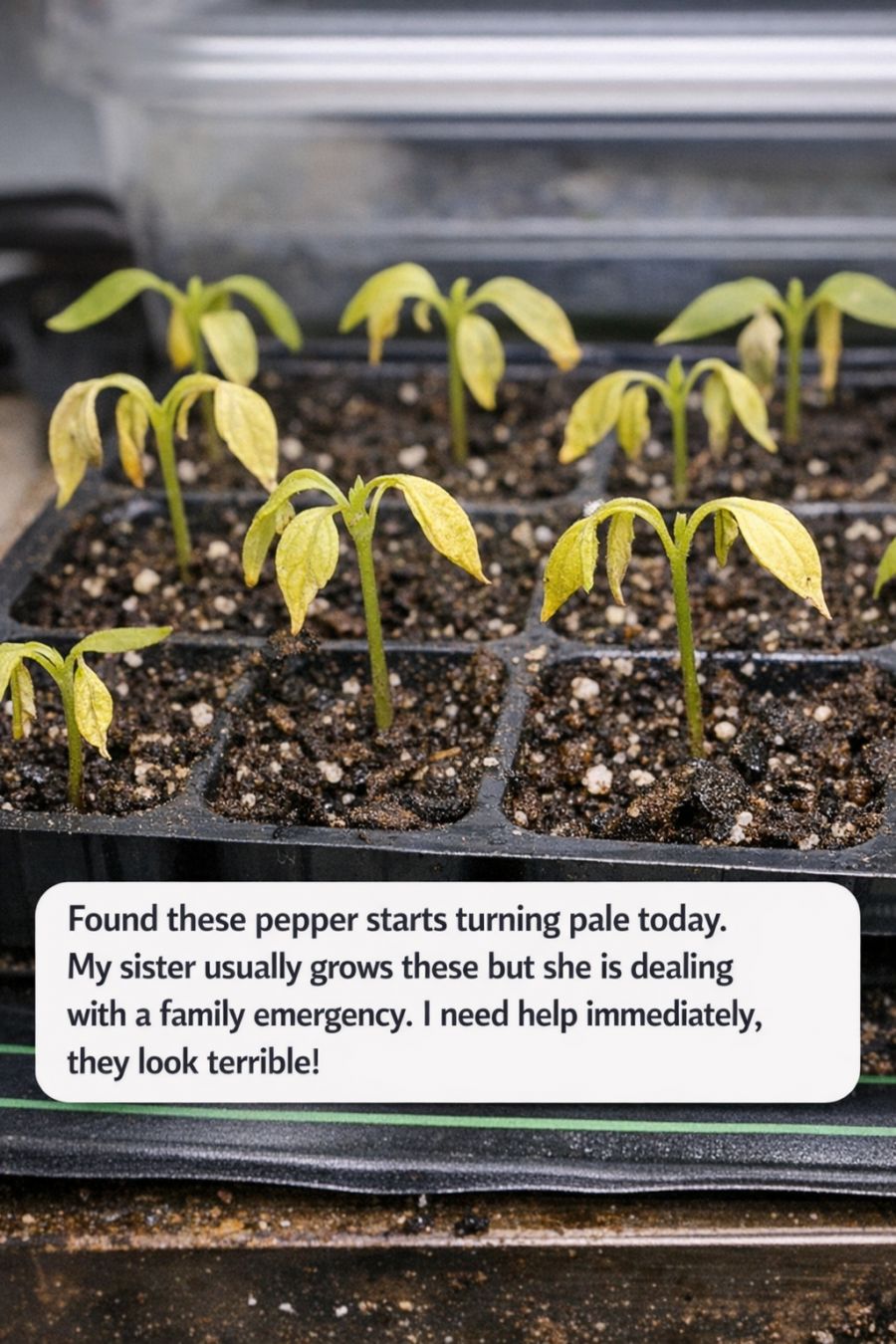
Found these pepper starts turning pale today. My sister usually grows these but she is dealing with a family emergency. I need help immediately, they look terrible!
Pages: 1 2
