
ZZ plants, or Zamioculcas zamiifolia, are well-loved for their glossy, dark green leaves and resilience in low-light conditions. However, they are notorious for their slow growth, often leaving plant enthusiasts wishing for a little more action in their indoor gardens. While patience is a virtue, who wouldn’t want to see their ZZ plant thrive with more frequent new shoots?
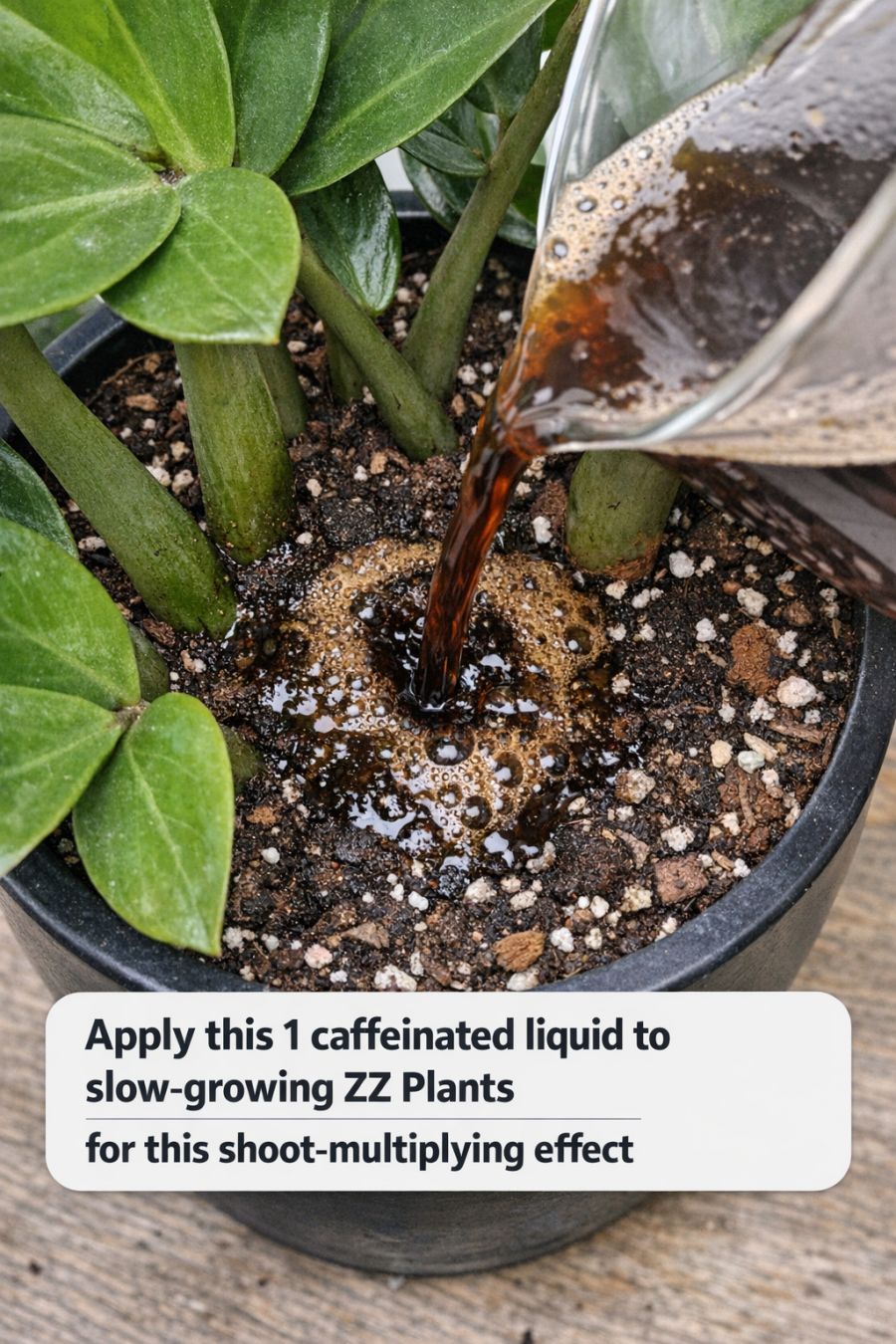
Enter a surprising solution: caffeinated liquids, specifically cold diluted black coffee, have been found to promote more vigorous growth in these stoic plants. This article explores how this simple kitchen staple can be used to encourage shoot multiplication in ZZ plants, offering a deeper dive into the science and practical application of this method.
1. Why ZZ Plants Grow So Slowly in the First Place
ZZ plants are native to Eastern Africa, where they have adapted to survive in arid conditions. This means they have evolved to conserve energy and resources, resulting in their characteristically slow growth. In their natural habitat, they experience infrequent rainfall and poor soil conditions, which further contributes to their slow and steady growth pattern.
The key to their survival is their rhizomes, which store water and nutrients, allowing them to endure long periods of drought. This adaptation, while beneficial in the wild, can be frustrating for plant owners expecting rapid growth. Typically, a healthy ZZ plant might only grow 2-3 new shoots per year under normal indoor conditions.
2. The Caffeinated Liquid Hack: Why Cold Diluted Black Coffee Works
The idea of using cold diluted black coffee as a growth stimulant for ZZ plants stems from the presence of caffeine and other compounds in coffee that can enhance plant development. Caffeine, a natural alkaloid, can stimulate cell elongation and division in plants, potentially leading to faster and more abundant shoot growth.
Additionally, coffee contains small amounts of nitrogen, a crucial nutrient for plant growth, which can further aid in the development of new shoots. By diluting the coffee, the risk of overwhelming the plant with too much caffeine is minimized, ensuring a gentle yet effective boost to the plant’s natural growth processes.
3. How Caffeine and Coffee Compounds Interact With ZZ Plant Roots
Caffeine and other compounds in coffee can influence plant growth through several mechanisms. Caffeine can enhance the cellular processes that govern growth and development, such as photosynthesis and nutrient uptake. When applied in moderate amounts, caffeine encourages more active root and shoot development.
In addition to caffeine, coffee contains antioxidants and other phytochemicals that may help protect the plant from certain stresses, potentially leading to healthier overall growth. The interaction of these compounds with the plant’s root system can lead to more vigorous growth, although care must be taken to avoid overloading the plant with too much of any single compound.
4. The Exact Coffee-to-Water Ratio ZZ Plants Can Tolerate
To ensure that your ZZ plant benefits from the coffee treatment without any adverse effects, it is crucial to use the correct coffee-to-water ratio. A common recommendation is to dilute one part black coffee with four parts water. This dilution ensures that the caffeine and other compounds are present in a concentration that the plant can tolerate.
It is important to use plain black coffee without any additives such as sugar or milk, as these can harm the plant. Additionally, the coffee should be allowed to cool to room temperature before application to avoid shocking the plant’s roots with a temperature that’s too high.
5. Step-by-Step: How to Brew and Cool Coffee for Plant Use
Begin by brewing a pot of black coffee using your preferred method, whether it’s a drip coffee maker, a French press, or another technique. Once brewed, allow the coffee to cool to room temperature. This cooling period is crucial, as applying hot coffee directly to the plant could damage the roots.
After the coffee has cooled, mix one part coffee with four parts water in a watering can or container. Stir the mixture thoroughly to ensure even dilution. Now your diluted coffee is ready to be applied to your ZZ plant, providing a gentle boost to its growth.
6. When and How Often to Water ZZ Plants With Diluted Coffee
ZZ plants should be watered with the diluted coffee mixture approximately once a month. This frequency allows the plant to benefit from the coffee’s growth-promoting properties without overexposing it to caffeine.
It’s best to apply the coffee mixture during the plant’s active growing season, which typically occurs in spring and summer. During the fall and winter months, when the plant’s growth naturally slows down, it’s advisable to reduce or cease coffee applications to prevent any potential negative effects.
7. Spotting the Shoot-Multiplying Effect: What Results to Expect
After beginning the coffee treatment, you may notice an increase in the number of new shoots appearing on your ZZ plant within a few weeks to a couple of months, depending on the plant’s overall health and environmental conditions.
The new shoots should appear healthier and more robust, with a quicker growth rate compared to before the treatment. While results can vary, many plant enthusiasts report a noticeable improvement in the plant’s vigor and the frequency of new shoot development.
8. Crucial Mistakes to Avoid With Coffee-Watering ZZ Plants
One common mistake is using coffee that contains additives like sugar, cream, or flavorings, which can harm the plant. Always use plain black coffee for this treatment.
Another error is applying the coffee treatment too frequently, which can lead to an accumulation of caffeine and other compounds in the soil, potentially harming the plant. Stick to the recommended once-a-month schedule to avoid this issue.
Apply this 1 caffeinated liquid to slow-growing ZZ Plants for this shoot-multiplying effect
Pages: 1 2
