
9. How Soil Type and Pot Choice Influence Coffee’s Impact
The type of soil and pot you use can significantly influence how well your ZZ plant responds to the coffee treatment. Well-draining soil is essential to prevent waterlogging, which can lead to root rot. A mix of potting soil with added perlite or sand can improve drainage and aeration.
Additionally, choosing a pot with adequate drainage holes ensures that excess water can escape, preventing the buildup of compounds from the coffee that could harm the roots. A pot made of breathable material, such as terra cotta, can also help regulate moisture levels and support healthy root development.
10. Pairing the Coffee Trick With Light and Care Tweaks for Maximum Growth
To maximize the benefits of the coffee treatment, it’s important to optimize other care aspects for your ZZ plant. Ensure the plant receives adequate indirect light, as too much direct sunlight can scorch the leaves while too little can hinder growth.
Regularly wipe the leaves with a damp cloth to remove dust and enhance photosynthesis. Additionally, maintaining consistent temperatures and avoiding drafts can create an ideal environment for your ZZ plant to thrive alongside the coffee treatment.
11. Safe Alternatives If Your ZZ Plant Doesn’t Love the Coffee Treatment
If your ZZ plant does not respond well to the coffee treatment or shows signs of distress, there are other safe alternatives to promote growth. Consider using a balanced liquid houseplant fertilizer diluted to half strength, applied during the active growing season.
Another option is to incorporate organic matter into the soil, such as compost or worm castings, which can provide a slow release of nutrients to support healthy growth without the risk of overloading the plant with caffeine.
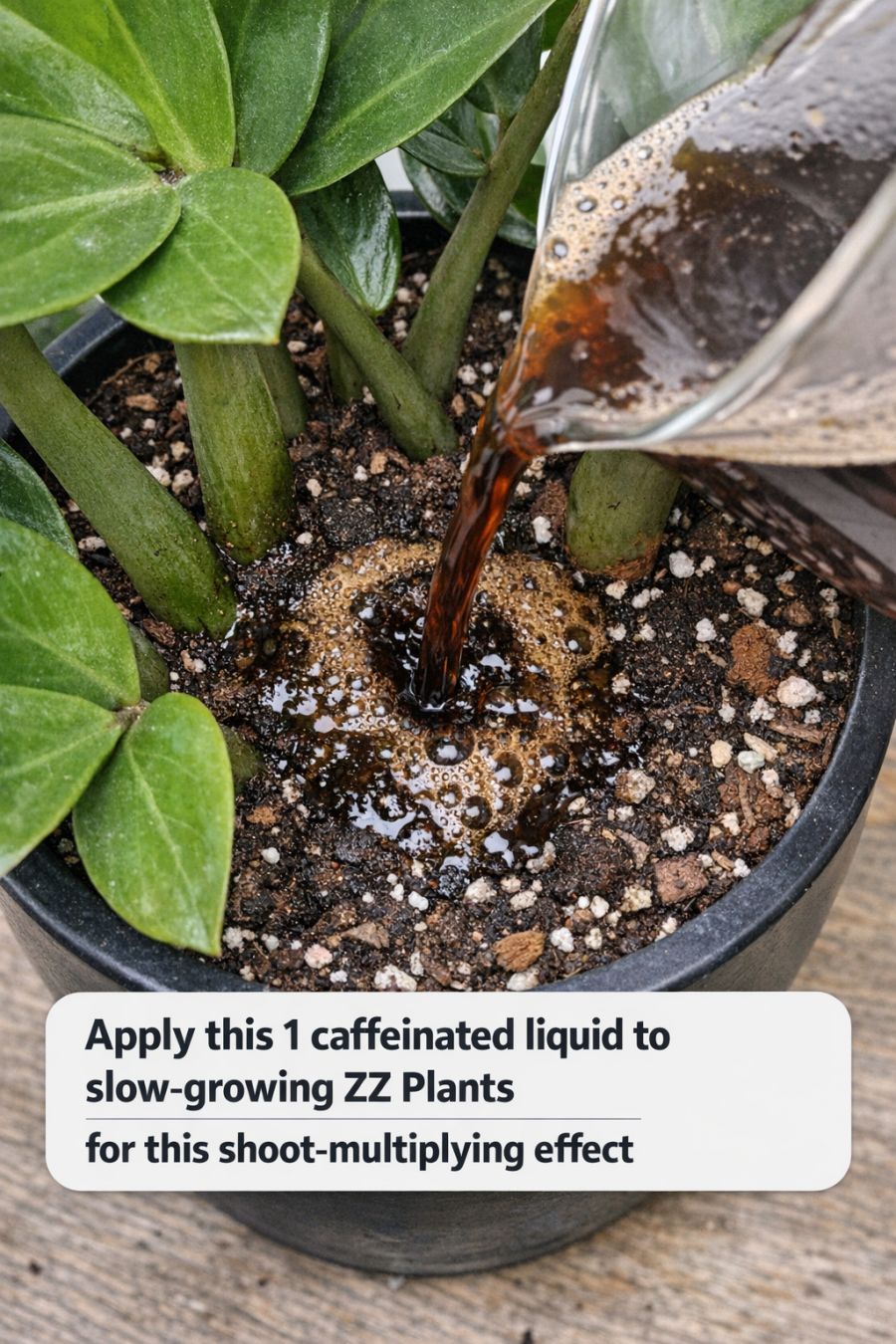
Apply this 1 caffeinated liquid to slow-growing ZZ Plants for this shoot-multiplying effect
Pages: 1 2
