
As the days grow longer and the promise of summer lingers in the air, now is the perfect time to start thinking about how to enhance your culinary creations with fresh herbs. While purchasing herbs from the store is always an option, growing your own provides an endless supply of fresh flavors while also being incredibly economical. The best part? You don’t need a garden or even soil to get started. Many herbs can be easily propagated in water, making it a simple and space-saving endeavor.
By starting your herb garden indoors now, you ensure a bountiful supply come summer. Fresh herbs not only elevate the taste of your dishes but also offer a host of health benefits, thanks to their high levels of antioxidants, vitamins, and minerals. Whether you have a sunny windowsill or a cozy corner in your kitchen, growing herbs in water is an accessible and rewarding project for both novice and seasoned gardeners.
1. Why Starting Herbs in Water Now Sets You Up for Summer Success
Starting herbs in water allows you to get a head start on your summer garden without the need for soil or a full outdoor setup. By utilizing water propagation, you can control the environment more effectively, ensuring that your plants are not subject to pests or harsh weather conditions. This method is particularly advantageous during late winter and early spring when outdoor conditions aren’t ideal for planting.
Water propagation also encourages faster root development. Most herbs will begin to root in a matter of weeks, allowing you to transplant them into soil or continue growing them in water as the weather warms. By starting now, you give your herbs time to develop a strong root system, which is crucial for robust growth and a plentiful harvest throughout the summer months.
2. How to Choose Healthy Cuttings and Containers for Water-Rooted Herbs
Selecting the right cuttings is essential for successful propagation. Look for healthy, vibrant stems that are free of any disease or pest damage. Ideally, cuttings should be about 4 to 6 inches long with at least two sets of leaves. Remove the lower leaves that would be submerged in water to prevent rot and encourage root growth.
As for containers, clear glass jars or vases work well because they allow you to monitor root development and water levels. Ensure that the container is clean and large enough to support the growing plant. Change the water every few days to keep it fresh and oxygenated, which helps prevent bacterial growth and supports healthy root development.
3. Basil: The Fast-Growing Flavor Powerhouse for Sauces and Salads
Basil is one of the easiest herbs to propagate in water and grows rapidly, making it perfect for beginners. Known for its aromatic leaves and essential role in dishes like pesto and caprese salad, basil thrives in sunlight. Place your basil cuttings in a sunny spot, such as a south-facing windowsill, and watch as roots begin to develop in just a week or two.
Once rooted, basil can be kept in water or transferred to soil. Regularly pinch back the tops of the plant to encourage bushier growth, which will result in a more abundant harvest. Remember to change the water every few days and top it up as needed to keep your basil healthy and flourishing.
4. Mint: The Vigorous Herb That Thrives in a Simple Jar of Water
Mint is a robust herb that can quickly take over a garden bed, making water propagation an excellent way to contain its growth. Known for its refreshing flavor, mint is a delightful addition to teas, desserts, and savory dishes. Simply take a cutting from a healthy mint plant, remove the lower leaves, and place it in water.
Mint cuttings will begin rooting within a week, and you’ll soon have a hardy plant that requires minimal care. Keep your mint in a bright location but out of direct harsh sunlight to prevent scorching. Once established, you can snip leaves as needed, and the plant will continue to produce new growth throughout the season.
5. Oregano: Mediterranean Depth for Pizzas, Pastas, and Marinades
Oregano brings a distinctive Mediterranean flavor to a variety of dishes, and starting it in water is a straightforward process. Choose cuttings from a healthy oregano plant, ensuring that each piece is about 4 inches long. Remove the lower leaves and place the cuttings in a jar of water.
Oregano prefers a sunny spot, so position your jar in a location that receives plenty of light. Be patient, as oregano may take slightly longer to root compared to other herbs. Once roots develop, you can either continue growing it in water or transplant it to soil. With regular trimming, your oregano plant will remain lush and productive, providing a steady supply for all your culinary needs.
6. Thyme: Tiny Leaves, Huge Flavor for Roasts and Grilled Vegetables
Thyme is a versatile herb that pairs well with a variety of dishes, from roasted meats to grilled vegetables. Propagating thyme in water is simple: cut a sprig about 4 inches long from a healthy plant, remove the lower leaves, and place it in a glass of water. Thyme requires bright, indirect light to thrive.
Rooting may take several weeks, so patience is key. Once roots are well established, you can leave thyme in water or plant it in a pot with soil. Regular harvesting encourages new growth, ensuring that you have a continuous supply of this flavorful herb throughout the summer.
7. Rosemary: Woody Sprigs That Root Slowly but Reward You All Summer
Rosemary is an aromatic herb with a woodier stem, which means it takes a bit longer to root in water compared to softer-stemmed herbs. However, the wait is worthwhile as rosemary offers a fragrant addition to a variety of dishes, from roasted potatoes to marinades.
To propagate rosemary, select a healthy sprig about 6 inches long and remove the leaves from the lower half. Place it in a jar of water and position it in a sunny location. It may take a month or more for roots to appear, but once they do, rosemary will continue to grow steadily. Keep the water fresh by changing it regularly, and enjoy the robust flavor of rosemary all summer long.
8. Sage: Earthy, Aromatic Leaves Perfect for Stuffings and Browned Butter
Sage’s earthy aroma and flavor make it a favorite for stuffings and browned butter sauces. To propagate sage in water, cut a healthy sprig about 4 inches long and remove the lower leaves. Place your cutting in a jar of water and position it in a location that receives bright, indirect light.
Sage may take a few weeks to develop roots, but once established, it will continue to grow vigorously. Regularly trim the plant to encourage bushier growth and prevent it from becoming leggy. Whether you choose to plant it in soil or keep it in water, sage will be a valuable addition to your culinary herb collection.
9. Parsley: Versatile Garnish That Becomes a Summer Harvest Workhorse
Parsley is more than just a garnish—it’s a workhorse in the kitchen, adding fresh flavor to a variety of dishes. Italian flat-leaf parsley is especially popular for its robust taste. To start parsley in water, choose a cutting that is 4 to 6 inches long, remove the lower leaves, and place it in a glass of water.
Parsley prefers bright light, so a sunny windowsill is ideal. While it may take a few weeks for roots to develop, the wait is well worth it. Once established, parsley can be harvested continuously, ensuring you always have fresh leaves on hand. Whether you’re garnishing a dish or blending it into a sauce, parsley is a versatile herb that deserves a place in your water garden.
10. Cilantro: Quick-Growing Herb for Salsas, Curries, and Fresh Toppings
Cilantro, also known as coriander, is a popular herb in many cuisines, known for its distinct flavor that enhances salsas, curries, and fresh toppings. To propagate cilantro in water, take a cutting of about 4 inches, remove the lower leaves, and place it in a jar of water. Cilantro thrives in bright, indirect light.
Cilantro is a fast-growing herb, and you’ll see roots forming within a couple of weeks. Once the roots are established, you can keep it in water or transplant it to soil. Regular harvesting will promote new growth, ensuring a continuous supply of fresh cilantro throughout the summer, perfect for all your culinary adventures.
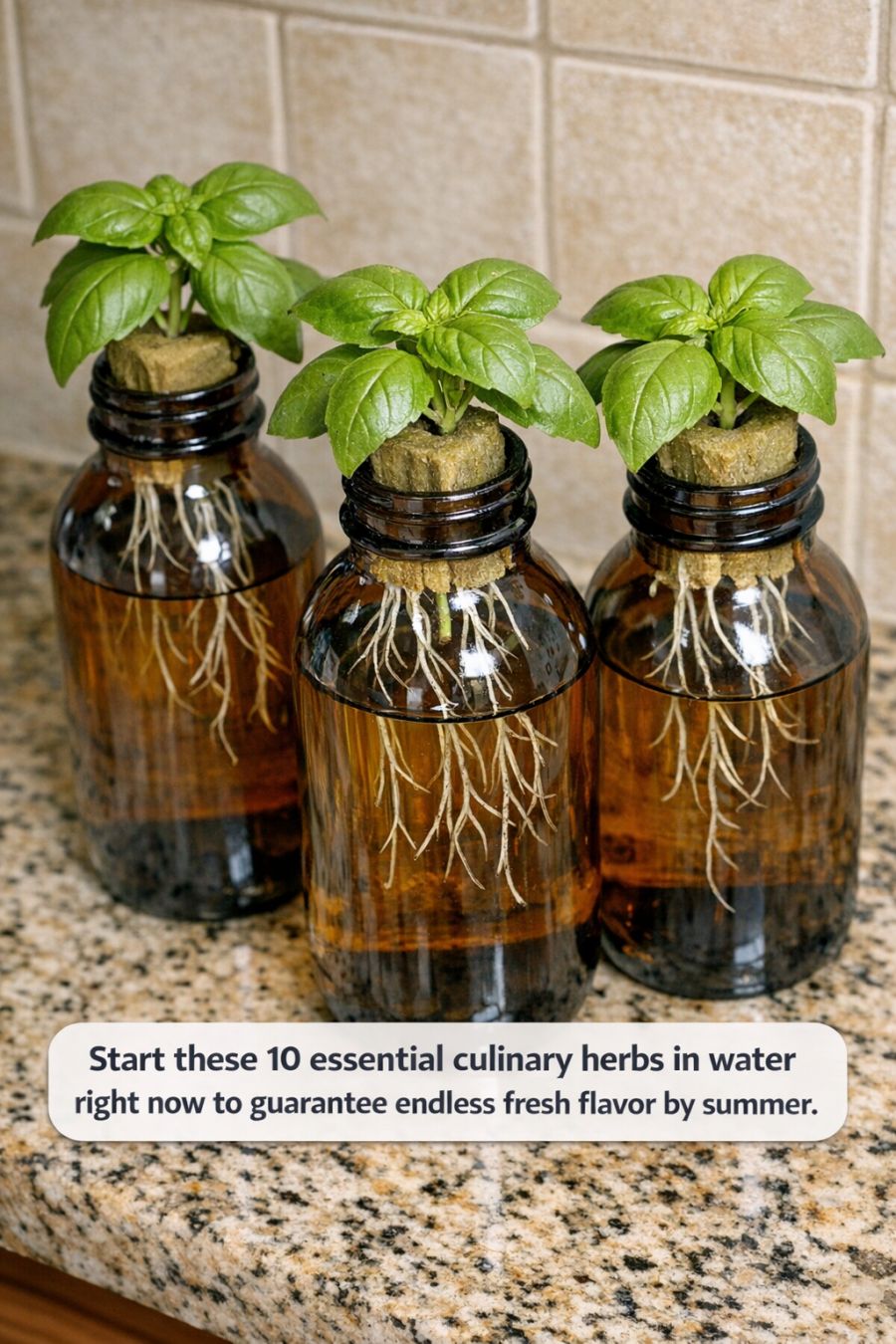
Start these 10 essential culinary herbs in water right now to guarantee endless fresh flavor by summer.
Pages: 1 2
