
8. Wiping, Buffing, And Inspecting: Finishing The Job Properly
After removing the rust, it’s essential to rinse the chrome surface thoroughly with clean water to remove any remaining debris or cleaning agents. Use a soft, lint-free cloth to wipe the surface dry.
Once dry, inspect the chrome for any remaining rust or scratches. If necessary, repeat the process on any missed areas. Finally, buff the chrome with a clean, dry cloth to enhance its shine and restore its luster.
9. Protecting Your Newly Cleaned Chrome So Rust Doesn’t Return
To protect your chrome fixtures from future rust, consider applying a chrome polish or a thin layer of automotive wax. These products create a protective barrier against moisture and air, significantly reducing the likelihood of rust formation.
Regular maintenance is also key. Keep your chrome clean and dry, especially in high-humidity environments, to prevent rust from developing. Regularly inspect your fixtures for signs of wear and address any issues promptly.
10. When Aluminum Foil Is The Wrong Choice (And Safer Alternatives)
While aluminum foil can be effective, it is not suitable for all situations. For delicate or antique chrome fixtures, the risk of scratching may outweigh the benefits. In these cases, a softer cleaning method, such as using a non-abrasive chrome polish or a dedicated rust remover, is recommended.
Additionally, for extensive rust damage or if the chrome surface is flaking, professional restoration might be necessary to avoid further damage. Always assess the condition of your chrome before deciding on the most appropriate cleaning method.
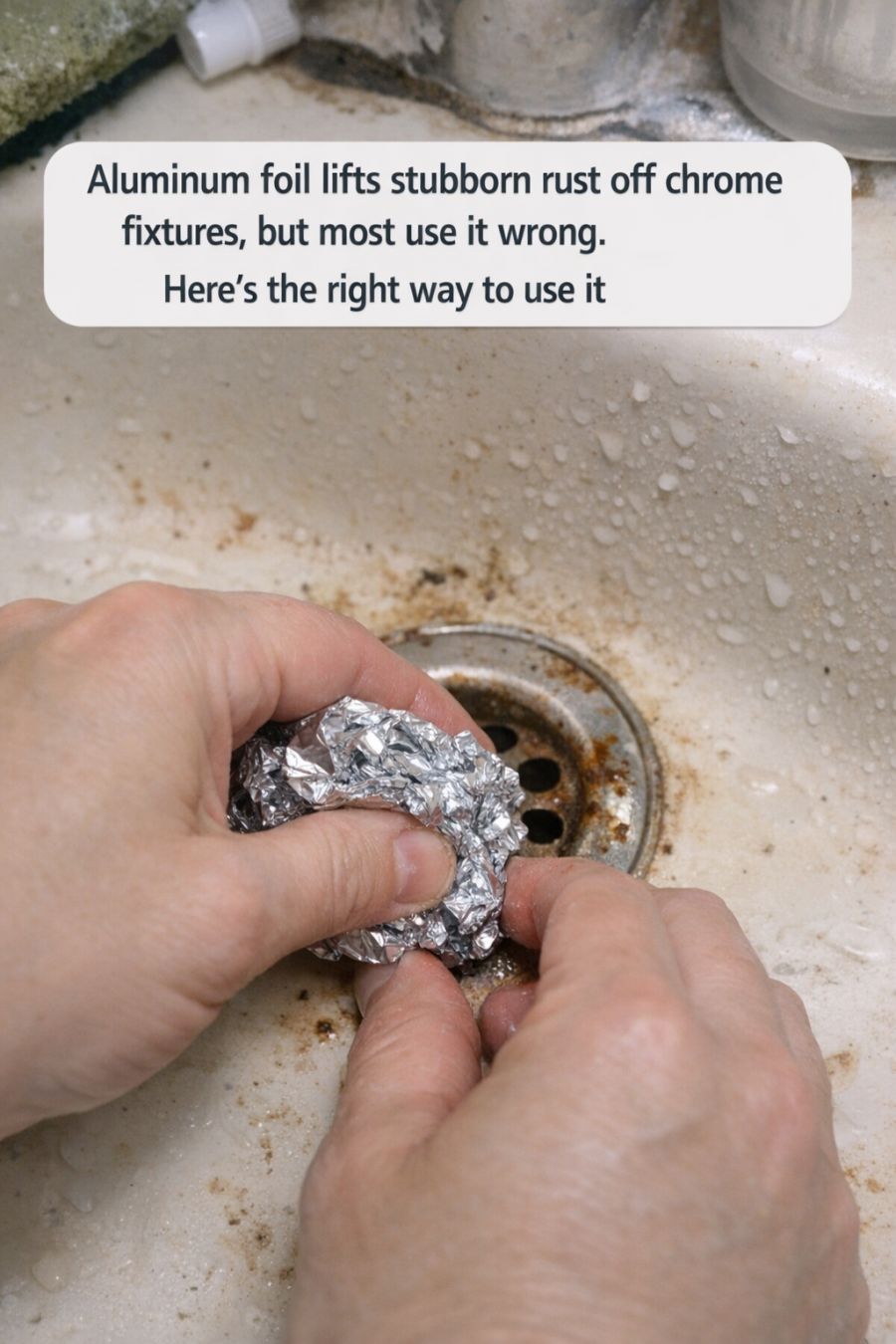
Aluminum foil lifts stubborn rust off chrome fixtures, but most use it wrong. Here’s the right way to use it
Pages: 1 2
