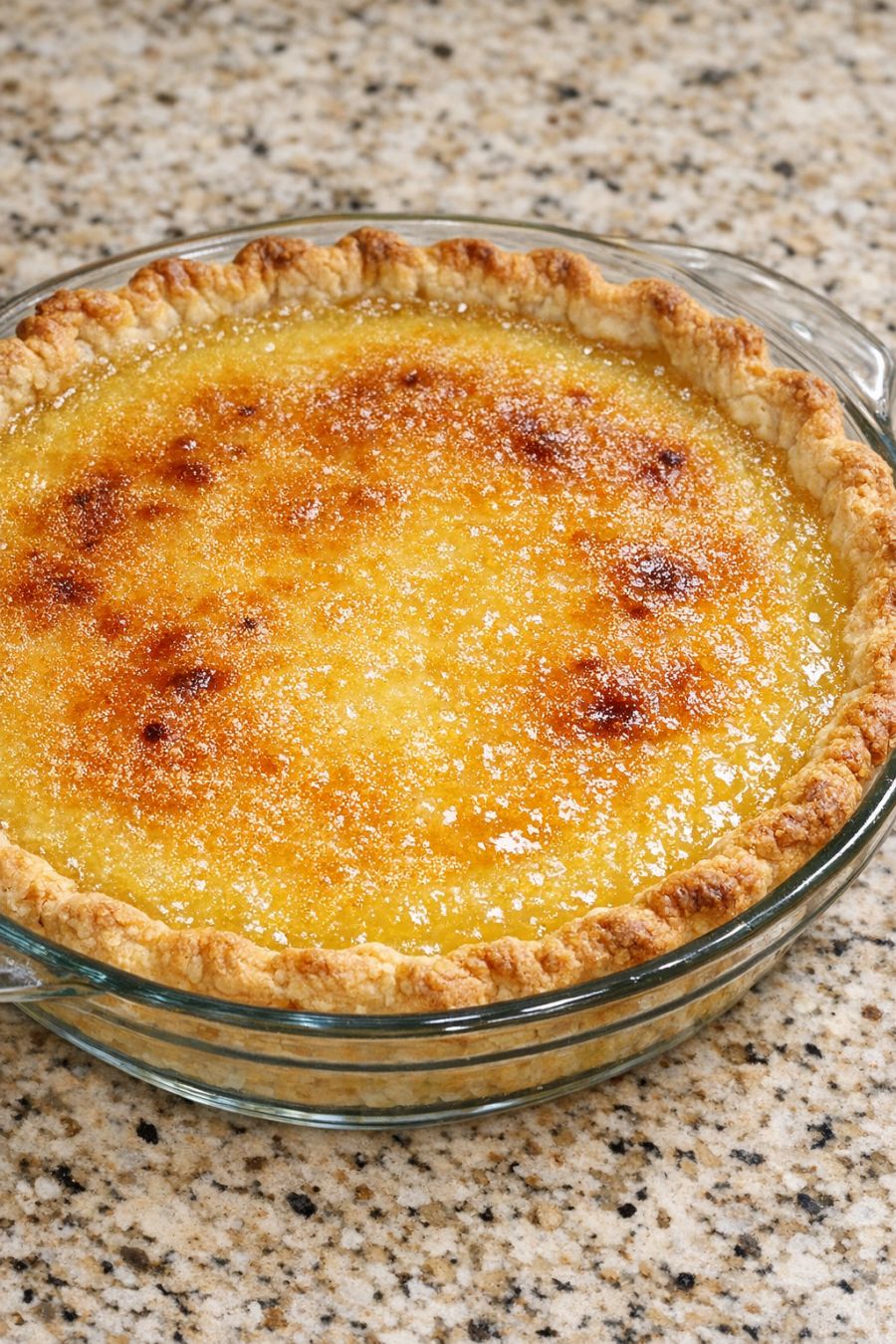
If the crust edges are browning too quickly before the center is set, loosely cover the edges with strips of foil or a pie shield and continue baking.
Once done, carefully transfer the pie to a cooling rack on your kitchen counter. Let it cool completely in the glass pie plate, at least 2 hours, so the filling can settle into a glossy, golden layer.
Slice the cooled pie with a sharp knife, wiping the blade between cuts for clean slices. Serve plain or topped with a little whipped cream. Watch how quickly those slices disappear at your next potluck or family dinner.
For a slightly milder tang, you can replace 1 to 2 tablespoons of the vinegar with milk or cream; this softens the bite while keeping the classic flavor. If your family likes warm spices, whisk in 1/4 teaspoon ground cinnamon or a pinch of nutmeg with the sugar for a cozy twist. For kids who are nervous about the word “vinegar,” just call it a butterscotch custard pie—the flavor is surprisingly similar once baked. If you prefer a firmer slice for traveling to potlucks, keep the tablespoon of flour in the recipe and chill the pie for 1 to 2 hours after it cools on the counter; let it sit out 15 minutes before serving so the texture softens slightly. To dress it up, serve with fresh berries or a drizzle of caramel sauce. Food safety tips: Always use fresh, clean eggs and avoid tasting the filling before it’s baked, since it contains raw egg. Make sure the pie bakes until the center is just set and reaches at least 160°F (71°C) if you’re checking with an instant-read thermometer. Cool the pie on the counter for no more than 2 hours, then refrigerate any leftovers, covered, and enjoy within 3 to 4 days. Reheat slices gently in the microwave if you like them slightly warm, but don’t leave the pie sitting out at room temperature for long periods after cutting, especially in warm weather or at potlucks.