
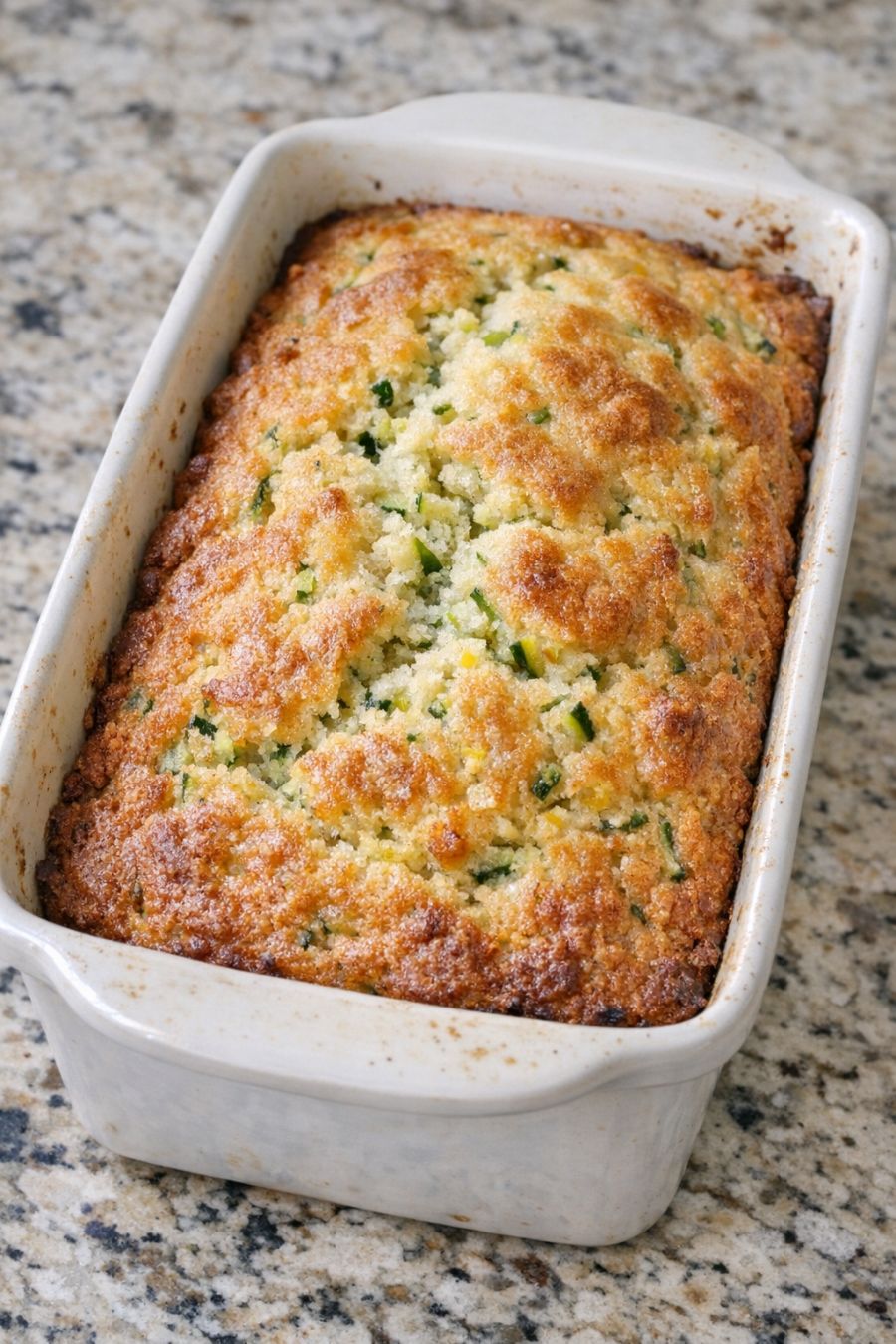
Lemon Zucchini Loaf
Servings: 8-10
Ingredients
1 1/2 cups all-purpose flour
1 cup granulated sugar
1 teaspoon baking powder
1/2 teaspoon baking soda
1/2 teaspoon fine salt
1 tablespoon finely grated lemon zest (from about 1 large lemon)
2 tablespoons fresh lemon juice
2 large eggs, at room temperature
1/2 cup neutral oil (such as canola or vegetable)
1/3 cup milk (any kind you keep on hand)
1 1/2 cups grated zucchini (lightly packed, from about 1 medium zucchini)
1 teaspoon vanilla extract
Optional: 1/2 cup finely chopped nuts or dried fruit for colorful bits
For the simple lemon drizzle (optional but very Aunt-Martha-ish): 1/2 cup powdered sugar
2-3 teaspoons fresh lemon juice (enough to make a thick but pourable glaze)
Directions
Preheat your oven to 350°F (175°C). Lightly grease a ceramic 9×5-inch loaf pan with oil or nonstick spray, then line the bottom with a strip of parchment if you have it. This helps the loaf release cleanly but still look perfectly homemade and a little uneven on top.
Wash and dry the zucchini. Trim off the ends, then grate it on the small or medium holes of a box grater. You want about 1 1/2 cups lightly packed. If the zucchini seems very wet and drippy, gently squeeze it over the sink with clean hands or a clean kitchen towel, but don’t wring it completely dry—you want some moisture for a tender loaf.
In a medium bowl, whisk together the flour, granulated sugar, baking powder, baking soda, salt, and lemon zest. Break up any clumps of zest with your fingers so it’s evenly scattered through the dry ingredients.
In a large bowl, whisk the eggs until slightly frothy. Add the oil, milk, lemon juice, and vanilla extract. Whisk until everything is smooth and well combined.
Add the grated zucchini to the wet ingredients and gently stir it in with a spatula. If you’re using nuts or dried fruit for extra color and texture, sprinkle them in now and fold just until they’re scattered throughout.
Pour the dry ingredients into the wet mixture. Using a spatula or wooden spoon, fold the batter together gently until no big streaks of dry flour remain. Try not to overmix; it’s okay if the batter looks a little lumpy and rustic—that’s part of the charm and gives you that homemade, slightly uneven surface once baked.
Scrape the batter into the prepared ceramic loaf pan and smooth the top lightly with your spatula. The batter will be fairly thick and will sit in a thick layer in the pan. If you like, you can give the pan a small tap on the counter to settle it, but don’t worry about making it perfect.
Bake on the middle rack of the oven for 45–55 minutes, or until the top is golden, slightly cracked, and a toothpick inserted into the center comes out mostly clean with just a few moist crumbs (no wet batter). Every oven is a little different, so start checking around 45 minutes.
Remove the pan to a speckled granite (or any heat-safe) countertop and let the loaf cool in the pan for about 15–20 minutes. The loaf will look a bit rustic with soft pieces visible through the top—that’s exactly how Aunt Martha’s always looked.
While the loaf cools slightly, make the optional lemon drizzle: In a small bowl, stir together the powdered sugar and 2 teaspoons of lemon juice. Add a few more drops of lemon juice as needed until you have a thick but pourable glaze.
