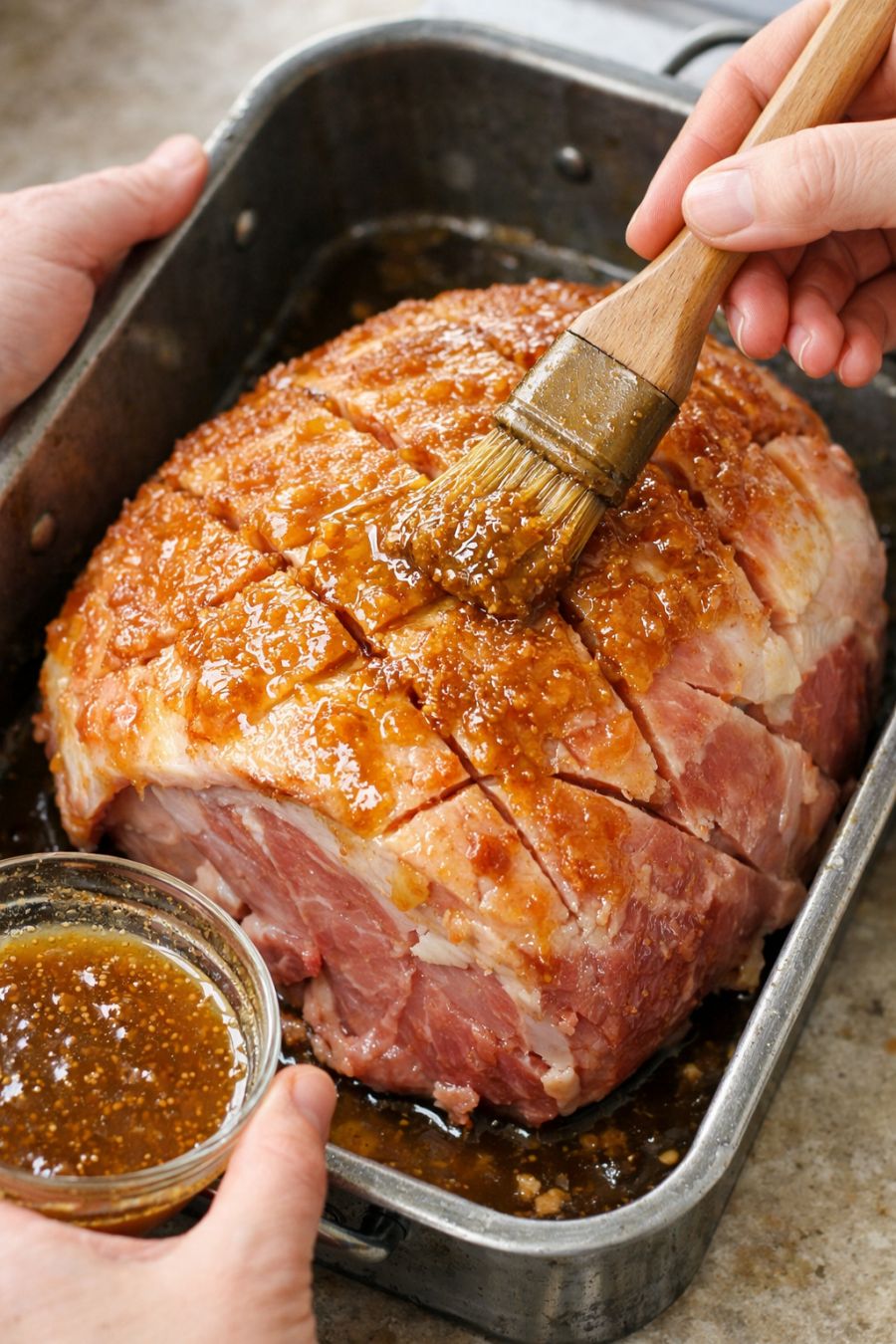
Using a sharp knife, score the surface of the ham in a crisscross diamond pattern, cutting about 1/4 inch deep. This helps the sticky mixture soak in and gives you that classic Southern baked ham look.
In a medium bowl, whisk together the brown sugar, honey, Dijon mustard, pineapple juice, black pepper, and optional ground cloves or smoked paprika until you have a smooth, sticky mixture.
Using a pastry brush or spoon, generously brush this 1 sticky mixture all over the surface of the raw cured ham right in the roasting pan, making sure to get it into the scored cuts and along the sides.
Cover the roasting pan tightly with foil. Transfer the ham to the oven and bake for about 1 1/2 to 2 hours (roughly 12–15 minutes per pound), basting with the pan juices and any remaining sticky mixture every 30–40 minutes.
Remove the foil for the last 30–40 minutes of baking to let the outside of the ham caramelize and get glossy, brushing on more of the sticky mixture as needed. If the top browns too quickly, loosely tent it with foil again.
The ham is ready when it’s heated through (an internal temperature of 140°F in the thickest part, away from the bone) and the glaze is deeply caramelized and sticky. Remove the ham from the oven and let it rest in the pan for 15–20 minutes so the juices settle.
Transfer the ham to a cutting board. Slice against the grain into thick or thin slices, depending on how you like it. Spoon some of the sticky pan juices over the slices and serve warm.
For a slightly tangier flavor, replace half of the pineapple juice with orange juice or apple cider. If you like more heat, stir 1–2 teaspoons of hot sauce or a pinch of cayenne into the sticky mixture before brushing it on the ham. You can also swap half the brown sugar for maple syrup for a deeper, woodsy sweetness. If you only have a smaller, boneless cured ham, use the same sticky mixture but shorten the baking time to about 10–12 minutes per pound, checking earlier so it doesn’t dry out. To make cleanup easier (especially with that sticky glaze), line your roasting pan with heavy-duty foil before placing the ham in. For meal prep, slice the leftover ham after it cools, store it with some of the pan juices in an airtight container, and use it throughout the week in sandwiches, breakfast scrambles, or tossed into pasta and casseroles.