
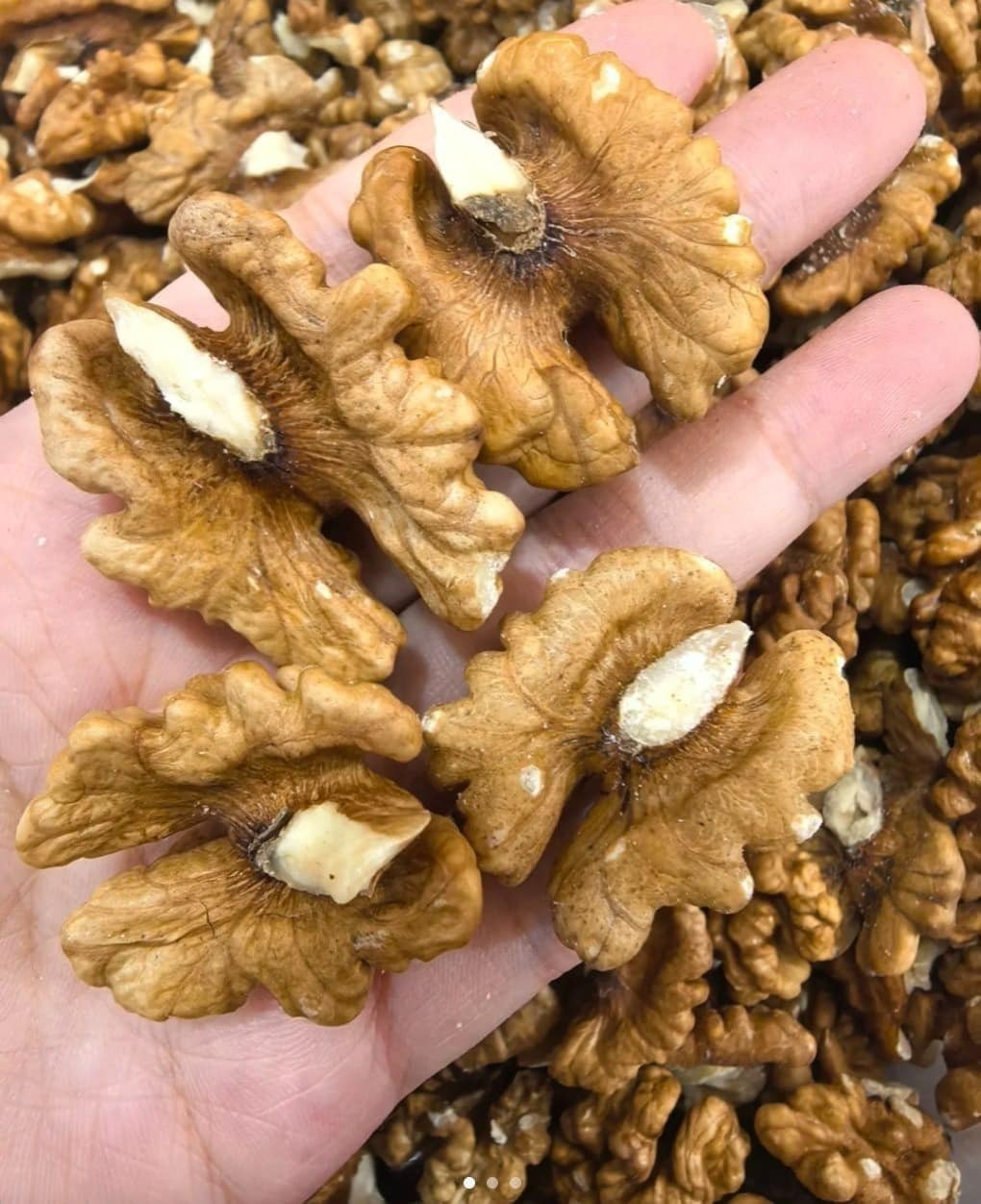
How to Add Walnuts to Your Diet
Handful as a snack – Simple and satisfying
Chopped on oatmeal or yogurt – Adds crunch and nutrition
In salads – Pairs beautifully with apple, pear, or goat cheese
In baked goods – Brownies, banana bread, muffins
Blended into pesto – Replace pine nuts with walnuts
As a crust for fish or chicken – Crushed walnuts add flavor and texture
In homemade granola – Perfect with oats and dried fruit
In smoothies – Adds healthy fats and creaminess
Are There Any Precautions?
Walnuts are safe for most people, but:
Nut allergies: Walnut allergy can be severe. If you have tree nut allergy, avoid walnuts.
Calorie awareness: While healthy, walnuts are calorie-dense. Stick to the recommended portion.
Oxalates: Walnuts contain oxalates, which can contribute to kidney stones in susceptible individuals. If you have a history of stones, moderate your intake.
Blood thinners: High doses of walnuts may have mild blood-thinning effects. If you take anticoagulants, maintain consistent intake and consult your doctor.
Doctors reveal that eating walnuts regularly can:
Sharpen your brain and protect against cognitive decline
Strengthen your heart by improving cholesterol and blood pressure
Stabilize your metabolism and support healthy weight
Improve your sleep with natural melatonin
Nourish your skin from the inside out
It’s not a miracle cure. No single food is. But as part of a healthy, balanced diet, walnuts are one of the most powerful, nutrient-dense foods you can eat.
A handful a day might just be one of the simplest, most delicious things you can do for your long-term health.
