
In the quiet recesses of a forgotten shed, covered in layers of dust and cobwebs, lie relics of the past waiting to be rediscovered. Among the clutter of old tools and miscellaneous objects, you might stumble upon something intriguing, something that raises more questions than answers. Such was the case when a heavy steel tool was unearthed, a tool that initially resembled a large C-clamp but with peculiar features that hinted at a more specialized purpose.
Discovering old tools can often feel like stepping into a time machine, offering a glimpse into the craftsmanship and ingenuity of earlier generations. This particular tool, with its rugged design and mysterious attachments, invites curiosity. What is it? What was it used for? And perhaps most importantly, does it hold any value beyond its utilitarian origins? In this article, we’ll delve into these questions, exploring the tool’s features, potential uses, and historical context.
1. First Impressions: A Mysterious Heavy Steel Clamp
Upon first glance, the tool appears robust and well-crafted, typical of mid-20th-century manufacturing. It’s made of heavy steel, with a weight that suggests durability and strength. Measuring approximately 12 inches in length, the tool’s structure is similar to a C-clamp, yet it deviates in significant ways. The primary body is a solid metal frame, with a screw mechanism that allows for adjustable pressure. However, it is the tool’s unique forked end that sets it apart from ordinary clamps.
This forked end, measuring about 3 inches in width, features two prongs that extend outward. The addition of a spring mechanism adds to the mystery, as this is not a common feature found in standard C-clamps. The tool’s design suggests it was intended for a specific task, requiring both precision and strength. The presence of a screw thread handle further implies that it was used to apply controlled pressure, possibly in an industrial or mechanical setting.
2. Key Clues: The Forked End And Spring Mechanism
The forked end of the tool is particularly telling. Unlike the flat jaws of a typical clamp, this forked design indicates it was meant to engage with a specific component. This suggests a specialized application, potentially in the realm of automotive or machinery repair. The spring mechanism is another crucial clue, as it indicates the tool was likely used in a repetitive process that required quick and efficient application of pressure.
The spring mechanism, positioned near the forked end, may have been used to hold the prongs in place or to provide a counteracting force when the screw mechanism was engaged. This combination of features suggests the tool was designed to interact with components that needed to be compressed or held in place temporarily, such as during assembly or disassembly processes.
3. Ruling Out Common Shop Tools And C-Clamps
To understand what this tool is, it’s essential to first rule out what it isn’t. While it shares similarities with common shop tools like C-clamps, the forked end and spring mechanism are atypical for such tools. C-clamps are generally used for holding materials together or securing them to a workbench, featuring simple flat jaws and a straightforward screw mechanism.
The presence of the forked end immediately distinguishes this tool from ordinary clamps, suggesting a more niche application. Similarly, the spring mechanism is not a feature found in standard clamps, which rely solely on mechanical pressure applied through the screw. This indicates that the tool was designed for a specific function that required more than simple clamping force.
4. What A Valve Spring Compressor Is And How It Works
A valve spring compressor is a specialized tool commonly used in automotive repair. Its primary function is to compress the valve springs on an engine during the process of removing or installing valves. The tool’s design allows mechanics to safely and efficiently compress the springs, preventing potential damage to the engine components.
A typical valve spring compressor features a frame similar to a C-clamp, with a screw mechanism for applying pressure. The forked end is designed to fit around the valve spring, while the opposite end holds the valve in place. This enables the user to compress the spring, allowing for the removal or installation of the valve retainer. The spring mechanism often found in these tools helps maintain tension, providing stability during the process.
5. Matching The Features: Why This Tool Fits The Valve Spring Compressor Profile
This mysterious tool’s characteristics align closely with those of a valve spring compressor. The forked end is indicative of a design meant to engage with circular components like valve springs. Its width and shape are consistent with the requirements for compressing and holding springs in place during automotive engine work.
The presence of a spring mechanism further supports this identification, as it would assist in maintaining pressure while the valve spring is compressed. The robust construction and heavy-duty steel material are typical of tools designed for automotive applications, where durability and strength are paramount due to the forces involved in engine maintenance tasks.
6. Where And When Tools Like This Were Commonly Used
Valve spring compressors have been staples in automotive repair shops since the early days of internal combustion engines. They are particularly prevalent in settings where engine rebuilding and maintenance are performed, such as automotive garages and specialized machine shops.
Tools like this were especially common during the mid-20th century when many mechanics operated independently or in small shops. The durable construction of such tools meant they were built to last, often passed down through generations of mechanics. This particular tool likely dates back several decades, making it a piece of history from a time when automotive repair was more hands-on and less reliant on computerized diagnostics.
7. How To Safely Test Its Function Without Damaging It
Before attempting to use or test this tool, it’s crucial to ensure it is in good condition. Start by inspecting the tool for signs of wear or damage, such as cracks in the metal or a compromised spring mechanism. If the tool appears sound, you can proceed with a basic functionality test.
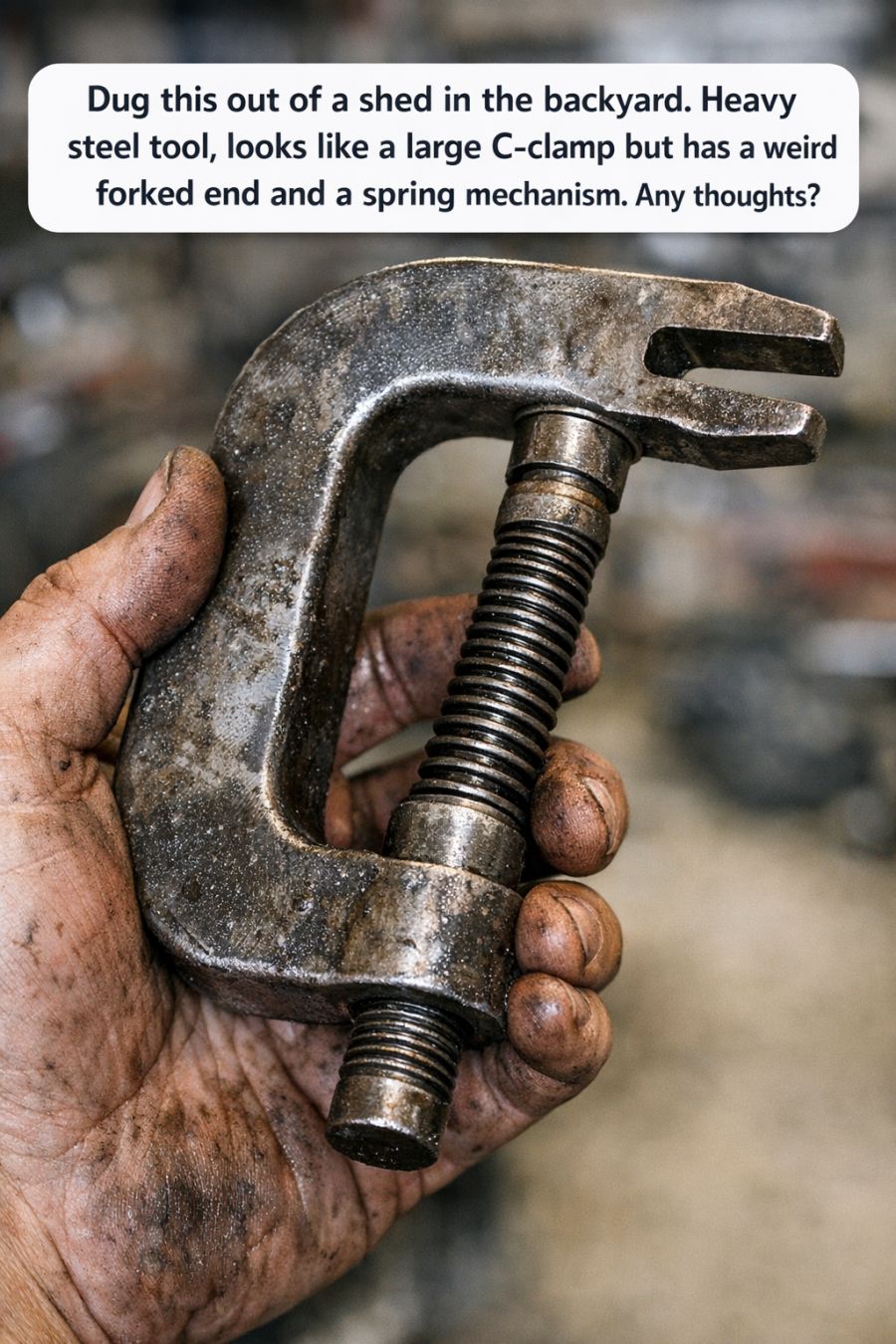
Dug this out of a shed in the backyard. Heavy steel tool, looks like a large C-clamp but has a weird forked end and a spring mechanism. Any thoughts?
Pages: 1 2
