
Gardening can sometimes lead to unexpected encounters with creatures that seem straight out of a science fiction movie. While turning the soil, you may come across a bug with a peculiar appearance that leaves you both intrigued and alarmed. This discovery might prompt questions about its origin and whether it poses any threat to you or your plants.
One such creature that often surprises gardeners is the Jerusalem cricket, a large insect that resembles something alien with its distinctive features. Its unusual look and size often cause fear, but understanding this bug can help alleviate concerns and even foster an appreciation for its role in the ecosystem.
1. Meet the Jerusalem Cricket: The ‘Alien’ Bug in Your Garden
The Jerusalem cricket, also known as ‘Stenopelmatus fuscus,’ is a member of the Stenopelmatidae family. Despite its name, it is neither a true cricket nor is it native to Jerusalem. These insects are primarily found in western United States and parts of Mexico.
They are nocturnal and spend most of their lives underground, which is why they are often discovered when soil is disturbed. Jerusalem crickets can grow up to 2 inches (5 cm) in length, making them one of the largest North American insects.
2. Key Features: Bald Head, Thick Legs, and Striped Abdomen Explained
The Jerusalem cricket’s most noticeable feature is its large, bald, and shiny head, which is equipped with strong mandibles. These are used for feeding on roots, tubers, and decaying organic matter. Its thick legs are adapted for digging, allowing it to burrow into the soil efficiently.
The insect’s abdomen is striped and segmented, which can give it a banded appearance. This characteristic, along with its overall size and form, contributes to its alien-like appearance that might startle those unfamiliar with it.
3. Where They Live and Why You Just Dug One Up
Jerusalem crickets prefer moist environments and are often found in gardens, forests, and under rocks or logs. They thrive in areas where they can easily burrow and find decaying plant material to feed on.
If you have disturbed the soil while gardening, especially in moist and sheltered spots, you may have inadvertently uncovered their habitat. Their presence in your garden is an indication of healthy soil, as they contribute to the ecosystem by breaking down organic matter.
4. Are Jerusalem Crickets Dangerous to Humans or Pets?
Despite their intimidating appearance, Jerusalem crickets are not dangerous to humans or pets. They are non-venomous and generally non-aggressive. However, they can bite if handled roughly, but the bite is not medically significant.
These insects pose no threat to your garden plants or pets, as they primarily feed on organic matter rather than live plant material.
5. Do They Bite or Sting? What to Do If One Nips You
Jerusalem crickets do not possess a stinger, but they have strong mandibles that can deliver a painful bite if they feel threatened. If bitten, it is important to clean the bite area with soap and water to prevent infection.
To avoid being bitten, it is advisable to handle them gently or use a container to move them. If you are bitten, applying a cold compress can help reduce any swelling or discomfort.
6. Helpful or Harmful? Their Surprising Role in the Soil Ecosystem
Jerusalem crickets play a crucial role in the soil ecosystem by aiding in the decomposition of organic material. As they feed on decaying plant matter, they help recycle nutrients back into the soil, promoting plant growth.
By aerating the soil through their burrowing activities, they improve soil structure and drainage. Their presence is often an indicator of a healthy and balanced soil environment.
7. Why They Make Creepy Sounds and What They Mean
Jerusalem crickets are known to produce sounds by rubbing their hind legs against their abdomen, a behavior known as stridulation. These sounds are often used for communication, particularly during mating season.
While these sounds can be unsettling, they are a normal part of the insect’s behavior and are not a cause for concern. Listening to these sounds can offer a unique insight into the nocturnal activities of these fascinating creatures.
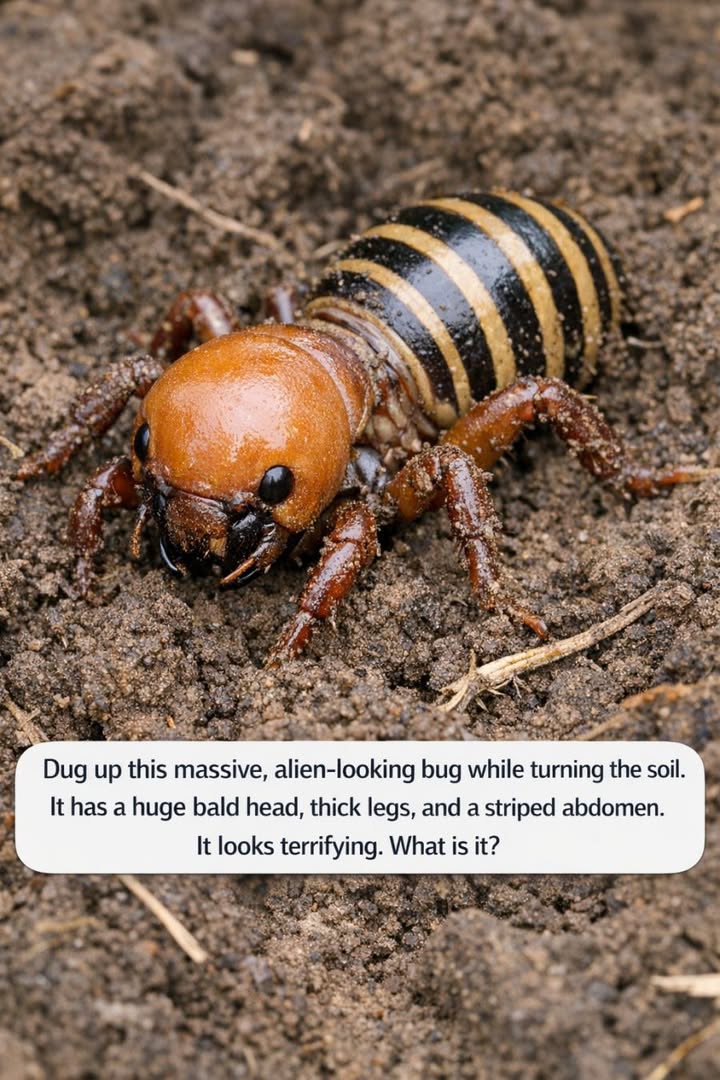
Dug up this massive, alien-looking bug while turning the soil. It has a huge bald head, thick legs, and a striped abdomen. It looks terrifying. What is it?
Pages: 1 2
