
Beneficial nematodes can be mixed with water and applied to the soil, where they will hunt down and destroy larvae. Bti can be found in products like mosquito dunks, which can be crumbled and applied to the soil surface. Both methods are highly effective and safe for indoor use.
8. Seal Soil Surfaces With Sand, Gravel, or Gnat-Proof Mulch
Covering the soil surface with a layer of sand, gravel, or a specially designed gnat-proof mulch creates a physical barrier that prevents adult gnats from accessing the soil to lay eggs. This method also helps maintain a drier top layer of soil.
Use a layer approximately 1/4 to 1/2 inch thick to ensure complete coverage. This barrier not only deters gnats but also adds an aesthetic touch to your plant displays. Ensure the material you use does not retain moisture, as this would counteract the drying effect needed to disrupt the gnats’ lifecycle.
9. Clean Up Saucers, Dead Leaves, and Hidden Moisture Traps
Regularly inspect and clean plant saucers, as they can collect excess water and create hidden moisture traps that attract fungus gnats. Remove any dead leaves or plant debris from the soil surface, as decaying organic matter is a food source for larvae.
Pay attention to hidden areas such as under pots or in crevices where moisture might accumulate unnoticed. Keeping your plant area clean and dry is an essential step in preventing gnat infestations and promoting overall plant health.
10. Quarantine New Plants and Potting Soil Before Spring Growth
When bringing new plants or potting soil into your home, quarantine them for a period to ensure they are not carrying fungus gnats. Place new plants in a separate area and monitor them for any signs of gnats before integrating them with your existing collection.
For potting soil, consider storing it in a sealed container or spreading it out to dry slightly indoors before use. This precaution helps prevent inadvertently introducing pests to your indoor garden, especially as spring growth begins and plants become more vulnerable.
11. Set a Simple Weekly Gnat-Prevention Routine
Establishing a regular routine can help keep fungus gnats at bay. Spend a few minutes each week inspecting your plants, cleaning up debris, and checking for excess moisture. Adjust watering schedules as necessary and replace sticky traps as needed.
Incorporating these practices into your weekly plant care routine not only prevents gnats but also encourages you to stay attentive to your plants’ overall health. By being proactive, you can enjoy a flourishing indoor garden free of unwanted pests as spring arrives.
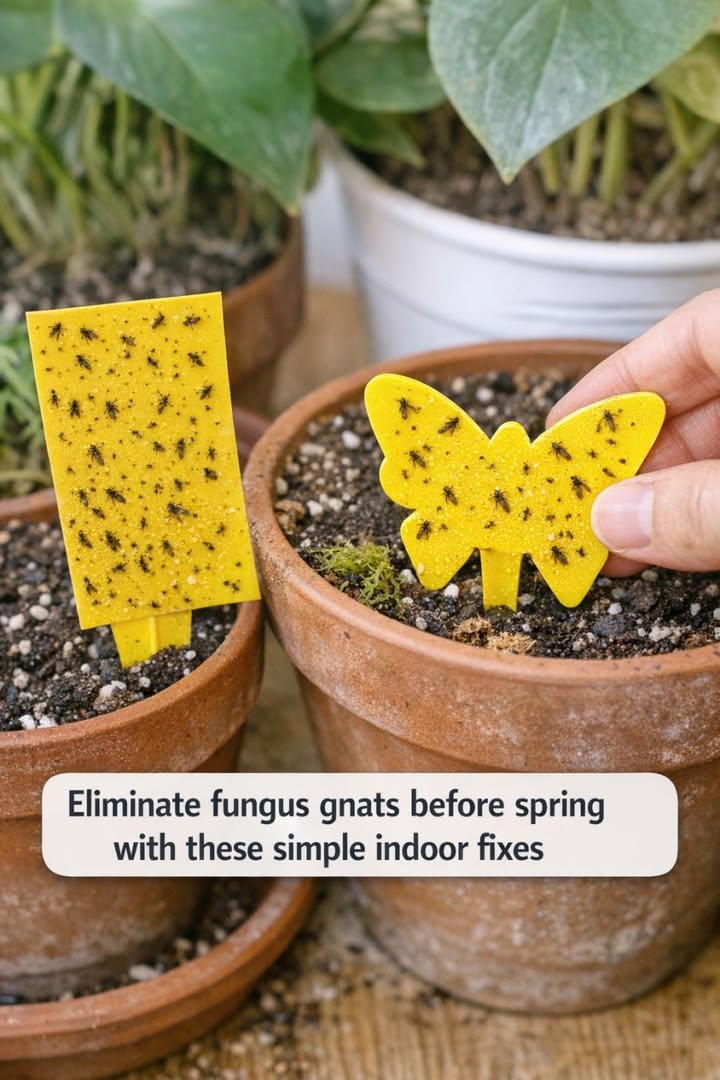
Eliminate fungus gnats before spring with these simple indoor fixes
Pages: 1 2
