
The Peace Lily, with its lush green leaves and elegant white flowers, is a favorite among indoor plant enthusiasts. However, one common issue that many plant owners face is the drooping of its stems. This can be disheartening, especially when you’ve tried everything you know to revive your once-thriving plant.
Fortunately, there’s a simple and natural solution that can breathe new life into your drooping Peace Lily stems: rice water. This starchy solution, often discarded after cooking rice, can be a miraculous elixir for your plants. Let’s explore how this humble liquid can transform your Peace Lily from wilted to wonderful.
1. Why Your Peace Lily’s Stems Are Drooping in the First Place
There are several reasons why your Peace Lily might be drooping. The most common cause is improper watering. Peace Lilies prefer consistently moist soil but are sensitive to overwatering. If the soil is too dry, the leaves will droop as a sign of stress, but if it’s too wet, the roots may rot, leading to a similar drooping appearance.
Another factor could be inadequate light. While Peace Lilies can tolerate low light, they thrive in bright, indirect light. Insufficient light can cause the plant to become weak and limp. Additionally, temperature fluctuations and drafts can stress the plant, causing the stems to droop.
2. The Science Behind Rice Water as a Plant-Reviving Elixir
Rice water is the starchy liquid left over after rinsing or boiling rice. It contains a variety of nutrients that can benefit plants, including nitrogen, phosphorus, and potassium, which are essential for healthy growth. These nutrients are absorbed by the plant’s roots, providing a gentle boost.
Studies have shown that the carbohydrates and amino acids in rice water can enhance microbial activity in the soil, promoting a healthy root environment. This improved root health can lead to stronger, more resilient plants, capable of recovering from drooping and other stressors.
3. How to Make Cloudy White Fermented Rice Water Step by Step
To make fermented rice water, start by rinsing one cup of rice to remove any impurities. Place the rinsed rice in a bowl and cover it with two cups of water. Allow the rice to soak for 30 minutes, stirring occasionally to help release the starch.
After soaking, strain the rice, reserving the water. Pour the rice water into a clean jar, cover it loosely with a lid or cloth, and let it sit at room temperature for 24 to 48 hours. This fermentation process enhances the nutrient content of the rice water. Once fermented, the rice water will have a slightly sour smell and a cloudy appearance.
4. The Right Fermentation Time for Maximum Peace Lily Benefits
The ideal fermentation period for rice water is between 24 to 48 hours. Fermenting for too long can lead to an overly sour solution that might be too acidic for your plants. If you’re new to using rice water, start with a 24-hour fermentation period.
Monitor the rice water closely during fermentation. The goal is to achieve a slight sourness without crossing into unpleasant territory. A 24 to 48-hour timeframe typically provides a balance between nutrient enhancement and acidity control, making it optimal for Peace Lilies.
5. Exactly How to Dilute and Feed Rice Water to Drooping Stems
Once your rice water is ready, it’s crucial to dilute it before using it on your Peace Lily. Mix one part fermented rice water with three parts water. This dilution ensures that the solution is not too strong, which could potentially harm the plant.
Water your Peace Lily with the diluted rice water, ensuring that the soil is evenly moistened. Avoid soaking the soil, as this can lead to waterlogged conditions. Use this solution in place of regular watering every two to four weeks, depending on your plant’s needs.
6. When and How Often to Use This Starchy Solution Safely
Rice water should be used as a supplement to your regular watering routine, not as a replacement. For optimal results, apply the diluted rice water once every two to four weeks. This frequency allows your plant to absorb the beneficial nutrients without overwhelming it.
It’s important to observe your Peace Lily for any signs of over-fertilization, such as leaf burn or yellowing. If such symptoms occur, reduce the frequency or further dilute the rice water solution.
7. Visual Signs Your Peace Lily Is Responding to the Rice Water
After a few applications of rice water, you should begin to notice improvements in your Peace Lily’s health. The most immediate sign is a reduction in drooping, with stems appearing firmer and more upright.
New growth is another positive indicator. Look for healthy, vibrant new leaves emerging from the plant’s center. Additionally, existing leaves may appear more lush and green, reflecting improved overall health.
8. Common Mistakes That Turn Rice Water From Cure to Killer
One common mistake is using undiluted rice water, which can lead to nutrient burn and harm the plant. Always dilute your rice water according to the recommended ratio.
Another error is overusing rice water. While it’s beneficial, too frequent application can lead to nutrient overload. It’s also crucial to monitor your plant’s response and adjust usage accordingly.
9. Combining Rice Water With Other Peace Lily Care Tweaks
In addition to using rice water, ensure your Peace Lily is receiving proper care in other areas. Maintain consistent watering, ensuring the soil is moist but not waterlogged.
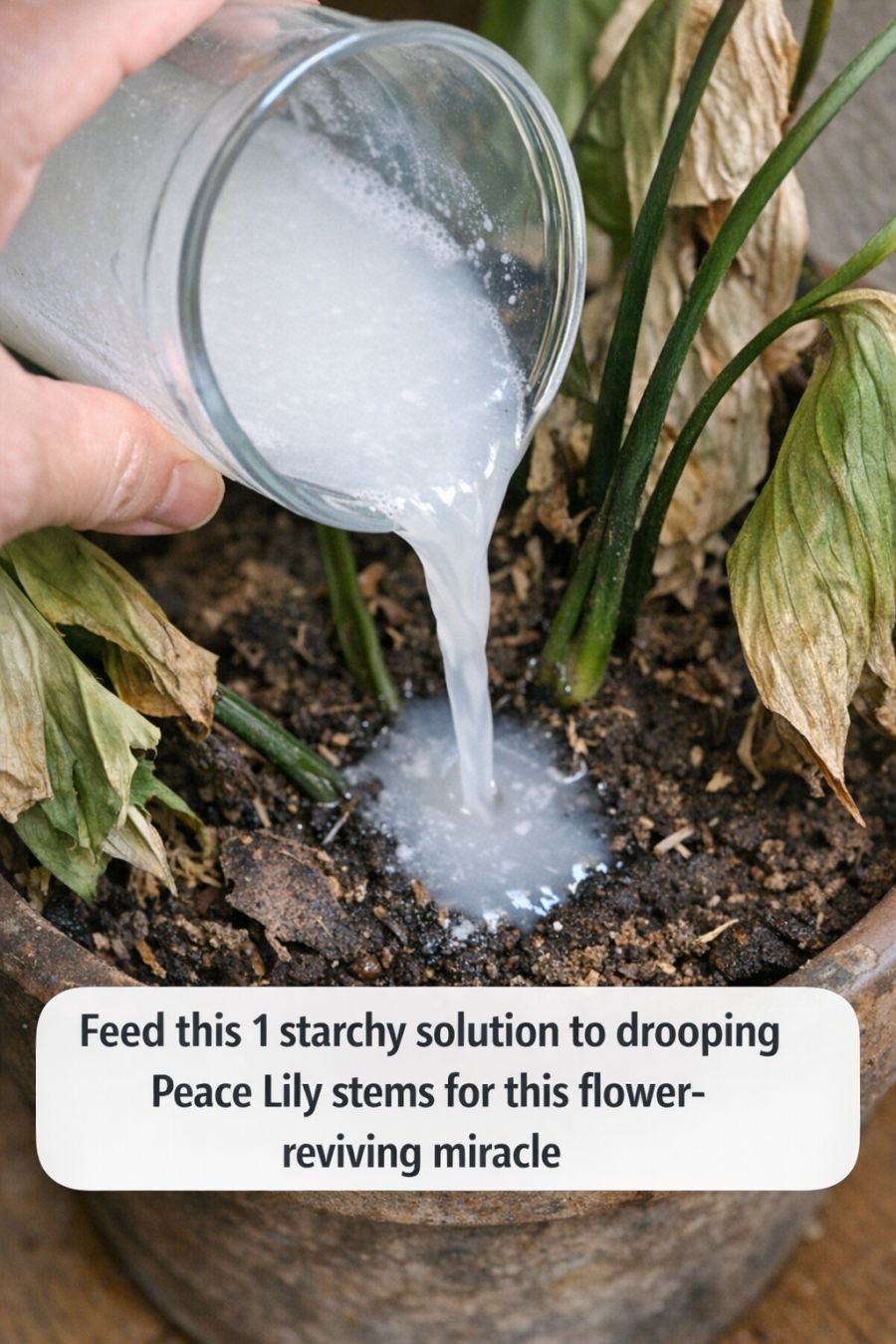
Feed this 1 starchy solution to drooping Peace Lily stems for this flower-reviving miracle
Pages: 1 2
