
In small numbers, green shield bugs may not cause significant harm, and their presence can indicate a healthy, biodiverse environment. However, if their population grows too large, they can become a nuisance by damaging plants and reducing crop yields.
6. Common Look-Alikes: Other Insects That Lay Similar Egg Clusters
Several other insects lay eggs that may resemble those of the green shield bug. For instance, the eggs of the Harlequin bug, another member of the stink bug family, are similar in appearance but tend to have a more elongated shape and are often white with black markings.
Ladybugs also lay eggs on the underside of leaves, but their eggs are usually yellow or orange and are more oval-shaped. Identifying the specific insect responsible for the egg clusters is crucial for determining the appropriate response.
7. What to Do When You Find These Egg Clusters on Your Tomatoes
Upon discovering egg clusters on your tomato plants, the first step is to confirm their identity. If they are indeed green shield bug eggs, you can choose to manually remove them by gently scraping them off with a fingernail or a soft brush.
Monitoring the plants regularly for new egg clusters and signs of nymphs or adult bugs can help manage their population. Encouraging natural predators and maintaining a healthy garden ecosystem will also aid in keeping their numbers in check.
8. Natural Predators and Organic Ways to Keep Green Shield Bugs in Check
Natural predators such as birds, parasitic wasps, and predatory insects like assassin bugs can help control green shield bug populations. Encouraging these predators by providing natural habitats and avoiding broad-spectrum insecticides can enhance their effectiveness.
Using organic sprays made from neem oil or insecticidal soap can also help manage green shield bugs without harming beneficial insects. Regularly inspecting plants and removing eggs and nymphs by hand can prevent their numbers from reaching damaging levels.
9. When (If Ever) You Should Use Chemical Controls
Chemical controls should be considered a last resort when dealing with green shield bugs, especially if organic methods have proven insufficient and the infestation is threatening your crop yield. Select insecticides specifically labeled for stink bugs and follow application instructions carefully to minimize harm to non-target species.
It’s important to weigh the potential benefits against the risks, as chemical treatments can disrupt the natural balance of your garden and harm beneficial insects.
10. How to Prevent Future Egg Clusters on Your Tomato Plants
To prevent future egg clusters, consider implementing cultural practices such as crop rotation and interplanting with aromatic herbs like basil or mint, which can deter pests. Maintaining healthy soil and ensuring proper plant spacing can also reduce stress on plants, making them less attractive to pests.
Regularly checking the undersides of leaves and removing any egg clusters you find will help prevent the population from establishing itself. Encouraging a diverse range of plants in your garden will attract beneficial insects that naturally keep pest populations in check.
11. When to Relax: Signs Your Garden Is Still in Healthy Balance
A healthy garden will naturally have a variety of insects, including some pests. The presence of green shield bugs or their eggs does not necessarily indicate a problem unless their numbers are causing noticeable damage to your plants.
Look for signs of a balanced ecosystem, such as a variety of insects, healthy plant growth, and the presence of natural predators. If your plants appear vigorous and are producing fruit despite the presence of some pests, it’s a good indication that your garden is in balance and no drastic measures are needed.
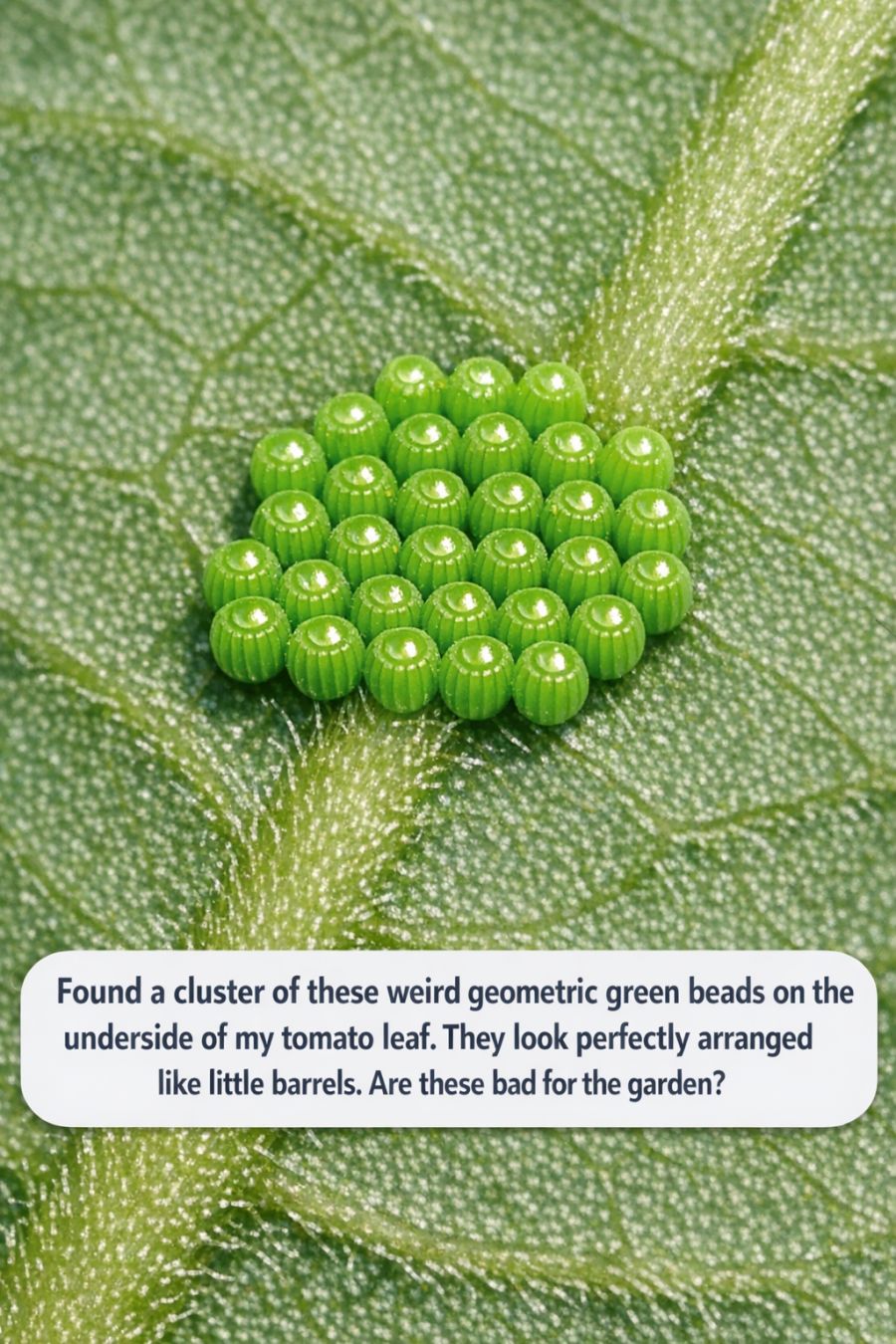
Found a cluster of these weird geometric green beads on the underside of my tomato leaf. They look perfectly arranged like little barrels. Are these bad for the garden?
Pages: 1 2
