
9. When Your Backyard Find Might Actually Be Man-Made
While the majority of these finds are natural, there are instances where a discovered object might be man-made. This is particularly true if the object is found in a context rich with human artifacts or if it clearly exhibits features inconsistent with natural formations.
If your find includes non-stone materials, such as rusted metal or recognizable tool marks, it may indeed be a piece of historical hardware. In such cases, consulting a local archaeologist or historian could provide further insights.
10. How To Document, Preserve, And Share Your Fossil Discovery
If you believe you have found a crinoid fossil, documenting it is the first step in preserving its history. Take clear photographs from multiple angles and note its dimensions and any unique features. Keep a record of where and when you found it.
To preserve the fossil, handle it gently and store it in a safe place. If you wish to share your discovery, consider reaching out to a local natural history museum or a paleontology group. They can provide more information and might be interested in adding it to their collection.
11. What Your “Stone Screw” Reveals About Earth’s Ancient Oceans
Finding a crinoid fossil in your backyard provides a direct connection to Earth’s ancient oceans. It offers a glimpse into a time when your land was submerged beneath warm, shallow seas teeming with marine life.
These fossils are a testament to the dynamic changes our planet has undergone over millions of years. They serve as a reminder of the rich biological history that predates human civilization and the intricate beauty of natural formations.
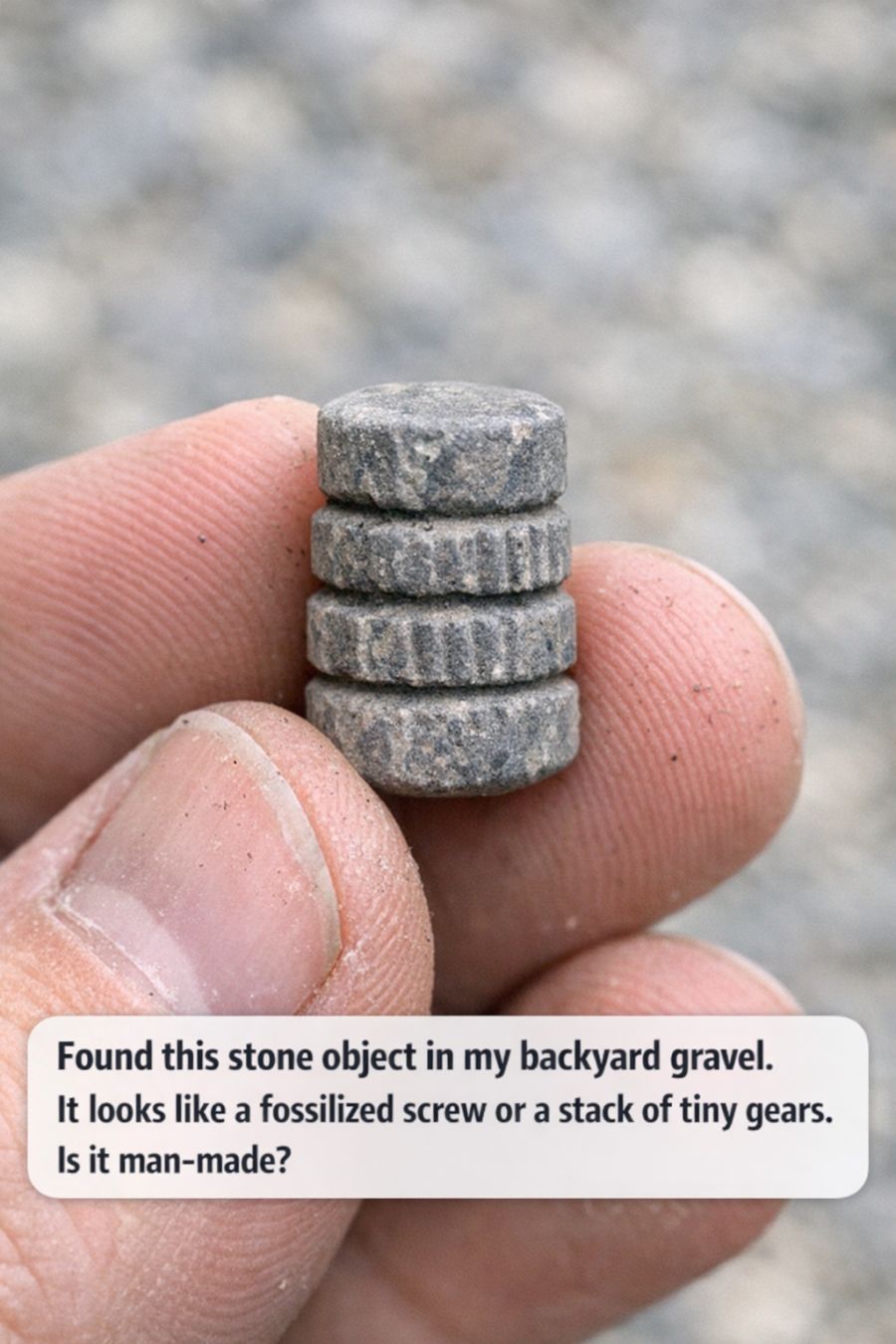
Found this stone object in my backyard gravel. It looks like a fossilized screw or a stack of tiny gears. Is it man-made?
Pages: 1 2
