
Ornamental cherry trees are adored for their breathtaking pink blossoms, a quintessential symbol of spring’s arrival. However, achieving that dazzling display requires some proactive care as the season begins. As the winter chill recedes, it’s the perfect time to prepare your cherry tree for a spectacular bloom.
From pruning to pest control, each step plays a vital role in ensuring your tree can produce an abundance of flowers. This guide will walk you through eight crucial steps to help your ornamental cherry burst into an impressive array of pink blossoms, making your garden the envy of the neighborhood.
1. Start With a Hard Prune to Wake Up Flowering Wood
Pruning is an essential first step in encouraging your ornamental cherry to produce as many blooms as possible. In early spring, before the buds begin to swell, take the time to prune your tree. Remove about 10-20% of the older wood to stimulate new growth, which is more likely to produce flowers. Focus on cutting back branches that are more than three years old, as younger wood tends to flower more prolifically.
Use sharp, clean pruning shears to make clean cuts just above a bud or a branch junction to avoid damaging the tree. This hard prune not only encourages flowering but also helps to shape the tree and improve air circulation, which is crucial for preventing disease.
2. Remove Dead, Crossing, and Shaded Branches for Maximum Bloom
In addition to the hard prune, it’s important to remove any dead, crossing, or shaded branches. Dead branches can be identified by their brittle texture and lack of green tissue under the bark. Crossing branches can rub against each other, causing wounds that invite disease. Shaded branches, meanwhile, won’t receive enough sunlight to produce healthy flowers.
Carefully cut away these branches to open up the canopy of your tree. This not only allows more sunlight to penetrate but also improves air circulation, reducing the risk of fungal infections and other diseases that can thwart your tree’s blooming potential.
3. Feed With the Right Spring Fertilizer (But Don’t Overdo It)
Fertilization provides your cherry tree with the nutrients it needs to support a strong bloom. In early spring, apply a balanced, slow-release fertilizer, such as a 10-10-10 formula, around the base of your tree. Use about 1 pound of fertilizer per inch of trunk diameter, spreading it evenly over the root zone.
Avoid over-fertilizing, as too much nitrogen can encourage leaf growth at the expense of flowers. A soil test can help determine any specific nutrient deficiencies, allowing you to tailor your feeding approach to your tree’s exact needs.
4. Water Deeply and Consistently as Buds Swell
As your cherry tree prepares to bloom, it’s crucial to provide consistent moisture. Water deeply once a week during dry spells, ensuring the water reaches the root zone. This encourages deep root growth and helps support the upcoming floral display.
Keep an eye on the weather and adjust your watering schedule accordingly. Aim to provide about 1 inch of water per week, either from rainfall or supplemental watering, and avoid wetting the foliage to reduce the risk of disease.
5. Mulch Smartly to Lock In Moisture and Protect Roots
Mulching is a simple yet effective way to conserve moisture and protect your cherry tree’s roots. Apply a 2-3 inch layer of organic mulch, such as wood chips or bark, around the base of the tree, leaving a gap around the trunk to prevent rot.
This layer of mulch helps retain soil moisture, suppresses weeds, and moderates soil temperature. It also gradually breaks down, adding organic matter to the soil, which can improve its structure and fertility over time.
6. Stop Grass and Weeds Robbing Nutrients From Your Cherry
Grass and weeds compete with your cherry tree for water and nutrients, potentially reducing the number of blossoms. Clear the area around the base of the tree, creating a weed-free zone that extends at least 3 feet out from the trunk.
Regularly check for new weed growth and remove it promptly. You can also use a pre-emergent herbicide in early spring to prevent weed seeds from germinating, but be sure to follow all label instructions to avoid harming your tree.
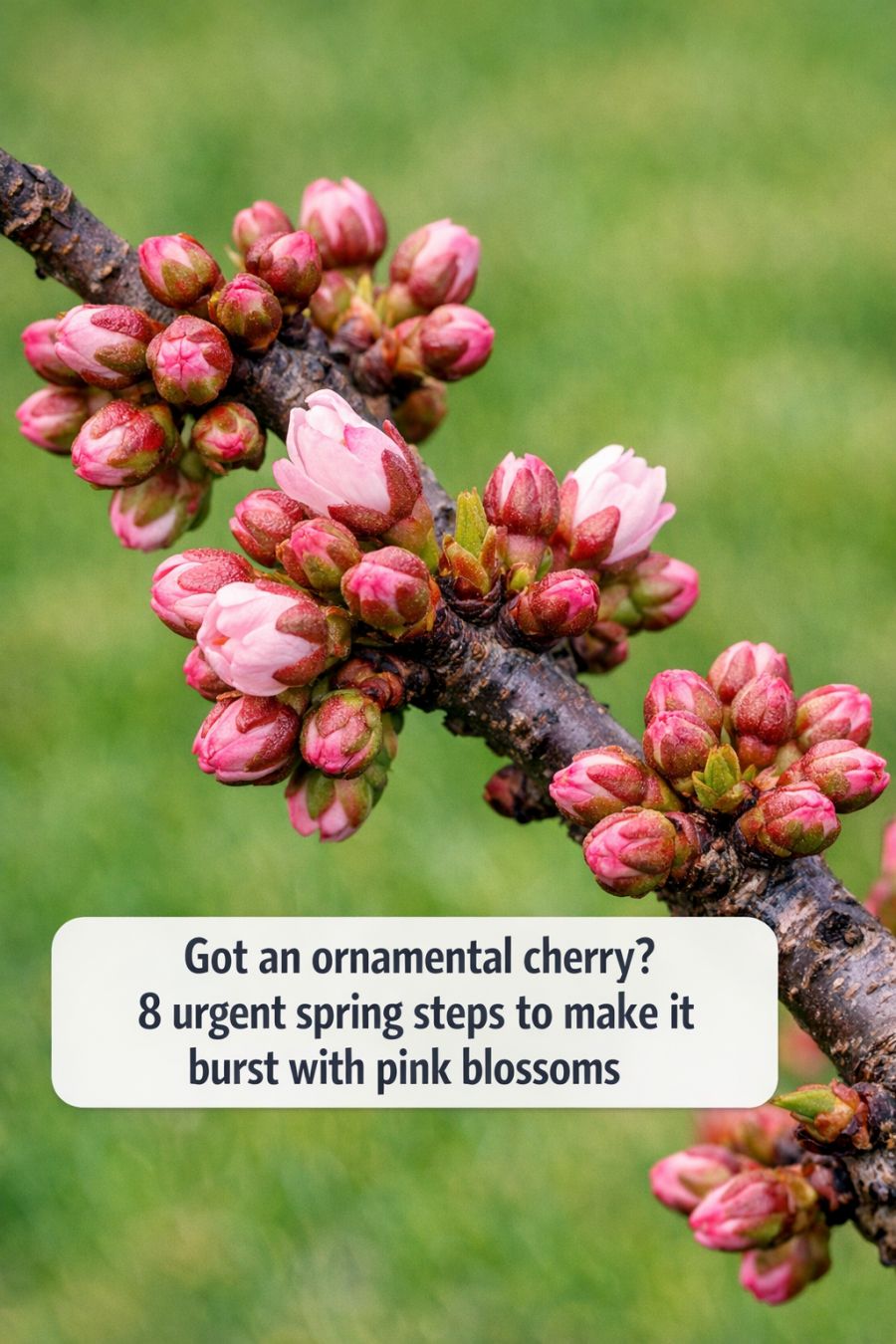
Got an ornamental cherry? 8 urgent spring steps to make it burst with pink blossoms
Pages: 1 2
