
9. Look For Early Pests, Disease Spots And Wilting
Spring is the time to scout for early pest infestations and signs of disease. Check the leaves and stems for aphids, spider mites, or scale insects. These pests can be controlled with insecticidal soap or neem oil if detected early.
Look for discolored spots on leaves, which may indicate fungal issues such as powdery mildew or leaf spot. Ensure your hydrangeas have good airflow and avoid overhead watering to reduce disease risk. Addressing these issues early prevents them from affecting your plants’ health and bloom production.
10. Refresh Mulch And Add Supports Before Growth Takes Off
As new growth begins, refreshing your mulch will help retain moisture and suppress weeds. Apply a 2-3 inch layer of new mulch around the base of your hydrangeas, being careful not to cover the stems directly.
For larger hydrangeas, consider adding supports like stakes or cages to prevent flopping as blooms become heavy. Install these supports early to avoid damaging roots later in the season. Proper mulching and support will keep your hydrangeas looking tidy and healthy as they grow.
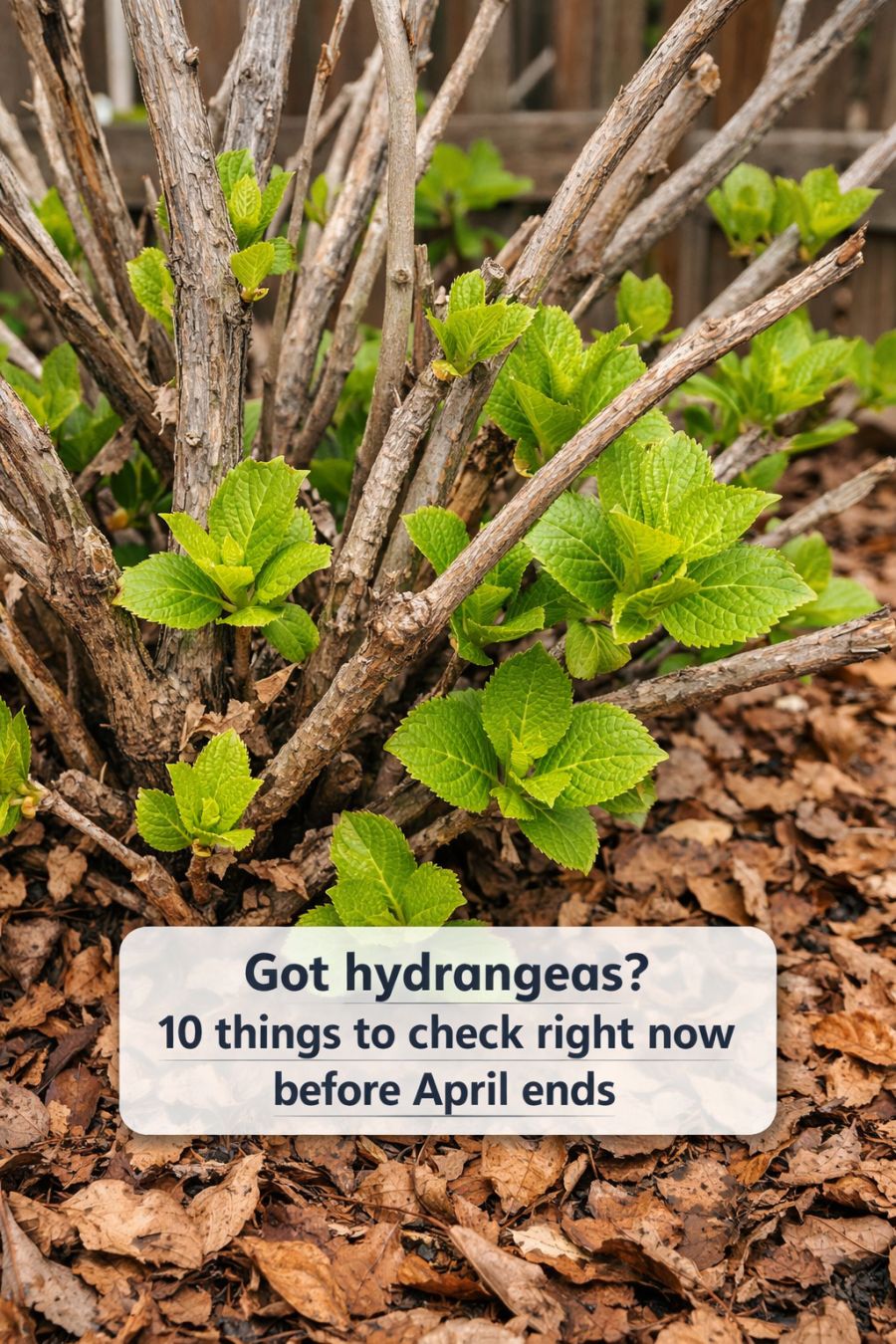
Got hydrangeas? 10 things to check right now before April ends
Pages: 1 2
