3. Feeding Them Like Annuals: Misusing Fertilizer
Peonies are perennials, not annuals, and their fertilization needs reflect this difference. Over-fertilizing can stimulate excessive foliage growth at the expense of flowers, leading to lush but bloomless plants.
It’s best to feed peonies with a balanced, slow-release fertilizer in early spring as new growth begins. A 10-10-10 fertilizer applied sparingly can help support healthy blooms. Avoid high-nitrogen fertilizers, which can encourage leaf growth over flower production.
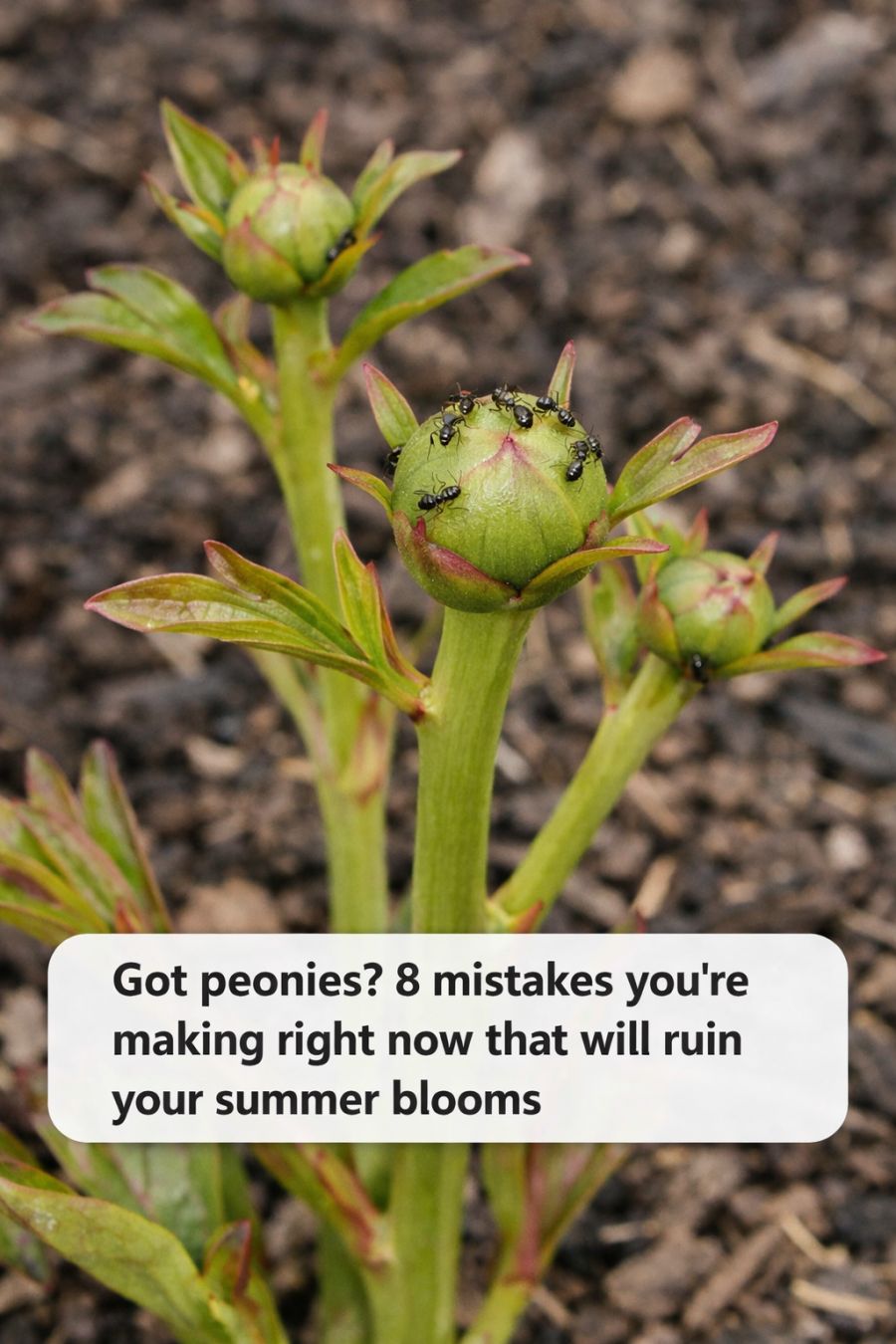
4. Letting Ant Myths Dictate Your Pest Strategy
Many gardeners mistakenly believe that ants on peonies are harmful, but in fact, they are often just attracted to the sweet nectar on the blooms. Ants do not harm peonies and can be left alone.
To manage other pests, such as aphids or thrips, use insecticidal soap or neem oil, applied in the early morning or late evening to avoid harming beneficial insects. Monitoring your plants regularly helps catch issues early before they escalate.
5. Ignoring Support Stakes Until Stems Snap
Peonies produce large, heavy blooms that can easily cause their stems to droop or snap if not properly supported. Installing peony rings or stakes early in the season, before the plants get too tall, can help keep the stems upright and prevent damage.
Choose supports that are sturdy enough to hold up the weight of the blooms but gentle enough not to damage the stems. Position them around the plant as new growth appears, adjusting them as necessary as the plant matures.
6. Skipping Spring Cleanup And Spreading Disease
Neglecting spring cleanup can leave your peonies vulnerable to diseases such as botrytis blight and powdery mildew. These diseases thrive in debris left around the base of the plants from the previous year.
In early spring, before new growth begins, remove any dead foliage and debris from around your peonies. This reduces the risk of disease and allows for better air circulation, which is essential for healthy growth.
7. Dividing, Moving, Or Pruning At The Wrong Time
Timing is crucial when it comes to dividing or moving peonies. The best time to divide and transplant peonies is in the fall, after the plants have gone dormant but before the ground freezes. This allows the roots to establish before the next growing season.