
Using a sharp knife, slice the chilled logs into 1/4- to 1/3-inch thick rounds. If any slices crumble at the edges, just press them back together gently with your fingers. Arrange the rounds on the prepared baking sheet, leaving about 1 inch between cookies. They spread only slightly.
Lightly sprinkle the tops of the cookies with the remaining 2 tablespoons of granulated sugar for a subtle sparkle. If you prefer a more defined edge, you can very gently press the tops with the bottom of a glass to even them out, then sprinkle with sugar.
Bake at 325°F (165°C) for 16–20 minutes, rotating the pan once halfway through. The cookies are done when they are set, dry-looking on top, and just turning pale golden at the edges; the centers should stay a very light cream color. Avoid browning them deeply—shortbread should look more blond than brown.
Remove the baking sheet from the oven and let the cookies cool on the pan for 5–10 minutes; they’re fragile while hot. Then transfer them carefully to a wire rack to cool completely. As they cool, they’ll firm up and develop that classic crumbly, melt-in-your-mouth texture.
Once fully cooled, transfer the cookies to an airtight tin or container. For the full Grandma Dot experience, keep the tin near your kettle or coffee station. The flavor actually improves after a day, and the cookies keep well at room temperature for about a week.
Variations & Tips
To stay true to Grandma Dot’s three-ingredient spirit, keep any changes subtle and optional. For a slightly more pronounced sweetness and crunch, roll the dough logs in coarse sugar (such as turbinado or sanding sugar) before slicing; this gives the edges extra sparkle. If you like a hint of salt with your sweets, sprinkle a few grains of flaky sea salt on top of each cookie right after baking while they’re still warm. For a citrus note, finely grate the zest of 1 small lemon or orange directly into the butter and sugar before adding the flour, taking care not to add juice (which can change the texture). You can also press the dough into an 8- or 9-inch round cake pan, score it into wedges before baking, and cut along the score lines while still warm for a more old-fashioned shortbread “slice” presentation. If your kitchen runs hot, keep the shaped dough well-chilled; cooler dough holds its shape better and gives you that tidy, crumbly edge that stacks so nicely in a tin.
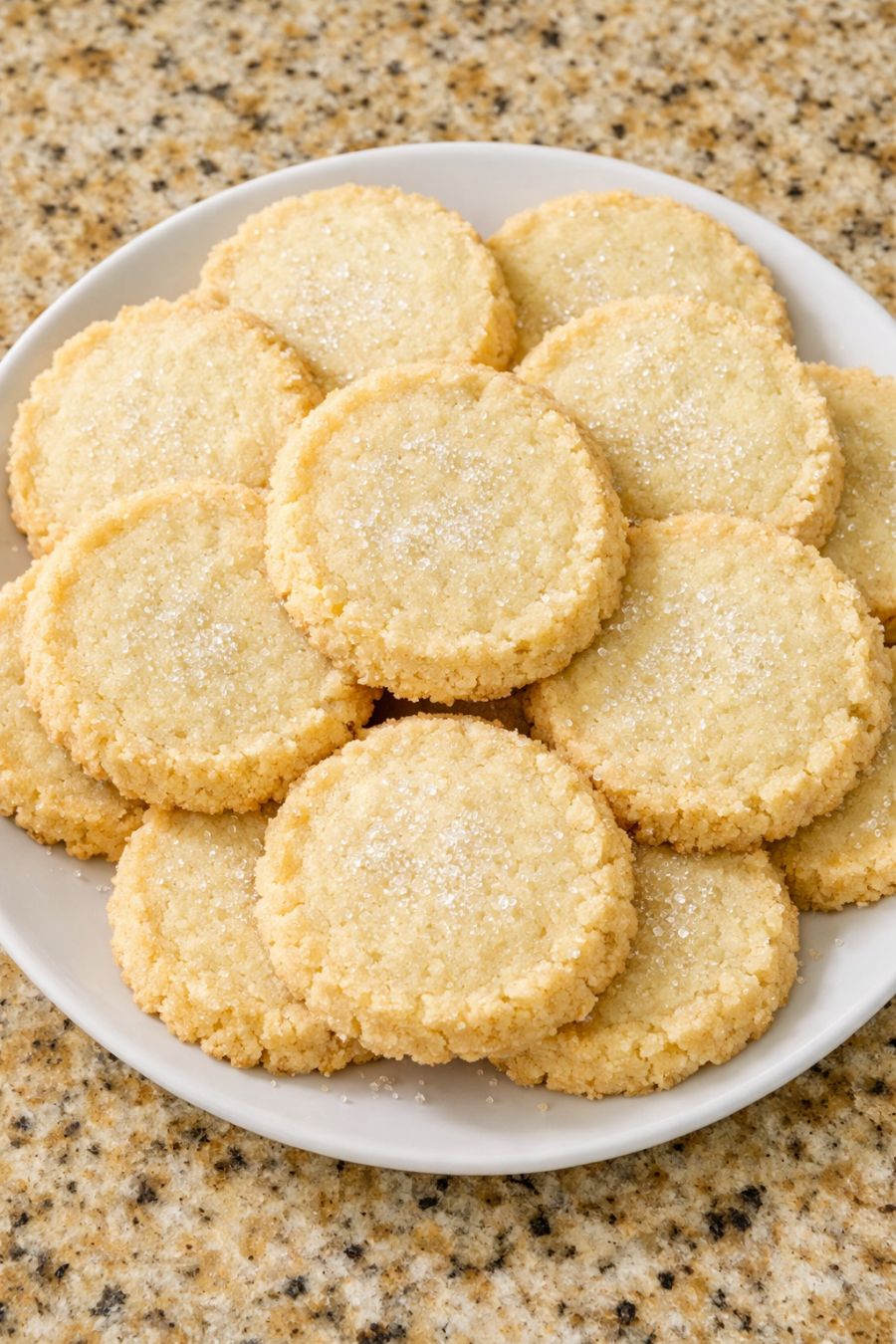
Grandma Dot kept a tin of these by the kettle and every visit turned into “just one more.”
Pages: 1 2
