
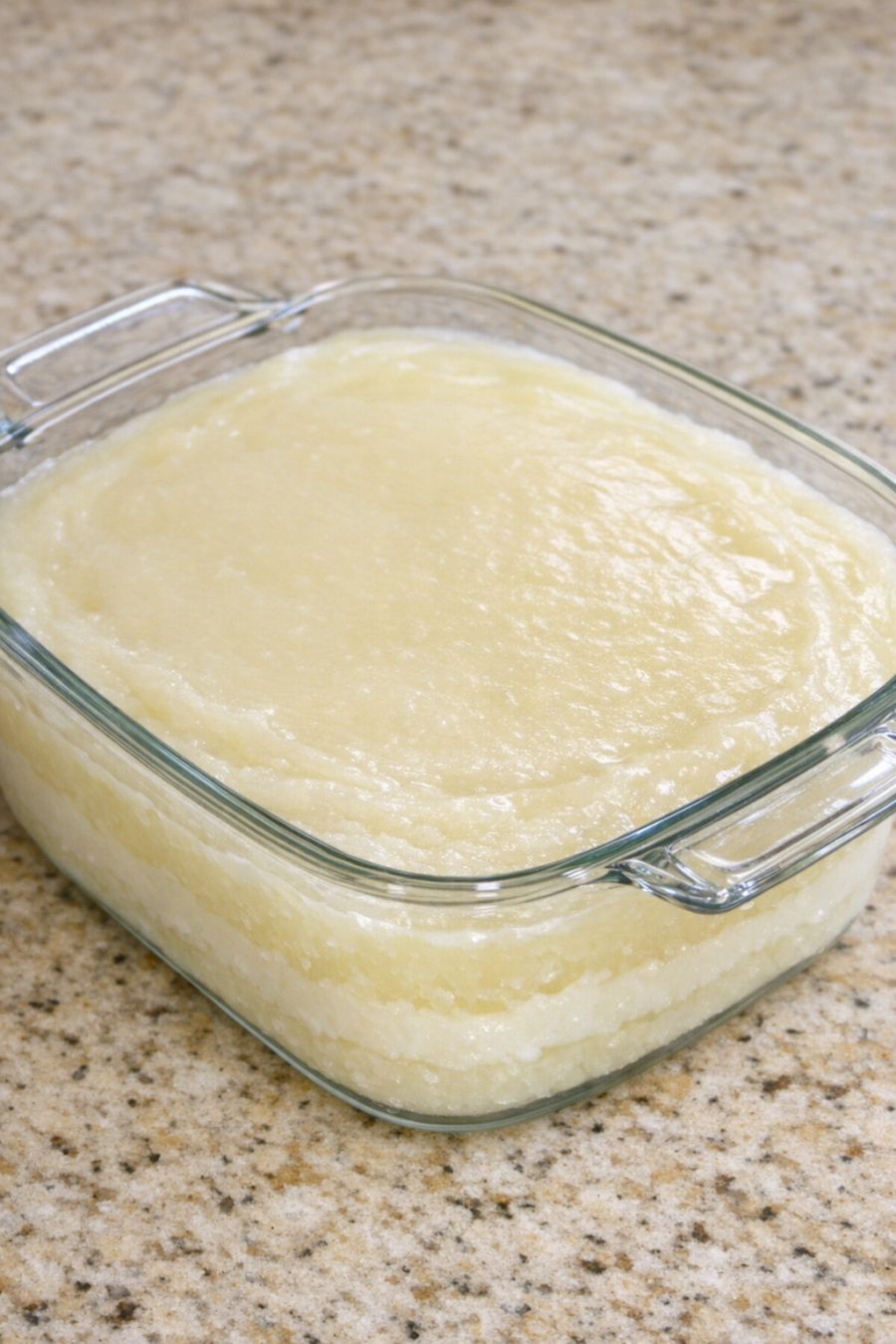
This little lemon snow is the kind of bright, thrifty dessert my Great Grandma Helen would have leaned on when the pantry was thin and the kids still needed a treat. It uses just three simple staples—lemon juice, sugar, and cornstarch—but somehow turns into a creamy, spoonable pudding that feels far fancier than it is. In our family, this was the sort of Depression era recipe that stretched a few cents into something everyone could share, and now my grandchildren scrape the glass dish clean just as fast as my brothers and I once did.
Serve this lemon snow well-chilled, scooped straight from the glass casserole dish at the center of the table. It’s lovely on its own, but you can spoon it over plain sugar cookies, simple buttered toast, or crumbled graham crackers for a bit of crunch. A dollop of lightly sweetened whipped cream or a few fresh berries on top turns it into a Sunday dinner dessert, while a plain scoop in a small bowl makes a light, bright finish to a heavier meal like pot roast or meatloaf.
3-Ingredient Depression Era Lemon Snow
Servings: 4–6
Ingredients
1/2 cup freshly squeezed lemon juice (from about 3–4 lemons)
2/3 cup granulated sugar
1/4 cup cornstarch
2 cups cold water
Directions
Lightly rinse and dry a small glass casserole dish (about 8×8 inches or similar) and set it on a heatproof surface near the stove so it’s ready for the hot pudding. No need to grease it; the lemon snow will spoon out easily once chilled.
In a medium saucepan off the heat, whisk together the sugar and cornstarch until there are no visible lumps. This helps the cornstarch disperse evenly so the lemon snow sets smooth instead of clumpy.
Slowly pour in the 2 cups of cold water while whisking constantly, making sure to scrape along the bottom and sides of the pan. Keep whisking until the sugar and cornstarch are fully dissolved and the mixture looks milky and smooth.
Place the saucepan over medium heat and cook the mixture, stirring steadily with a whisk or wooden spoon. At first it will look thin, then it will begin to steam and thicken. Continue cooking and stirring until it comes to a gentle bubble and turns glossy and noticeably thick, about 5–7 minutes. Make sure to scrape the corners of the pan to prevent scorching.
Once the mixture is thick and bubbling, turn the heat down to low and cook for 1–2 more minutes, stirring constantly. This brief extra cooking time helps the cornstarch fully gel so the lemon snow sets properly and doesn’t taste starchy.
Remove the pan from the heat and let it sit for 1–2 minutes, just until the bubbling calms down. Slowly whisk in the lemon juice, adding a little at a time. The mixture will loosen slightly and turn a soft, pale yellow. Taste carefully (it will still be hot) and, if desired, add another spoonful of sugar for a sweeter dessert.
Immediately pour the hot lemon mixture into the waiting glass casserole dish. Use a spatula to scrape the pan clean and smooth the top so the surface looks even and creamy, like a soft pudding. A few tiny bubbles are fine; they will settle as it cools.
Let the dish cool on the counter at room temperature for about 30 minutes, until the glass is just warm to the touch. Do not cover it tightly while it’s steaming hot, or condensation will drip back down and water the top.
Once mostly cooled, lay a piece of plastic wrap or parchment directly on the surface of the lemon snow if you want to prevent a skin from forming. Transfer the dish to the refrigerator and chill for at least 2 hours, or until fully cold and set with a creamy, sliceable texture.
To serve, peel off the plastic wrap, if using, and use a large spoon to scoop the lemon snow into small bowls. For a more old-fashioned presentation, cut it into squares right in the glass dish and lift them out with a spatula. Serve chilled, straight from the casserole on the kitchen counter, and expect it to disappear quickly.
