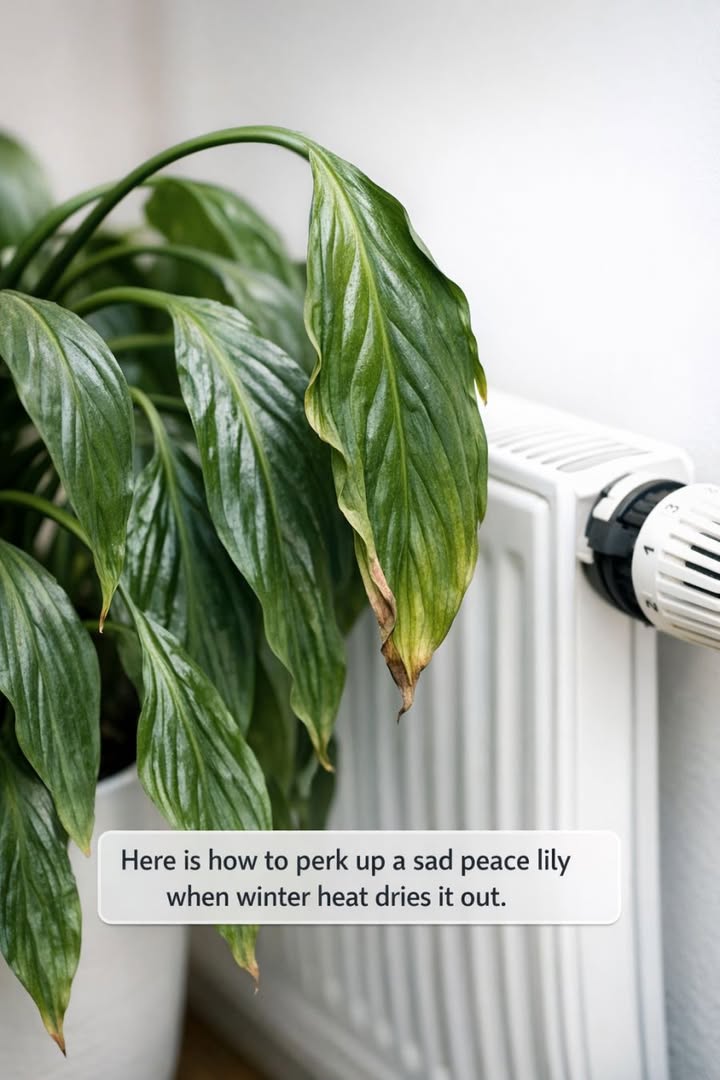
3. Move It Away From Radiators, Vents, and Drafty Windows
Peace lilies are sensitive to temperature fluctuations and should be kept away from radiators, vents, and drafty windows. These areas can cause the air around your plant to become too dry, leading to stress. Ideally, place your peace lily in a location where it can enjoy stable temperatures between 65°F and 80°F (18°C to 27°C).
If possible, use a room thermometer to monitor the temperature in different areas of your home to find a suitable spot for your peace lily. By avoiding these sources of dry air, you can create a more favorable environment for your plant.
4. Boost Humidity With Simple Home Hacks
Increasing the humidity around your peace lily can significantly improve its health during the winter months. One simple way to boost humidity is by grouping your peace lily with other plants. Plants naturally release moisture into the air, and when placed together, they can create a more humid microclimate.
Another effective method is to place a shallow tray of water near your plant. As the water evaporates, it will increase the humidity in the surrounding air. Be sure to refill the tray as needed to maintain consistent humidity levels.
5. Try the Viral Pebble-Tray and Humidifier Combo
The pebble-tray method is a popular way to increase humidity around your peace lily. To create a pebble tray, fill a shallow tray with pebbles and add water until it reaches just below the tops of the pebbles. Place your peace lily pot on top of the pebbles, ensuring the bottom of the pot is not in direct contact with the water.
For an added boost, consider using a humidifier in the room where your peace lily is located. A humidifier can help maintain consistent humidity levels, which is particularly beneficial during the dry winter months.
6. Master the Winter Watering Schedule
Watering your peace lily during the winter requires a bit more attention than during the warmer months. The key is to avoid overwatering while ensuring that the plant does not dry out. Water your peace lily when the top inch of soil feels dry to the touch.
During winter, you may need to adjust your watering schedule and reduce the amount of water you give your plant. Make sure to use room-temperature water to avoid shocking the plant’s roots with cold water.
7. Give the Leaves a Spa Day: Wipe, Mist, and Trim
Your peace lily’s leaves can benefit from regular cleaning to remove dust and improve their ability to photosynthesize. Use a damp cloth to gently wipe down each leaf. This not only keeps the leaves clean but also provides a bit of moisture.
Mist the leaves with water occasionally to help increase humidity. If you notice any leaves that are severely damaged or dying, trim them away to encourage new growth and maintain the plant’s overall health.
8. Refresh the Potting Mix Without Full Repot Shock
If your peace lily’s soil is compacted or depleted of nutrients, consider refreshing the top layer of potting mix. Carefully remove the top inch of soil and replace it with fresh potting mix. This can provide your plant with a nutrient boost without the stress of a full repotting.
Avoid repotting your peace lily during the winter unless absolutely necessary, as the plant is less active and may take longer to adjust to a new pot.