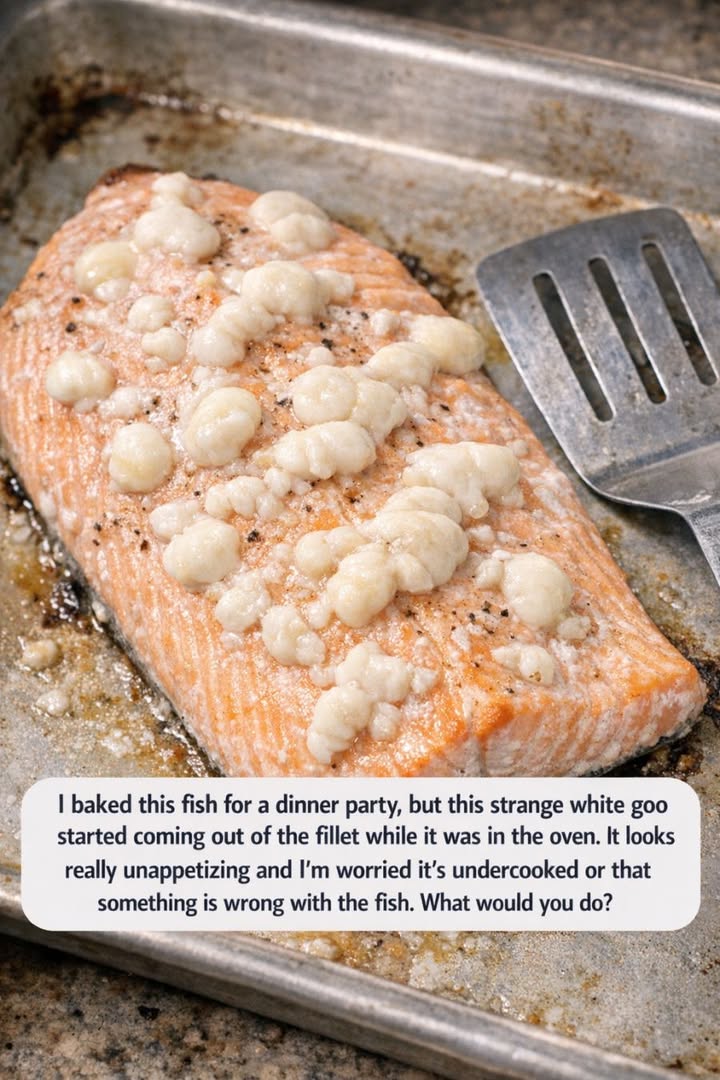
4. Is The Fish Undercooked, Overcooked, Or Perfectly Safe?
Albumin’s presence doesn’t necessarily indicate that the fish is undercooked or overcooked. However, excessive albumin can sometimes mean that the fish was cooked too quickly at a high temperature. To check if your salmon is perfectly cooked, use a thermometer to ensure the thickest part of the fish reaches 145°F (63°C), which is the recommended safe internal temperature.
Alternatively, you can use the fork test: gently press a fork into the thickest part of the fish and twist. If it flakes easily, it’s cooked through.
5. Simple Visual And Temperature Checks Before Serving Guests
Before serving your guests, it’s essential to ensure that the salmon is cooked properly. Besides using a thermometer, you can check the color and texture of the flesh. Cooked salmon should be opaque and slightly pink in the center. If it’s translucent, it needs more time in the oven.
Perform these checks a few minutes before serving to ensure the fish is at its best when it reaches the table.
6. Easy Tricks To Prevent The White Goo Next Time You Bake Salmon
To minimize albumin formation, try cooking the salmon at a lower temperature. A gentle heat of around 300°F (150°C) for a longer period will reduce the amount of albumin released. You can also try covering the salmon with foil to retain moisture and reduce direct heat exposure.
Another trick is to brine the salmon before cooking. Soaking the fish in a solution of salt and water for about 10 minutes can help the proteins set, reducing albumin release.
7. Marinades, Brines, And Gentle Heat To Keep Fillets Picture-Perfect
Marinating or brining salmon before cooking can significantly enhance its flavor and texture while reducing albumin. A simple marinade of olive oil, lemon juice, and herbs can add depth to the dish. Brining in a saltwater solution for about 10 minutes before cooking helps to firm up the proteins, which can prevent excessive albumin leakage.
Cooking the fish gently, either by poaching or baking at lower temperatures, helps maintain its moisture and keeps it looking appealing.
8. Smart Ways To Plate Or Disguise Albumin For A Dinner Party
If albumin does appear on your salmon, you can easily disguise it with garnishes or sauces. A light drizzle of a lemon-dill sauce or a sprinkling of fresh herbs can cover any unsightly white patches. Serving the salmon with colorful sides, like roasted vegetables or a vibrant salad, will also draw attention away from any imperfections.
Plating with care and creativity can make even a simple dish look restaurant-quality.
9. What I’d Do In The Moment With Guests Waiting At The Table
If you’re caught off guard by the appearance of albumin just as you’re about to serve your guests, don’t worry. Quickly but gently scrape off the excess albumin with a spoon or knife. Then, add a finishing touch like a sprinkle of fresh herbs or a squeeze of lemon juice.