
Fermenting vegetables at home is a rewarding process that not only enhances the flavor profile of your produce but also strengthens its nutritional value. With the right conditions, a jar of okra can transform into a tangy, probiotic-rich treat. However, for those new to the world of fermentation, encountering unexpected changes such as a cloudy brine or a potent sour aroma can be disconcerting.
Understanding the signs of a healthy ferment versus one that may have gone awry is crucial for both safety and taste. In this article, we will delve into the nuances of fermenting okra, exploring the reasons behind cloudy brine, the significance of a strong sour smell, and how to differentiate between a successful fermentation and potential spoilage.
1. What Cloudy Brine Really Means in Fermented Okra
Cloudy brine is a common occurrence in fermented vegetables and is typically a sign of successful fermentation. During the fermentation process, lactic acid bacteria convert sugars in the okra into lactic acid, which causes the brine to turn cloudy. This cloudiness is primarily due to the presence of harmless bacteria and yeast.
For fermentation of okra, it’s recommended to use a salt concentration of 2-3% in the brine. This level of salinity not only inhibits the growth of harmful bacteria but also supports the proliferation of beneficial lactic acid bacteria. So, a cloudy brine is usually an indication that these bacteria are thriving, transforming your okra into a safe and tasty fermented product.
2. Why a Strong Sour Smell Is Usually a Good Sign
A strong sour smell is a hallmark of successful vegetable fermentation. This aroma is produced by the lactic acid bacteria as they metabolize the sugars in the okra and produce lactic acid. This acid not only contributes to the tangy flavor but also plays a crucial role in preserving the okra by lowering the pH to levels that are hostile to harmful bacteria.
Typically, a safe pH level for fermented vegetables is below 4.6. If your jar of okra smells sour, it is likely that the pH has reached a safe level, preventing spoilage and ensuring that the ferment is safe to consume.
3. The Difference Between Healthy Fermentation and Rotting
Healthy fermentation and rotting can sometimes share visual and olfactory characteristics, but there are distinct differences. Healthy fermentation is characterized by a tangy smell, a cloudy brine, and a crisp texture. In contrast, rotting will often produce off-putting smells that are putrid rather than pleasantly sour, and the texture of the vegetables may become mushy.
Additionally, rotting is often accompanied by visible signs of spoilage, such as mold growth on the surface of the brine. Always trust your senses; if something smells or looks off beyond the usual fermentation indicators, it is safer to discard the batch.
4. Visual Checks: Color, Texture, and Mold to Watch For
When evaluating your fermented okra, start with a visual inspection. Healthy fermented okra should maintain its bright green color, although some slight darkening is normal due to the acidic environment. The texture should remain firm and crunchy.
Watch for any signs of mold, which typically appears as a fuzzy growth on the surface. Mold can range in color from white to green or black. If you spot mold, it’s often best to discard the batch as some molds can produce harmful toxins. Kahm yeast, a harmless white film, can sometimes form on the surface and can be removed without issue.
5. Smell and Taste Tests: How to Safely Judge Your Ferment
The smell test is a reliable method for assessing the safety of your ferment. If the okra emits a pleasantly sour, vinegary aroma, it’s likely safe. Avoid any batches with a foul, putrid smell, as this indicates spoilage.
Once the smell passes the test, perform a taste test. Start by tasting a small piece of okra. It should taste tangy and slightly salty, with a firm texture. If the taste is unpleasant or the texture is overly soft, it’s best not to consume it.
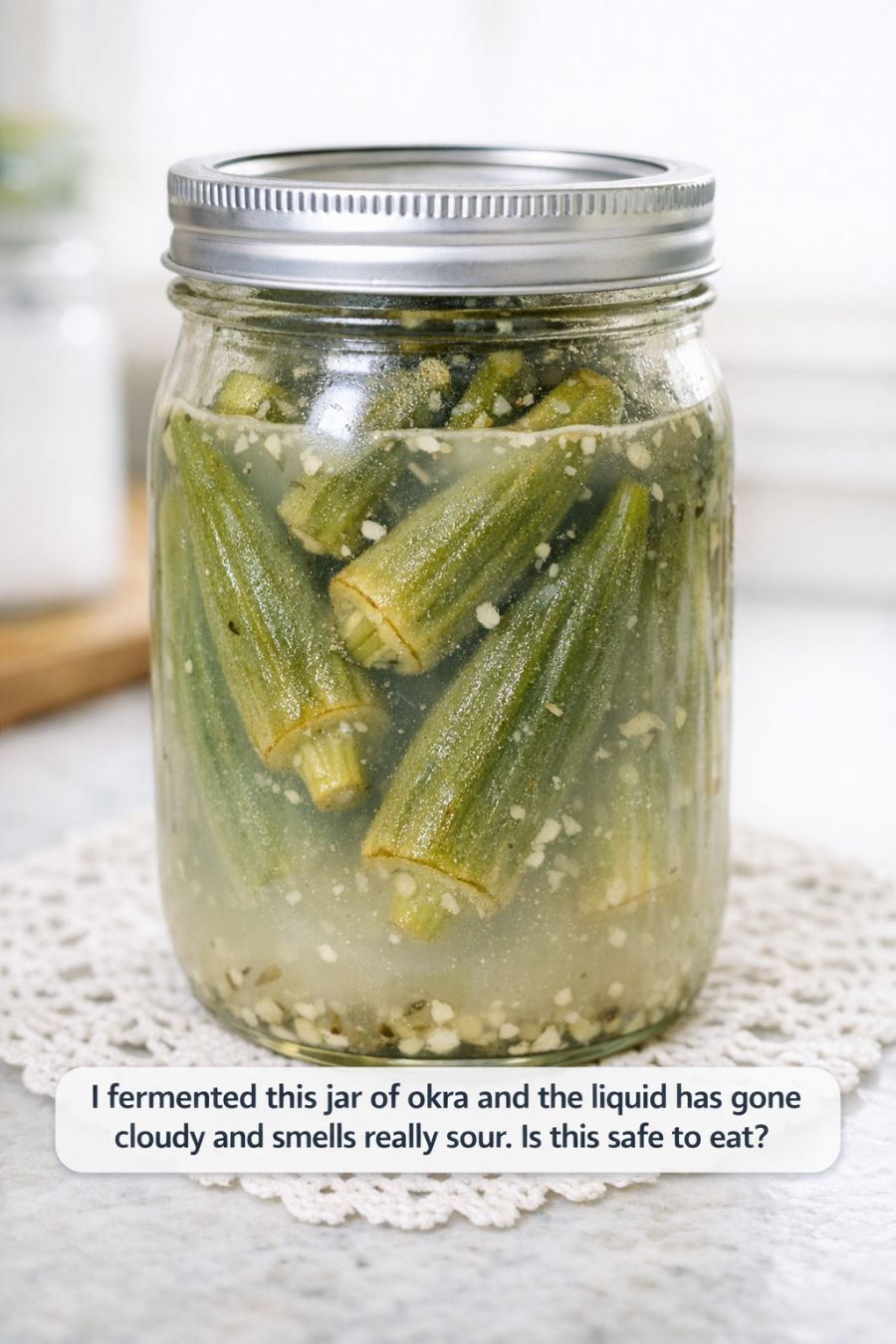
I fermented this jar of okra and the liquid has gone cloudy and smells really sour. Is this safe to eat?
Pages: 1 2
