
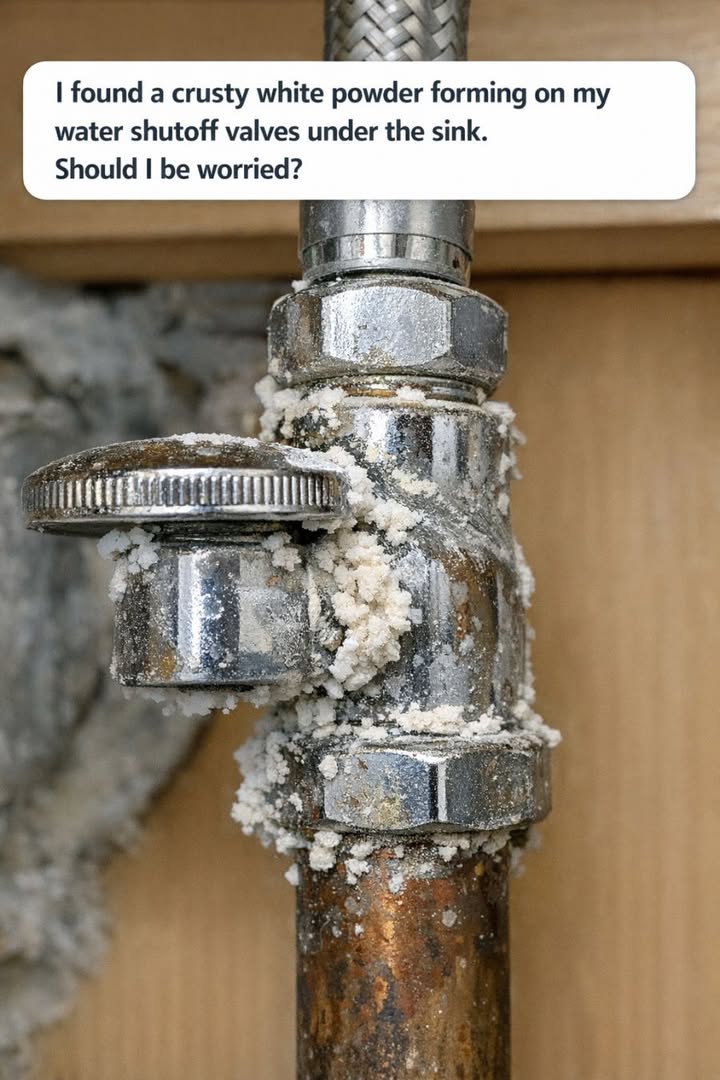
Discovering a crusty white powder on your water shutoff valves under the sink can be concerning, especially if you’re unsure of its origin or potential implications. You might wonder if it’s just an aesthetic issue or if it signals a more severe plumbing problem. Before jumping to conclusions, it’s essential to understand what this substance might be and what it signifies for your home plumbing.
In this article, we’ll delve into the possible causes for this buildup, how to differentiate between harmless and harmful deposits, and the steps you can take to address the issue. Whether you’re facing a simple case of mineral accumulation or a sign of a more significant leak, knowing how to handle it can save you time, money, and stress.
1. What That Crusty White Powder Actually Is
The crusty white powder you see is most likely mineral buildup, primarily composed of calcium carbonate. This is a common occurrence in areas with hard water, where dissolved minerals precipitate out of the water and form deposits on surfaces. These deposits are often white, chalky, and can feel gritty to the touch.
In some cases, the white powder might also contain traces of other minerals such as magnesium, depending on the specific composition of your local water supply. The presence of these minerals can vary significantly, with hardness levels ranging from 60 milligrams per liter (mg/L) in softer water areas to over 180 mg/L in regions with very hard water.
2. How To Tell If It’s Just Harmless Mineral Buildup
To determine if the white powder is simply harmless mineral buildup, consider the location and extent of the deposits. Mineral buildup often appears uniformly around plumbing fixtures and is usually dry and flaky. If you can easily wipe it away with a damp cloth, it’s likely just surface-level mineral residue.
Another indicator is the absence of any signs of moisture or leaks. If the area surrounding the valves is dry and free from water stains or discoloration, this suggests that the buildup is not associated with a leak. You can also perform a simple test by applying a few drops of vinegar to the powder. If it fizzes and dissolves, it’s a good indication that the substance is calcium carbonate.
3. Signs the White Powder Means a Slow, Hidden Leak
If you notice wetness, discoloration, or a persistent damp smell around the shutoff valves, these could be signs of a slow leak. Leaks can cause mineral deposits to form as water continually evaporates, leaving behind the mineral content.
Additionally, if the buildup appears to be localized to joints or fittings and you observe corrosion or rust on metal surfaces, this may indicate that water has been leaking over time. In such cases, the white powder might be a combination of mineral deposits and corrosion byproducts, signaling a need for further investigation.
4. Common Causes: Hard Water, Aging Valves, and Loose Fittings
Hard water is one of the most common causes of mineral buildup. When water with a high mineral content flows through your pipes, these minerals can precipitate out and form deposits on surfaces, particularly where water flow is restricted or irregular.
Aging valves and loose fittings can also contribute to the problem. As valves and fittings wear out over time, they may develop small leaks or allow water to escape at connections. This can lead to the accumulation of mineral deposits as the water slowly evaporates.
5. When You Should Be Worried About Corrosion and Pipe Damage
Corrosion is a serious concern that can lead to structural damage in your plumbing system. If you observe rust-colored stains, pitting, or flaking on metal parts, this could indicate corrosion. Corrosion weakens pipes and fittings, increasing the risk of leaks and potential water damage.
If the white powder is accompanied by signs of corrosion or if it recurs despite cleaning, it’s essential to address the issue promptly. Corroded pipes may require replacement, and professional assessment might be necessary to ensure the integrity of your plumbing system.
6. Simple At-Home Tests to Identify the Deposit
One of the simplest methods to identify the deposit is the vinegar test. Apply a few drops of white vinegar to the crusty area. If it bubbles and dissolves, the deposit is likely calcium carbonate, a common mineral found in hard water.
I found a crusty white powder forming on my water shutoff valves under the sink. Should I be worried?
Pages: 1 2
