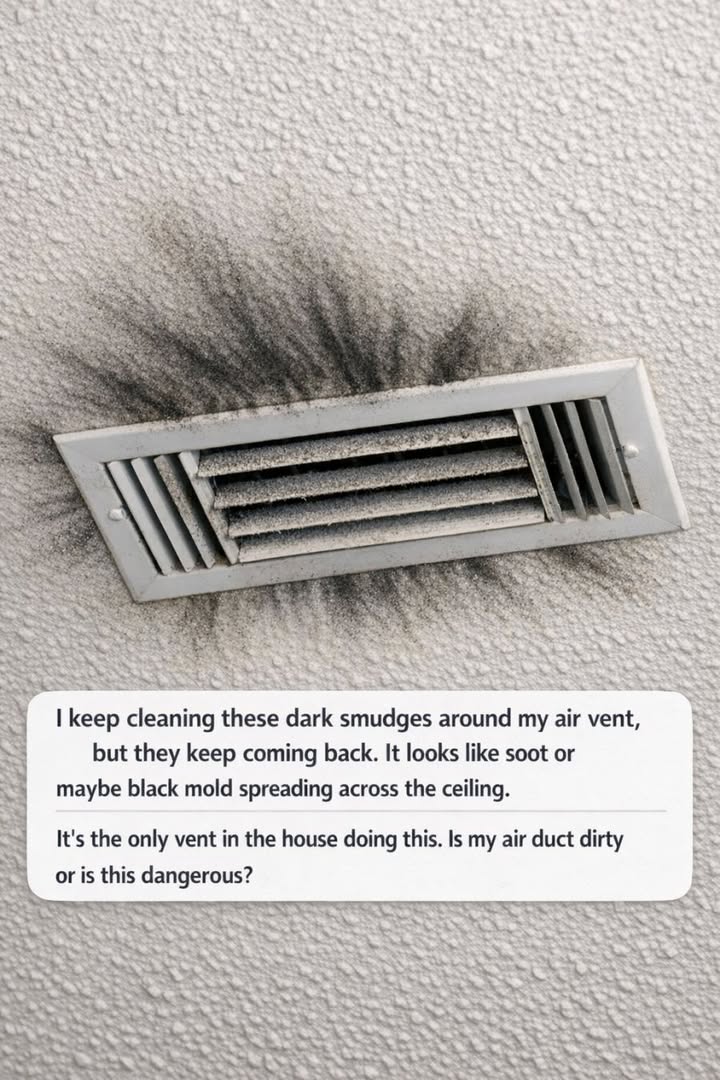
3. How to Tell Soot, Mold, and Ghosting Stains Apart
Identifying the type of stain is the first step in addressing the problem. Soot stains are usually black, greasy, and can be wiped off with a damp cloth, although they may leave a residue. Mold, on the other hand, has a fuzzy or slimy texture and can appear in a variety of colors, including black, green, or white.
Ghosting stains from thermal tracking are typically faint and appear in straight lines or patterns that correspond with the underlying structure. These marks don’t have texture and are harder to clean, as they are more a result of particle deposition than surface contamination.
4. When a Dirty Air Duct Is Actually to Blame
While dirty air ducts are often blamed for a variety of issues, they are not always the culprit behind dark smudges. However, if your duct system is particularly dirty, it can contribute to the problem by circulating dust and debris throughout your home.
If you suspect your ducts are dirty, it’s worth checking them for visible dust, debris, and mold. Regular cleaning of ducts as part of home maintenance can prevent the buildup of contaminants, which might otherwise find their way onto your ceilings and walls.
5. Hidden Sources of Soot: Candles, Fireplaces, and Furnaces
Soot can originate from several common household sources, including candles, fireplaces, and improperly maintained furnaces. Candles, especially those scented or made with paraffin wax, can produce significant soot. Burning them frequently near vents can lead to soot accumulation.
Fireplaces, if not properly ventilated, can also contribute to soot buildup. Similarly, furnaces that are not functioning efficiently may produce excess soot that can spread throughout the home via the HVAC system. Ensuring these sources are well-maintained and ventilated can help reduce soot-related staining.
6. Could This Be Black Mold—and Is It Dangerous?
Black mold is a serious concern due to its potential health risks, including respiratory issues and allergic reactions. It thrives in damp, dark areas, which can sometimes include HVAC systems if there’s a moisture issue.