
Starting seeds can be an exciting and rewarding part of gardening, but success often depends on creating the perfect environment for germination. One of the most crucial factors in this process is maintaining the right moisture balance in your seed trays. Too much moisture can lead to mold growth and seed rot, while too little can cause seeds to dry out and fail to sprout.
Achieving this delicate balance involves more than just watering correctly; it starts with the right growing medium. By mixing three specific ingredients into your seed trays, you can create an ideal environment that promotes healthy seedling growth. This article will guide you through the benefits of moisture balance, introduce the three ingredients you need, and explain how to mix them correctly.
1. Why Moisture Balance Matters In Seed Trays
Moisture balance in seed trays is crucial because it directly affects the germination rate and health of seedlings. Seeds require consistent moisture to break dormancy and begin growth. However, excessive moisture can suffocate the seeds and create a breeding ground for pathogens such as Pythium and Rhizoctonia, which cause damping-off disease.
To illustrate the importance of moisture control, consider that seeds generally need an environment with 50-70% moisture retention. This range ensures that seeds remain hydrated without being waterlogged. Proper moisture balance also helps maintain the appropriate oxygen levels in the soil, crucial for root respiration and seedling vigor.
2. The Three-Ingredient Mix That Transforms Seed Starting
The three-ingredient mix for seed starting includes a base medium for structure, a water-holding component to prevent dry-out, and an aeration booster to stop waterlogging. Together, these ingredients create a balanced environment that supports seed germination and robust seedling development.
By using these ingredients, gardeners can tailor the growing medium to suit the specific needs of their seeds and growing conditions, enhancing success rates compared to traditional single-medium approaches.
3. Ingredient One: The Base Medium For Structure And Drainage
The base medium serves as the foundation of your seed-starting mix, providing structure and essential drainage. A commonly used base medium is coconut coir or peat moss. Coconut coir is sustainable and has excellent water retention properties while providing good drainage.
Typically, the base medium should make up about 40-60% of your seed-starting mix. This ensures that the medium is loose enough to allow root growth and drainage, but dense enough to retain necessary moisture.
4. Ingredient Two: The Water-Holding Component That Prevents Dry-Out
The second ingredient is a water-holding component, such as vermiculite. Vermiculite is a natural mineral that expands when heated and can hold several times its weight in water. This makes it ideal for maintaining moisture in the seed-starting mix.
Incorporating about 20-30% vermiculite into your mix helps keep seeds consistently moist, reducing the risks associated with drying out. It is especially beneficial in environments with fluctuating temperatures and humidity levels.
5. Ingredient Three: The Aeration Booster That Stops Waterlogging
Perlite is the third ingredient and is used to improve aeration in the seed-starting mix. Perlite is a lightweight, volcanic glass that is heated until it expands, creating a porous structure. This structure allows for better air circulation within the soil, preventing waterlogging and promoting healthy root development.
Adding 20-30% perlite to your mix ensures that excess water can drain away easily while maintaining sufficient airflow to the roots, which is vital for preventing fungal diseases.
6. How To Measure And Mix The Three Ingredients Correctly
To prepare the mix, you will need to measure the ingredients accurately. Start with a large container or wheelbarrow to combine the ingredients. Using a standard measuring cup or scoop, measure out 2 parts of the base medium, 1 part of the water-holding component, and 1 part of the aeration booster.
Thoroughly mix the ingredients until they are evenly distributed. This ensures that each part of the seed tray receives the same balance of moisture and aeration. If mixing larger batches, consider using a garden fork or hands to blend the components effectively.
7. Adjusting Ratios For Different Seeds And Growing Conditions
Different seeds and growing environments may require adjustments to the basic mix ratios. For instance, seeds that are prone to rot or are planted in particularly humid conditions might benefit from more perlite to enhance drainage. Conversely, seeds that require higher moisture, like certain tropical plants, might perform better with an increased proportion of vermiculite.
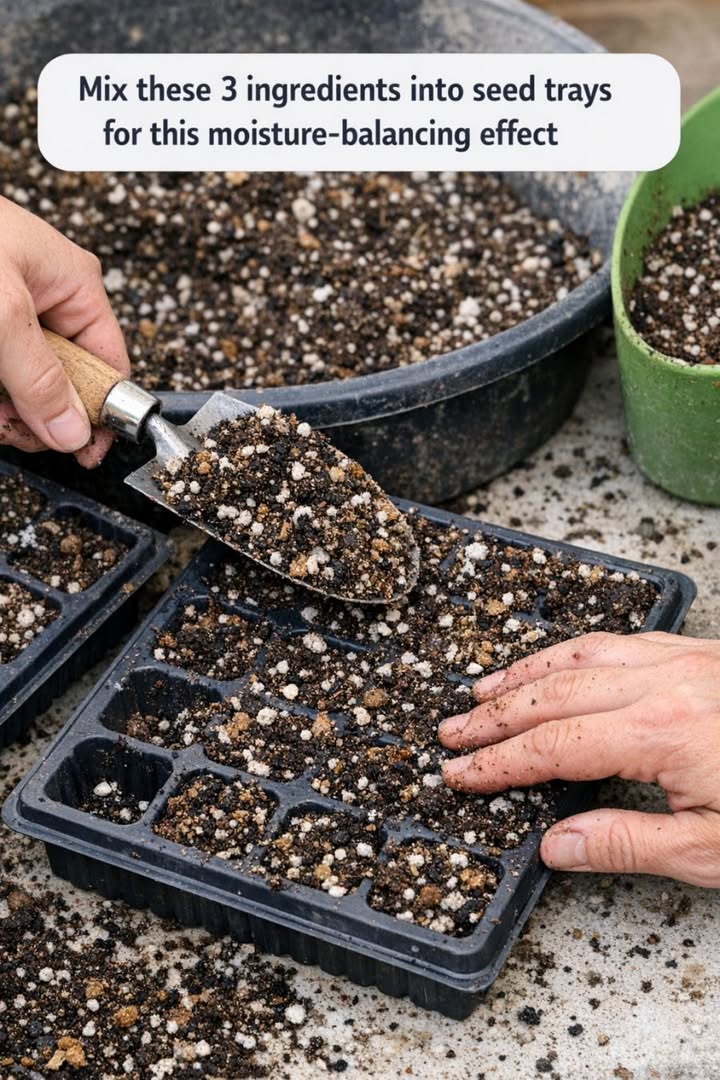
Mix these 3 ingredients into seed trays for this moisture-balancing effect
Pages: 1 2
