
In addition to fixing leaks, consider installing water alarms in areas prone to leaks, such as under sinks and near water heaters. These devices can alert you to moisture issues before they become severe.
6. Poor Ventilation in Basements and Attics
Basements and attics are often poorly ventilated, making them prime locations for mold growth. Without proper airflow, moisture can accumulate, especially in humid climates. Installing vents or fans can help improve air circulation and reduce humidity levels.
Consider using a dehumidifier in these areas to maintain a humidity level below 50%. Regularly check for signs of mold, such as musty odors or discoloration on walls and ceilings, and address any issues promptly.
7. Using Carpets in Damp Areas
Carpets in damp areas like basements or bathrooms can trap moisture and provide a perfect environment for mold. If carpets get wet, they should be dried immediately to prevent mold growth. In areas prone to moisture, consider using alternative flooring materials like tile or vinyl, which are less susceptible to mold.
If you must use carpets, choose those with moisture-resistant backing and regularly clean them to prevent mold spores from settling.
8. Storing Items in Damp Basements
Basements are often used for storage, but if they are damp, stored items can become moldy. Cardboard boxes and fabric items are particularly susceptible to mold. Use plastic bins with tight-fitting lids to protect items from moisture.
Regularly inspect stored items for signs of mold and consider using desiccants or moisture absorbers to help control humidity levels in storage areas.
9. Not Cleaning Refrigerator Drip Pans
Refrigerator drip pans collect condensation and can become breeding grounds for mold if not cleaned regularly. Mold can develop in these pans and spread to other areas of the kitchen. Check and clean the drip pan every few months, ensuring it is dry and free of mold.
In addition to cleaning the drip pan, regularly check the refrigerator seals and interior for any signs of mold and clean them as needed.
10. Leaving Spills and Stains Untreated
Spills and stains on carpets, upholstery, or other surfaces can lead to mold growth if not cleaned promptly. Mold can start growing within 24 to 48 hours on damp surfaces. Clean spills immediately and thoroughly dry the area to prevent mold from taking hold.
For stubborn stains, consider using a carpet cleaner or professional cleaning service to ensure all moisture is removed.
11. Storing Firewood Indoors
Firewood can introduce moisture and mold spores into your home if stored indoors. As the wood dries, it releases moisture into the air, increasing humidity levels. Store firewood outside, away from the house, and only bring in small amounts as needed.
Ensure that the wood is properly seasoned and dry before bringing it indoors to minimize the risk of mold growth.
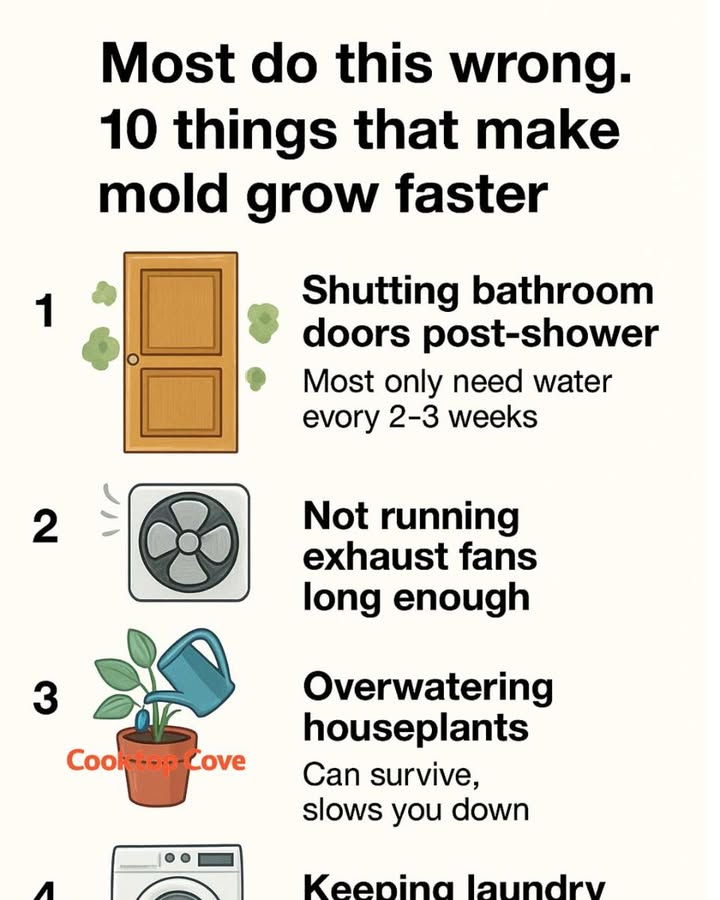
Most do this wrong. 10 things that make mold grow faster
Pages: 1 2
