
Variations & Tips
For a creamier, richer gravy, you can replace 1/2 cup of the chicken broth with 1/2 cup of half-and-half or evaporated milk; add it when you stir in the noodles so it doesn’t curdle during the long cook. If you prefer a slightly lighter version, use reduced-fat cream of chicken soup and chicken breasts instead of thighs, and add a splash of extra broth at the end to loosen the gravy.
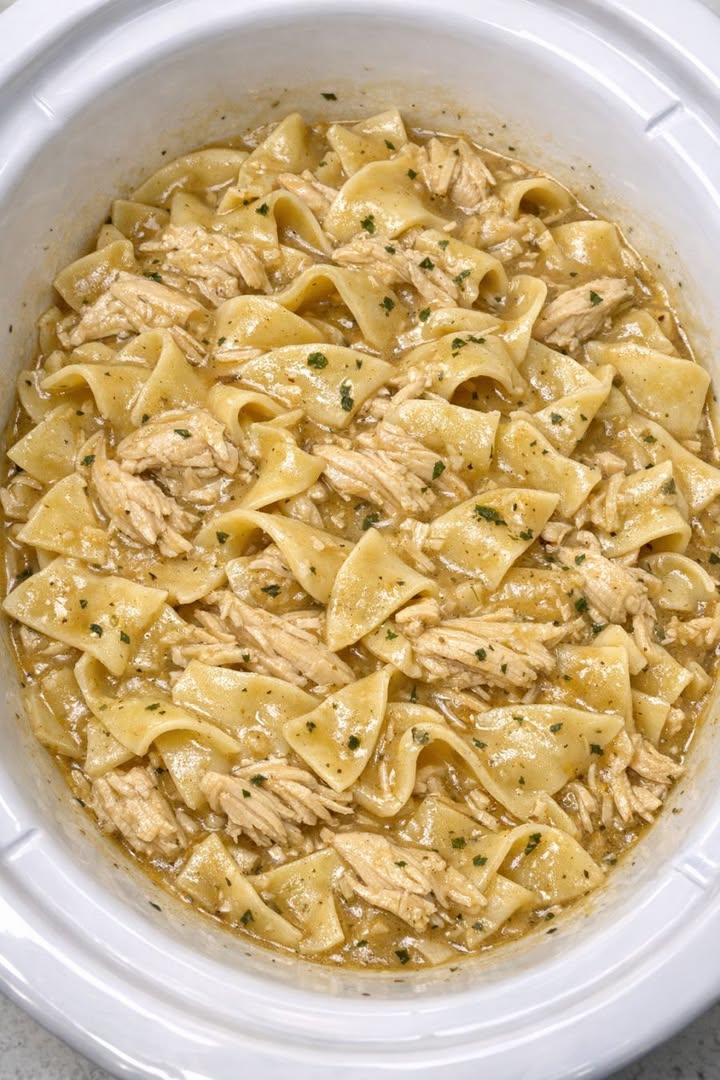
Served chicken gravy noodles with parsley and black pepper
Served chicken gravy noodles with parsley and black pepper
To stretch the meal for a larger family, stir in up to 16 ounces of egg noodles and increase the broth by 1 cup, watching the consistency as they cook. For added flavor, you can sprinkle in a pinch of garlic powder, onion powder, or poultry seasoning with the gravy mix. A handful of frozen peas or mixed vegetables can be stirred in during the last 10 minutes of cooking for color and a bit of sweetness.
If you need to make this ahead, cook the chicken and gravy fully, chill it quickly in shallow containers, and reheat in the slow cooker or on the stovetop, adding freshly cooked egg noodles just before serving so they don’t over-soften.
Leftover chicken gravy noodles stored in shallow containers
Leftover chicken gravy noodles stored in shallow containers
Food safety tips: Always start with fully thawed chicken, never frozen solid, to ensure it reaches a safe internal temperature quickly in the slow cooker. Cook the chicken until it reaches at least 165°F in the thickest part. Keep the slow cooker covered during cooking to maintain a safe temperature, and refrigerate leftovers within 2 hours in shallow containers. Reheat leftovers until steaming hot, at least 165°F, and use within 3 to 4 days, or freeze for longer storage.
