
In a large mixing bowl, use a hand mixer or stand mixer to beat together 1/2 cup softened unsalted butter and 1 cup granulated sugar on medium speed for 2 to 3 minutes, until the mixture looks pale and fluffy. This step incorporates air into the batter, giving the loaf a softer crumb.
Add the eggs to the butter-sugar mixture one at a time, beating well after each addition so the mixture stays smooth and emulsified. Mix in 2 teaspoons vanilla extract, scraping down the sides of the bowl as needed so everything is evenly combined.
With the mixer on low speed, add about half of the flour mixture to the wet ingredients and mix just until combined. Pour in about half of the milk (or buttermilk) and mix briefly. Repeat with the remaining flour mixture and then the remaining milk, mixing gently after each addition. Stop as soon as you no longer see dry flour; overmixing at this stage can make the loaf dense.
Gently fold the chopped rhubarb into the thick batter using a spatula. The batter will be fairly heavy and soft, with rhubarb pieces distributed throughout rather than in neat layers. Don’t worry if it looks a bit uneven—that’s what gives the finished loaf its soft, rustic texture with pockets of fruit.
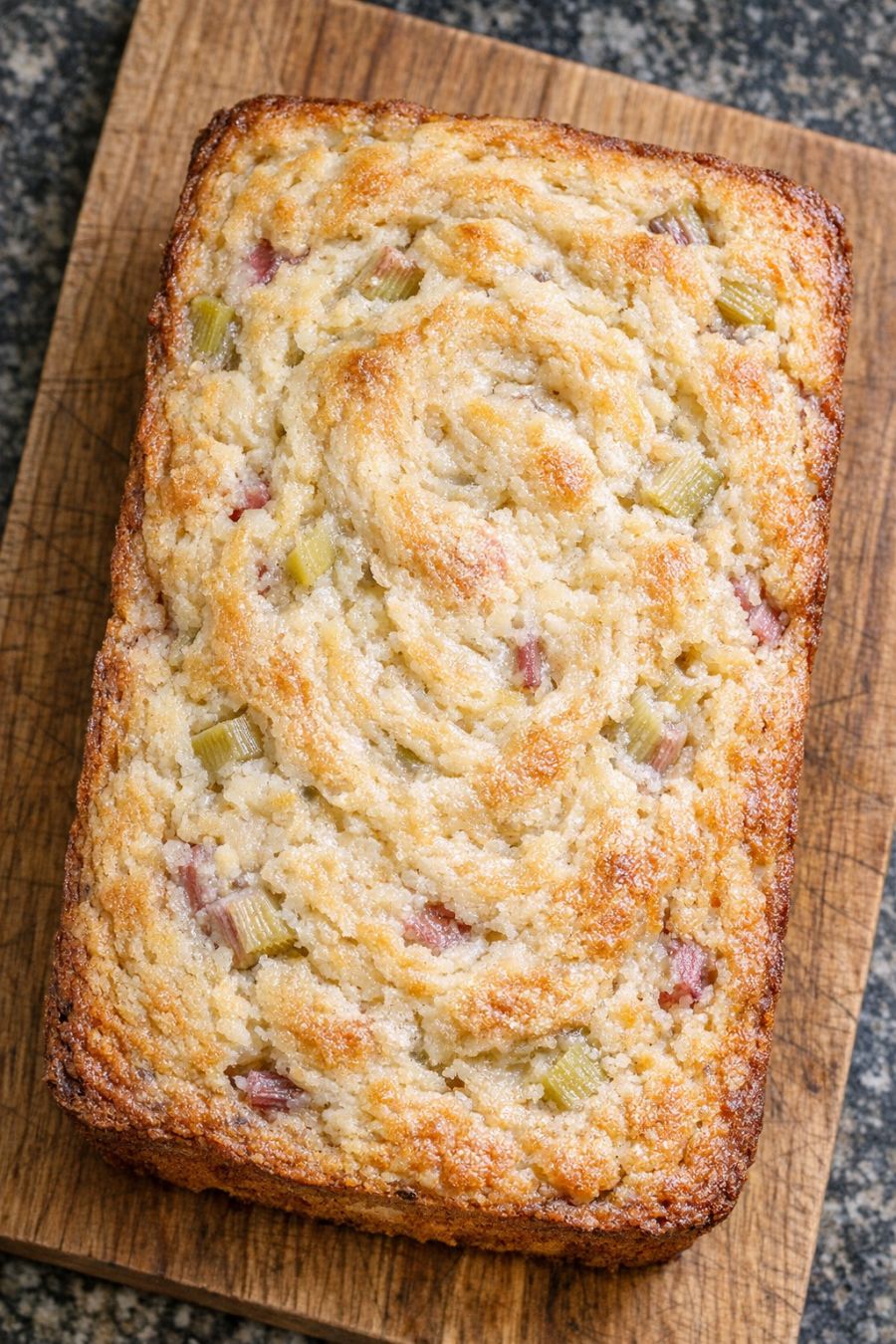
Spoon the batter into the prepared loaf pan, smoothing it out lightly with the back of the spoon or a spatula. For a slightly swirled, homemade look on top, run the spatula in a few loose, shallow figure-eight motions across the surface rather than making it perfectly flat. If you like a lightly crisp, sweet crust, sprinkle the remaining 1 tablespoon of sugar evenly over the top.
Bake on the center rack of the preheated oven for 50 to 60 minutes, or until the top is golden and slightly cracked and a toothpick or thin skewer inserted into the center comes out mostly clean, with just a few moist crumbs but no wet batter. Ovens vary, so begin checking around 45 minutes and continue to check every 5 minutes until done.
Remove the loaf pan from the oven and place it on a wire rack. Let the rhubarb vanilla loaf cool in the pan for 15 to 20 minutes so it can set; it will be quite soft when hot. Then run a thin knife around the edges, carefully turn the loaf out onto the rack, and flip it upright. Allow it to cool until just warm or completely to room temperature before slicing so it holds its shape and the crumb stays tender.
To serve, use a sharp serrated knife to cut thick slices. You’ll see the soft-set interior with little pieces of rhubarb scattered throughout and a slightly uneven, swirled top—very much like something your grandma would have baked on a Saturday afternoon.
Variations & Tips
You can adjust this rhubarb vanilla loaf to suit your kitchen and your taste while keeping its comforting, old-fashioned character. For a slightly tangier loaf, use buttermilk instead of regular milk, which echoes the way many Midwestern grandmothers baked with what they had on hand. If you prefer a more pronounced vanilla flavor, add an extra 1/2 teaspoon of vanilla extract or scrape in the seeds from half a vanilla bean. To add a gentle crunch, stir 1/2 cup of chopped toasted almonds or walnuts into the batter with the rhubarb, or sprinkle them over the top along with the sugar before baking. A teaspoon of finely grated orange or lemon zest folded into the batter brightens the rhubarb’s natural tartness. For a lighter sweetness, you can reduce the sugar in the batter to 3/4 cup, though the loaf will be a bit less tender. If you need to use frozen rhubarb, thaw it fully, drain off any excess liquid, and pat it dry before chopping and folding it into the batter; this helps avoid a soggy center. For a small household, you can bake the batter in two smaller loaf pans (about 8×4 inches) and reduce the baking time to around 35–45 minutes, checking early. Food safety tips: Rhubarb leaves are toxic and should never be eaten; always discard them and use only the stalks. Wash the stalks well to remove any dirt or garden residue before chopping. Make sure the loaf bakes through to the center—look for a clean or nearly clean toothpick—to avoid a gummy, underbaked interior. Once cooled, store the loaf tightly wrapped at room temperature for up to 2 days, or refrigerate if your kitchen is very warm; for longer storage, slice and freeze in an airtight container for up to 2 months, thawing slices at room temperature or briefly toasting them before serving.
My grandma Sue used to grow the secret ingredient for this in her backyard and we would beg her to bake it every weekend. It is so perfectly sweet and comforting.
Pages: 1 2
