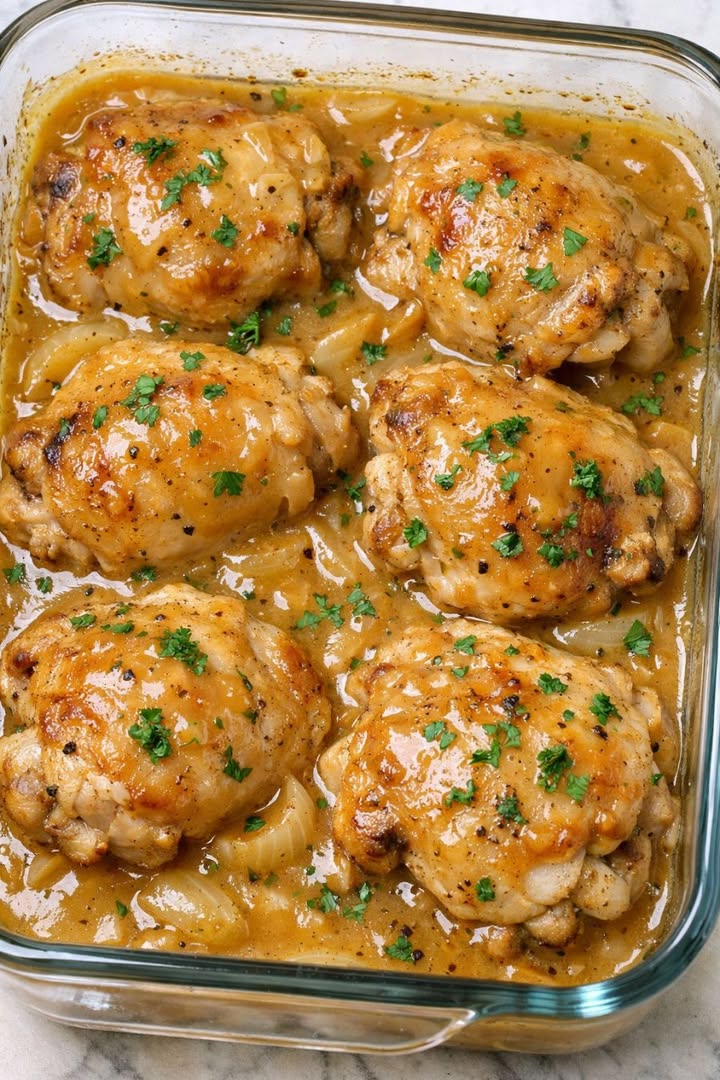
Continue baking, uncovered, for another 20–30 minutes, or until the chicken is very tender, the skin is lightly browned, and the gravy around it is bubbling and golden. The internal temperature of the thickest thigh should reach at least 165°F (74°C).
Once done, let the chicken rest in the hot gravy for about 5–10 minutes before serving. This helps the juices settle and the gravy thicken slightly. Serve the chicken thighs straight from the clear glass dish, spooning plenty of that golden gravy over each piece and over whatever you’re serving alongside.
If you prefer boneless, skinless chicken thighs, you can use them in place of bone-in; just reduce the covered baking time by about 10 minutes and keep an eye on them so they don’t dry out. For a milder flavor, use low-sodium gravy mix and a low-sodium cream of chicken soup, then taste the finished gravy and add a pinch of salt only if needed. If your gravy seems too thick at the end, stir in a splash or two of hot water or chicken broth right in the baking dish and gently mix it into the juices. For a slightly deeper color and flavor, you can briefly brown the chicken thighs in a skillet before placing them in the glass dish, though my grandmother usually skipped that step on busy nights. If you like a hint of herb, sprinkle a little dried parsley or thyme over the top after baking—this keeps the recipe true to its three-ingredient simplicity while letting you dress it up for company. Leftovers reheat well; warm them gently in the oven or on the stovetop, adding a spoonful of water to loosen the gravy if needed.