
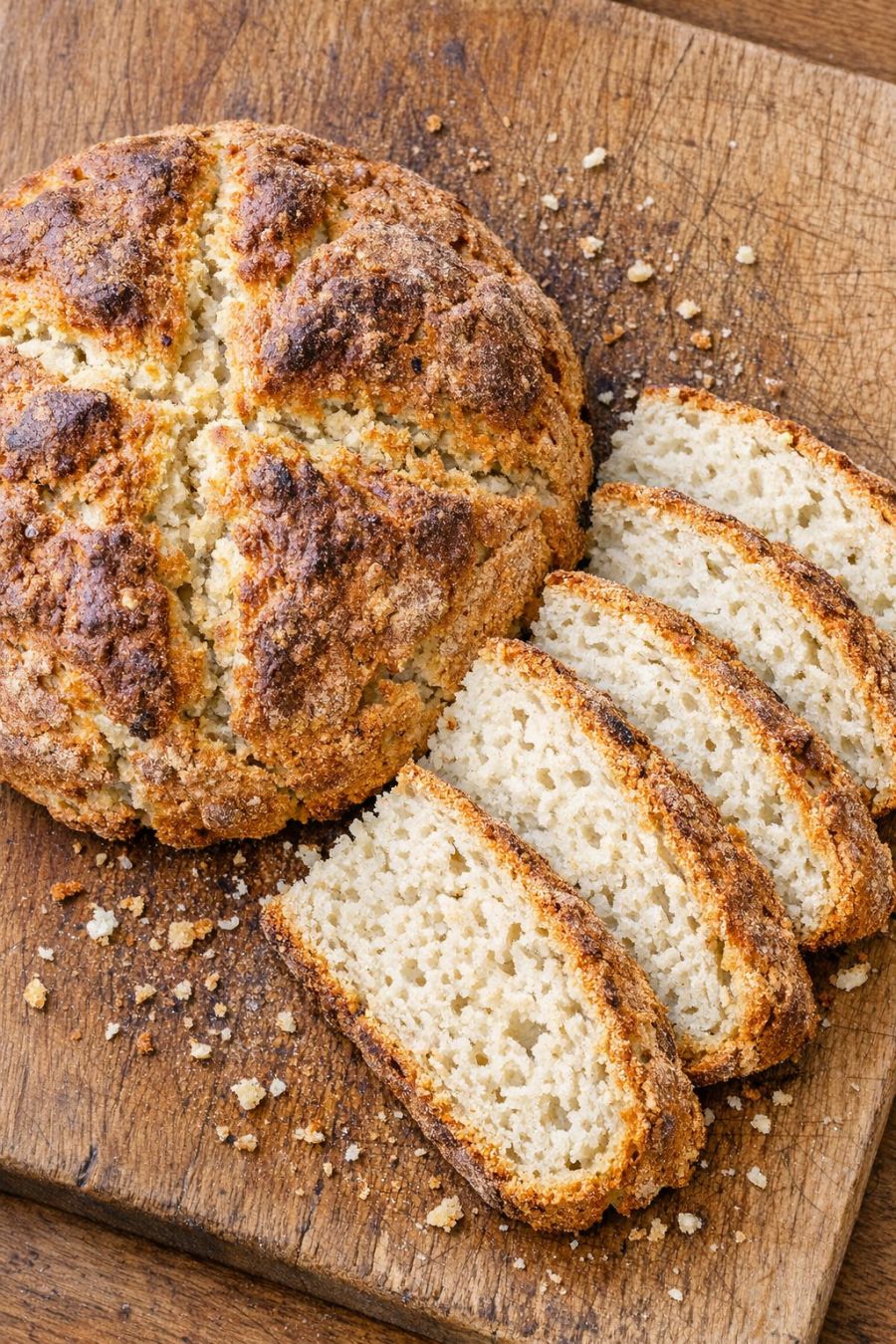
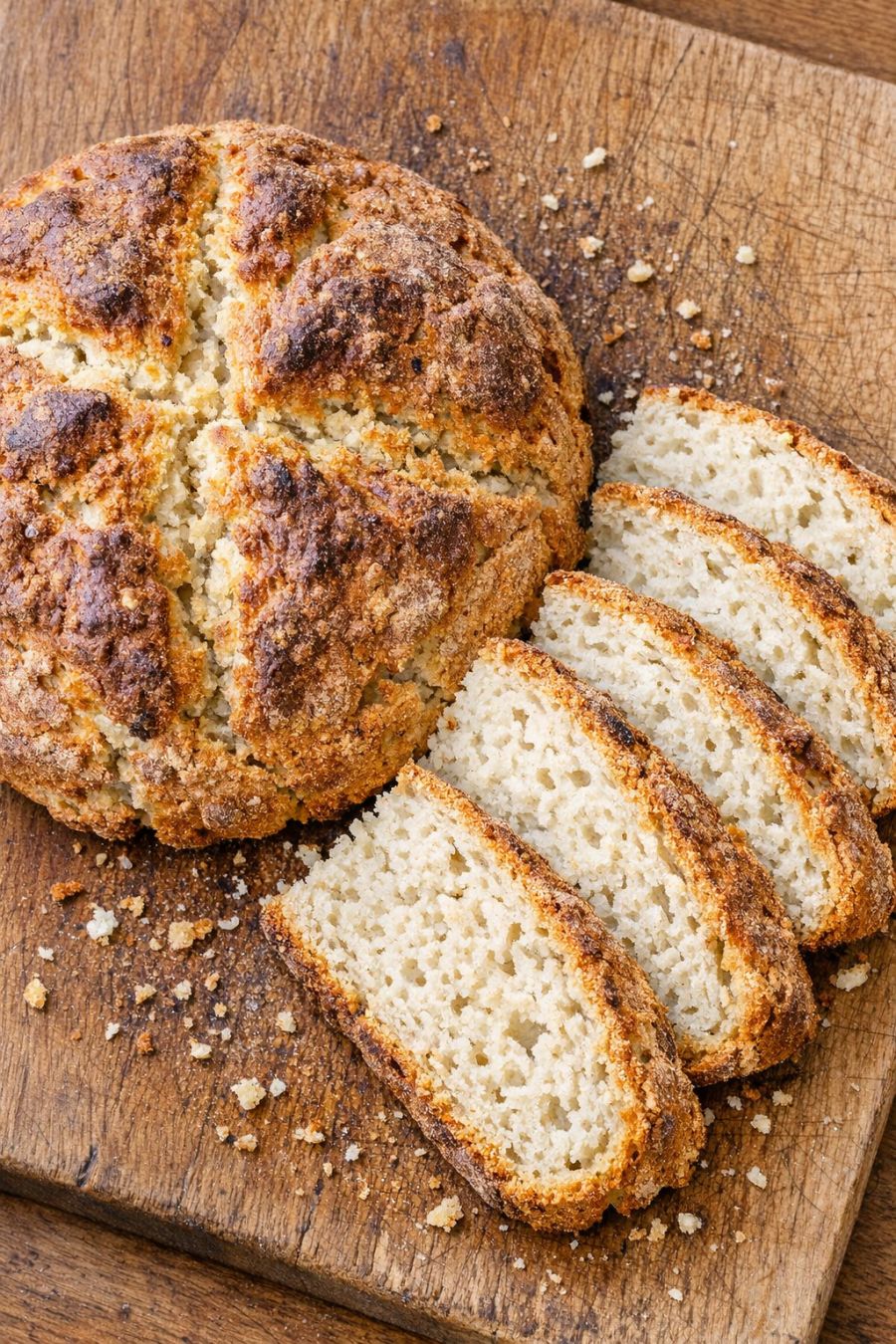
This 4-ingredient Irish soda bread is the kind of dense, rustic loaf my mother used to bake on chilly spring afternoons, just as the house started to smell like simmering stew. It’s a traditional no-yeast bread that relies on baking soda and buttermilk instead of long rising times, so you can go from mixing bowl to golden, crackling crust in under an hour. The crumb is sturdy yet tender—just right for thick slices and a generous swipe of salty butter—making it a comforting, practical bread for busy home cooks.
Serve this soda bread warm, sliced thick from the round loaf, with plenty of salted butter so it melts into the dense white crumb. It’s perfect alongside hearty beef or vegetable stew, pot roast, or a big pot of chili. For a simple lunch, toast leftover slices and top with sharp cheddar and sliced apples, or use it to soak up broth from soups like chicken noodle or tomato. A little dish of jam or honey on the table makes it feel extra special for kids and guests.
4-Ingredient Irish Soda Bread
Servings: 8
Ingredients
4 cups all-purpose flour
1 1/2 teaspoons baking soda
1 1/2 teaspoons fine salt
1 3/4 cups cold buttermilk (plus 1–2 tablespoons more if needed)
Directions
Preheat your oven to 425°F (220°C). Line a baking sheet with parchment paper or lightly flour a baking stone. This helps the loaf release easily and encourages a nice crust on the bottom.
In a large mixing bowl, whisk together the flour, baking soda, and salt until everything is evenly combined. This step makes sure the baking soda is distributed so the bread rises evenly without any bitter spots.
Make a well in the center of the dry ingredients and pour in 1 3/4 cups of the cold buttermilk. Using a wooden spoon or your hand shaped like a claw, gently mix just until the dough starts to come together in a shaggy, slightly sticky mass. If there are dry, floury patches at the bottom, sprinkle in an extra tablespoon or two of buttermilk and fold again. Do not knead like yeast bread—overworking makes it tough.
Turn the dough out onto a lightly floured surface. With floured hands, gently gather it into a rough ball, folding it over on itself once or twice to bring it together. You’re aiming for a cohesive, slightly rough ball of dough, not a smooth, elastic one. Handle it as little as possible to keep the crumb tender.
Shape the dough into a round loaf about 7–8 inches across and place it in the center of the prepared baking sheet or stone. Pat the top gently to even it out. With a sharp knife, cut a deep cross on top of the loaf, about 1/2 inch to 3/4 inch deep. This helps the center bake through and gives that classic rustic look with a thick, cracked crust.
Pages: 1 2
