
Combine crackers and syrup: Sprinkle the remaining flour (about 2 teaspoons) over the crackers, then pour the warm spiced syrup over them. Gently fold with a spatula until all the pieces are coated and beginning to soften, but not completely mushy. They’ll continue to soften as the pie bakes.
Fill the pie crust: Pour the cracker mixture into the prepared pie crust, spreading it evenly. It should mound slightly in the center, just like a traditional apple pie filling.
Add the top crust: Place the second pie crust over the filling. Trim to match the bottom crust’s overhang, then fold and crimp the edges together to seal. If you prefer, cut the top crust into strips and create a lattice. Cut 4–5 small slits in the top crust if using a solid lid to allow steam to escape.
Finish the top: Lightly brush the top crust with water or a little milk, then sprinkle the remaining 1 tablespoon of sugar evenly over the surface for a bit of sparkle and crunch.
Bake the pie: Place the pie plate on a baking sheet to catch any drips. Bake at 425°F (220°C) for 15 minutes, then reduce the oven temperature to 375°F (190°C) and continue baking for another 20–25 minutes, or until the crust is golden brown and you can see the filling bubbling through the vents.
Cool before slicing: Transfer the pie plate to a cooling rack and let the pie cool for at least 1–1 1/2 hours. This cooling time helps the syrup set so you can slice clean wedges that hold together, much like a classic apple pie.
Serve: Slice the pie directly from the pie plate and serve warm or at room temperature, with ice cream, whipped cream, or a slice of cheddar cheese if you like the sweet-salty contrast.
Variations & Tips
For a slightly more complex flavor, you can replace half of the water with apple juice or cider; it won’t be a strict historical mock pie anymore, but it deepens the illusion of apples. If you prefer a less sweet dessert, reduce the sugar in the syrup to 3/4 cup and add an extra teaspoon of lemon juice for brightness. You can also play with the spice profile—add a pinch of ground ginger or cardamom for a more contemporary twist, or dial back the cinnamon if you like a subtler flavor. For a richer crust, brush the top with beaten egg instead of water or milk to encourage deeper browning and shine. If you’re avoiding traditional crackers, try using a neutral-tasting gluten-free cracker; just note that some gluten-free varieties soften faster, so watch your syrup temperature and don’t over-soak them. Finally, if you love texture, stir in a small handful of finely chopped toasted walnuts or pecans with the crackers—the nuts won’t mimic apples, but they’ll add a pleasant crunch that plays well with the flaky crust and syrupy filling.
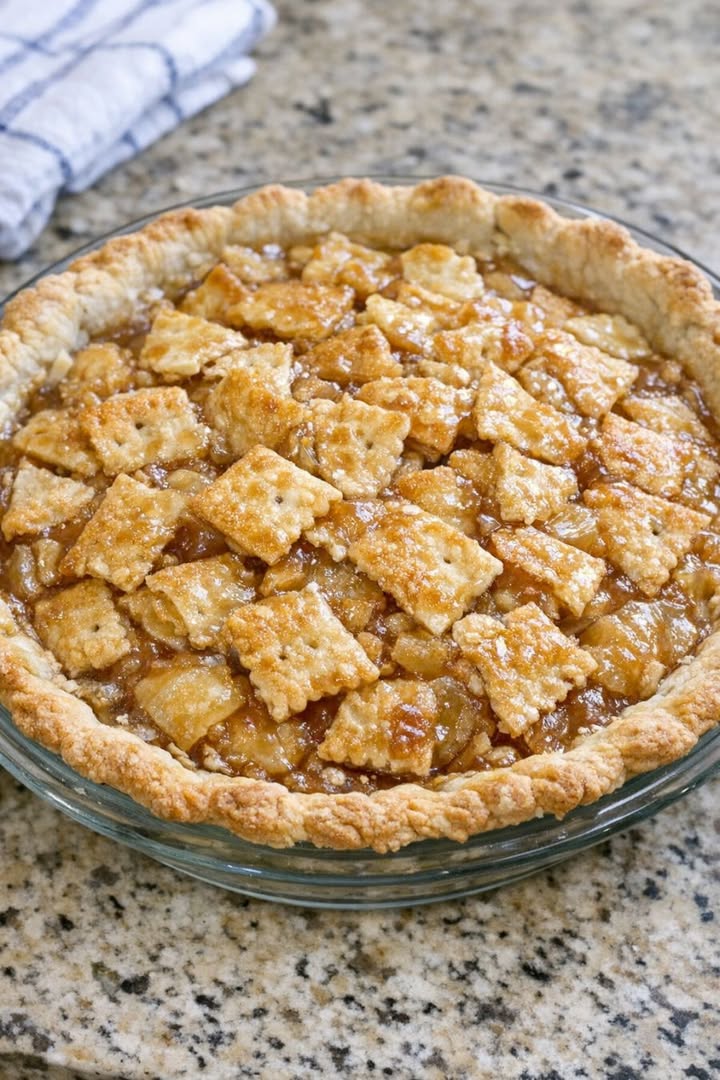
One of the most clever depression era desserts ever made. Proof people got creative when supplies were scarce
Pages: 1 2
